Climate activists in 10 cities on Tuesday staged the first simultaneous national protest against sportswashing at stadiums from Sacramento to Boston with pro teams sponsored by fossil fuel interests. A full list of teams, stadiums and sponsors is below. Photos of protestors in each city can be found here.
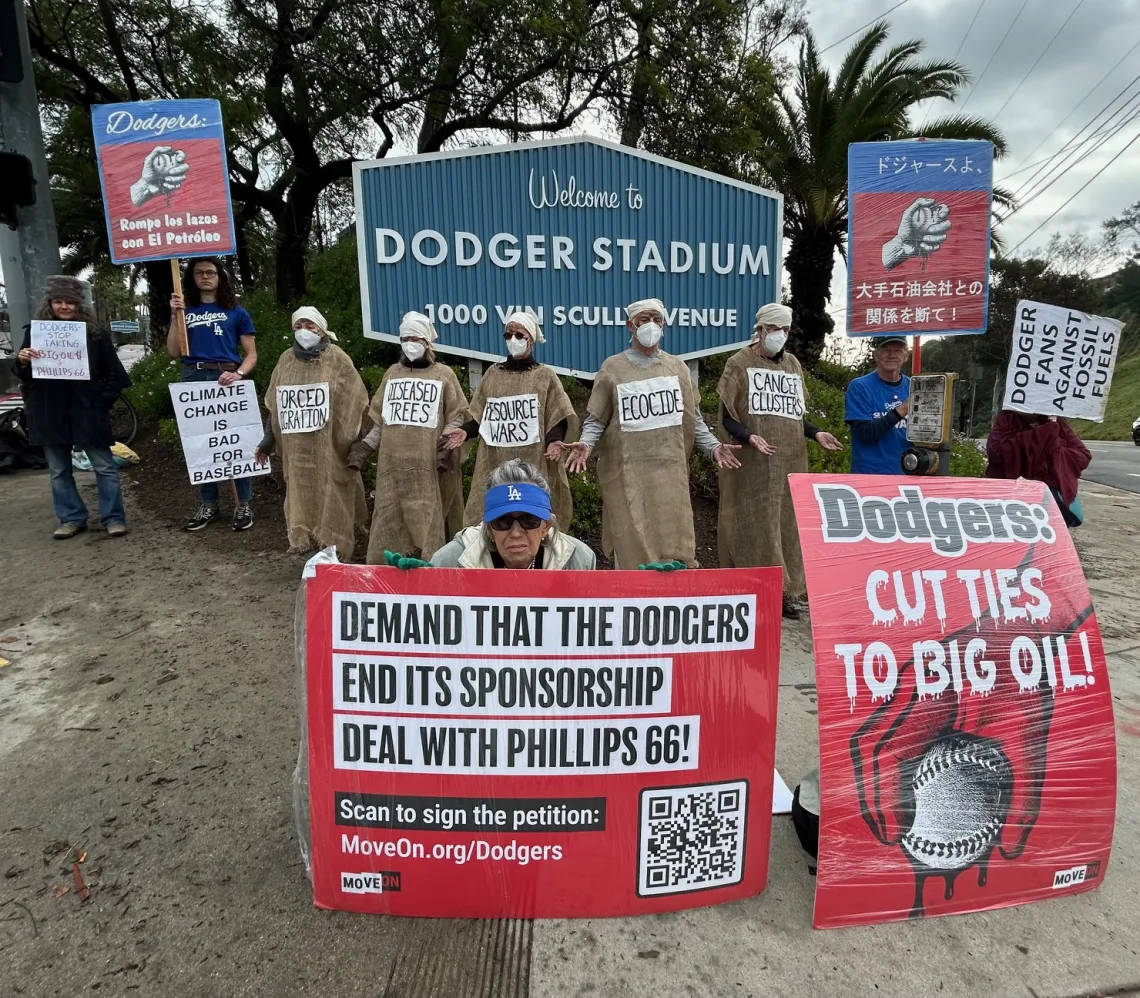
Hoisting posters, marching and chanting, the protestors urged their respective team owners to drop their fossil fuel sponsorships. Protestors put a spotlight on the damage done by sportswashing, wherein teams advertise through stadium signage or jersey logos for fossil fuel interests seeking to make fans associate their products or business with the fierce passion they feel for their favorite players.
"It wasn't hard to find protestors in 10 cities because people care about the health of our communities and our planet, just like they care about their home teams," said campaign organizer Zan Dubin. "Our protestors are sports fans, too, and have experienced record heat and other extreme weather effects, worsened by climate change, that make it harder and harder to sit through games."
Sponsors protested Tuesday included oil companies, major banks that finance fossil fuel projects, and a utility that generates most of its energy from non-renewable sources.
The national action, inspired by protests at L.A.'s Dodger Stadium, is an expansion of Dodger Fans Against Fossil Fuels, a Sierra Club Angeles Chapter campaign endorsed by California state Sen. Lena Gonzalez and eminent environmentalists urging Dodger owners to drop their sponsorship deal with oil giant Phillips 66.

Other groups participating and supporting Tuesday's action: Communities for a Better Environment, Scientific Rebellion, Stop the Money Pipeline, EcoAthletes, Resilient Palisades, Dayenu, the Center for Biological Diversity, the Sisters of Charity New York and Third Act.
"We love these teams," said David Rosenstein, a Dodger Stadium protestor with Third Act SoCal. "But we don't love the deceitful practice of sportswashing. We encourage owners and managers to end this complicity now and find new sponsors."
Global anti-sportswashing sentiment appears to be reaching unprecedented levels: As the 25th Winter Olympics wind down, two groups of Olympians and others (here and here) have urged the International Olympic Committee to jettison fossil fuel sponsorships.
"Dodger owners Mark Walter, Billie Jean King and Magic Johnson, all of whom have publicly supported conservation or sustainability, have a massive opportunity to show a new kind of global leadership by dropping Phillips 66," Dubin said. "The intent of our protest was to stigmatize sportswashing, but also to inspire teams to be climate leaders."
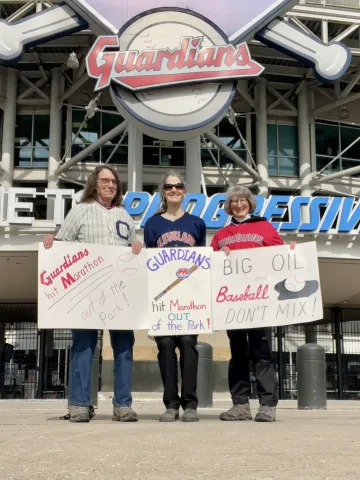
Protests took place at these 10 stadiums:
- Los Angeles, Dodger Stadium, Dodgers (Phillips 66/76 gas)
- San Francisco, Oracle Park, Giants (Phillips 66/76 gas)
- Sacramento, Golden 1 Center, Sacramento Kings (AM/PM, owned by BP)
- Portland, Providence Park, Portland Timbers (Bank of America)
- St. Louis, Busch Stadium, St. Louis Cardinals (Phillips 66)
- Atlanta, Mercedes-Benz Stadium, FIFA World Cup (Aramco)
- Cleveland, Progressive Field, Cleveland Guardians (Marathon)
- Philadelphia, Lincoln Financial Field, Philadelphia Eagles (NRG)
- New York City, Citi Field, Mets (Citi bank)
- Boston, TD Garden, Boston Celtics (Gulf)
Expert Quotes:
Juanita Chavez, director, Sierra Club Angeles Chapter: "The Dodgers rejected stadium cigarette ads decades ago for good reason. Bans on tobacco advertising lead to fewer people smoking. The team showed a similar responsiveness to fans last year, albeit too little and too late, by turning away federal immigration agents and pledging funds to help immigrant families. We’re asking Dodger owners to show the same concern for their fans' health and our planet by refusing to allow Big Oil to advertise in their stadium."
Naomi Oreskes, Harvard University historian: "Corporations that practice sportswashing buy goodwill by doing things that are genuinely good, like financially backing beloved teams, in order to distract us from the things they're doing that are genuinely bad. They are advertising products that are killing people, damaging property, and making it hard to do things we care about, like play baseball or go skiing, as weather worsened by climate change melts snow or raises temperatures unbearably."
Bill McKibben, author, environmentalist; co-founder Third Act/350.org: "The greatest threat to sports in the years ahead is the rapid rise in temperature, which increasingly makes it too hot and stormy to play. So, you might say it's an error for those who enjoy--and profit from--sports to be collaborating with the industry doing the most to overheat the planet."
Sam Mattis, American Olympic discus thrower (Tokyo 2021, Paris 2024) training for the 2028 games: "In the last five years, I've had to cancel training because of flooding and wildfire smoke; I've had to compete in extreme heat waves with track surfaces exceeding 140 degrees; and I've had a heat stroke while competing. Climate change from fossil fuel emissions is affecting sports right now and is a direct threat to the future of sport, as well. The companies polluting our atmosphere and endangering sports have no business doing business with the teams and games we love."