Editor’s Note: I recently dove into this book and thoroughly loved it. I know that immersing myself in nature makes me happier and healthier. But Why? Florence Williams gave me many answers and expanded my mind on why nature is so good for young and old, and for society at large. Listening to this book, I was impressed by the storytelling and personal feelings she calls upon as she meets with scientists, researchers and leaders in the field who share their research. I appreciate the help I received from Google Gemini in writing up the following learnings I gained from the book.
The Unseen Prescription: 5 Vital Takeaways from Florence Williams' "The Nature Fix"
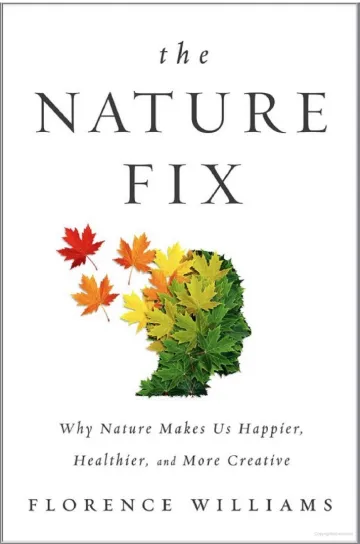
In a world increasingly dominated by screens, concrete, and incessant connectivity, the idea that nature might hold a key to our well-being can feel both obvious and revolutionary. Florence Williams’ groundbreaking book, The Nature Fix: Why Nature Makes Us Happier, Healthier, and More Creative, dives deep into the burgeoning science behind this intuition, revealing a compelling case for reconnecting with the natural world.
Far from a mere feel-good sentiment, Williams meticulously compiles research from neuroscientists, psychologists, and environmental scientists, demonstrating that nature is not a luxury, but a necessity for our physical, mental, and creative health. Here are five crucial takeaways from her insightful exploration:
Nature is a Measurable Mood and Stress Reducer
Perhaps the most immediate and impactful revelation of The Nature Fix is the quantifiable effect nature has on our psychological state. Williams presents a wealth of studies showing that even brief exposures to green spaces can significantly reduce levels of cortisol, the primary stress hormone. Research cited includes Japanese "forest bathing" (Shinrin-yoku) where participants experience decreased blood pressure, heart rate, and sympathetic nervous system activity (our "fight or flight" response) simply by being present in a forest environment. The book underscores that this isn't just anecdotal; the benefits are physiological and measurable, acting as a potent antidote to the chronic stress of modern life.
Our Brains are Wired for Nature
Williams elaborates on Attention Restoration Theory (ART), a theory that our brains operate differently in natural environments than in urban ones. Urban settings demand "directed attention," forcing us to filter out distractions and focus on specific tasks (like navigating traffic or checking emails). This wears us out.
Nature, conversely, offers "soft fascination" – engaging our attention effortlessly without demanding intense focus. The rustle of leaves, the flow of water, the patterns of branches – these natural stimuli allow our directed attention to rest and recover, leading to improved cognitive performance, enhanced creativity, and reduced mental fatigue. It's why a walk in the woods can often clear your head and spark new ideas in a way staring at a spreadsheet never could.
The Immune System Gets a Boost from the Wild
Beyond mental well-being, Williams reveals surprising evidence of nature's impact on our physical health, particularly our immune system. She highlights research suggesting that exposure to phytoncides – airborne chemicals emitted by trees – can increase the activity of natural killer (NK) cells, a type of white blood cell that plays a crucial role in fighting off infections and even cancer. This suggests that time spent in forests isn't just relaxing; it's actively fortifying our bodily defenses, offering a natural and accessible way to bolster our resilience against illness.
"Dose" Matters: From Tiny Glimpses to Deep Immersion
One of the practical takeaways from The Nature Fix is that the benefits of nature are not an all-or-nothing proposition. Williams demonstrates that even small "doses" of nature can have a positive impact. Looking at trees from a window, having plants in your office, or taking a short stroll in a park can offer measurable improvements in mood and cognition.
However, the book also emphasizes that deeper, longer immersions in wilder places yield more profound and lasting effects. Whether it's a few minutes a day or a multi-day backpacking trip, actively seeking out and engaging with nature, in varying degrees, is key.
Reconnecting with Nature is an Urgent Societal Imperative
Ultimately, Williams' work transcends individual well-being to present a powerful argument for societal change. As our lives become increasingly urbanized and technologically driven, the "epidemic dislocation from the outdoors" (as she puts it) has tangible negative consequences for public health, education, and even economic productivity.
The Nature Fix serves as a crucial call to action, urging us to design our cities with more green spaces, integrate nature into our schools and workplaces, and prioritize policies that ensure equitable access to natural environments for everyone. It's a reminder that nurturing our connection to the wild is not just about personal preference, but about fostering a healthier, happier, and more resilient human species.
This is the first "What We Are Reading" article for the Reno ICO Newsletter. If you have a book to suggest, please contact me at robschamberg@gmail.com and we will publish your review in the next newsletter.