Article by F. Green
Did you know that California is home to the oldest known tree in the world? California has an incredible array of wildlife and ecosystems, and its trees are no exception. The oldest, tallest, and largest known trees in the world grow in the Golden State, and they’re not even the same tree!
The Oldest Known Living Tree
Methuselah is a bristlecone pine tree in the White Mountains of Eastern California. At 4,850 years old, this tough and gnarled tree is older than the Egyptian pyramids and several thousand years older than the Roman Empire. Methuselah is aptly named after the longest-living figure in the Bible.
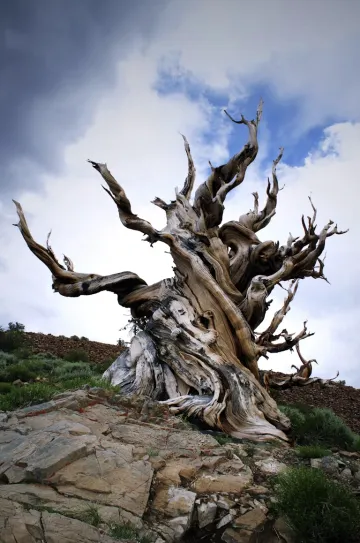
Like many other species of trees with unbelievable longevity, the bristlecone pines of the White Mountains grew up in a very harsh environment. Methuselah persevered in arid, cold conditions, which caused it to grow very slowly and therefore live for a very long time. Bristlecone pines also deploy a survival technique known as “sectored architecture,” meaning that only a small part of the tree’s bark is alive at any given time. Ironically, this gives it the appearance of something always on the verge of dying.
Other trees around the world have also laid claim to the title of the oldest known tree. Contenders include Sweden’s “Old Tjikko,” a 9,500-year-old Spruce, and the clonal forest of 40,000 cloned Aspen trees in Utah, collectively known as Pando, which could be as old as 80,000 years. However, these are clonal trees, meaning they consist of genetically identical trunks that sprout from a single root system. It is the root system that lives so long, while the top tree(s) die off. Methuselah is the oldest known living individual tree.
There may be older, unknown trees out there. In fact, there was an older Bristlecone Pine named Prometheus that was cut down in 1964. There is rumored to be another unnamed bristlecone pine in the same area that is over 5,000 years old. The exact location of Methuselah is kept a secret to protect it from harm.
The Tallest Known Living Tree
Hyperion is a roughly 600-year-old coastal redwood in Redwood National and State Parks, Humboldt County. In 2019, Hyperion’s height reached 116.07 meters, or 380 feet and 9.7 inches. This is taller than London’s Big Ben clock tower and the Statue of Liberty. Since it is still growing, this towering giant is likely even taller now.
Coastal redwoods are a fascinating species of tree. Although they do not match Methuselah in age, they can still live for thousands of years. Redwoods grow along the Pacific Coast in California and Oregon. They have 12-inch-thick bark that makes them fire-resistant, and their root systems often spread wide, intertwining with other redwoods for stability. Hyperion is fittingly named after the Titan of heavenly light in Greek mythology.
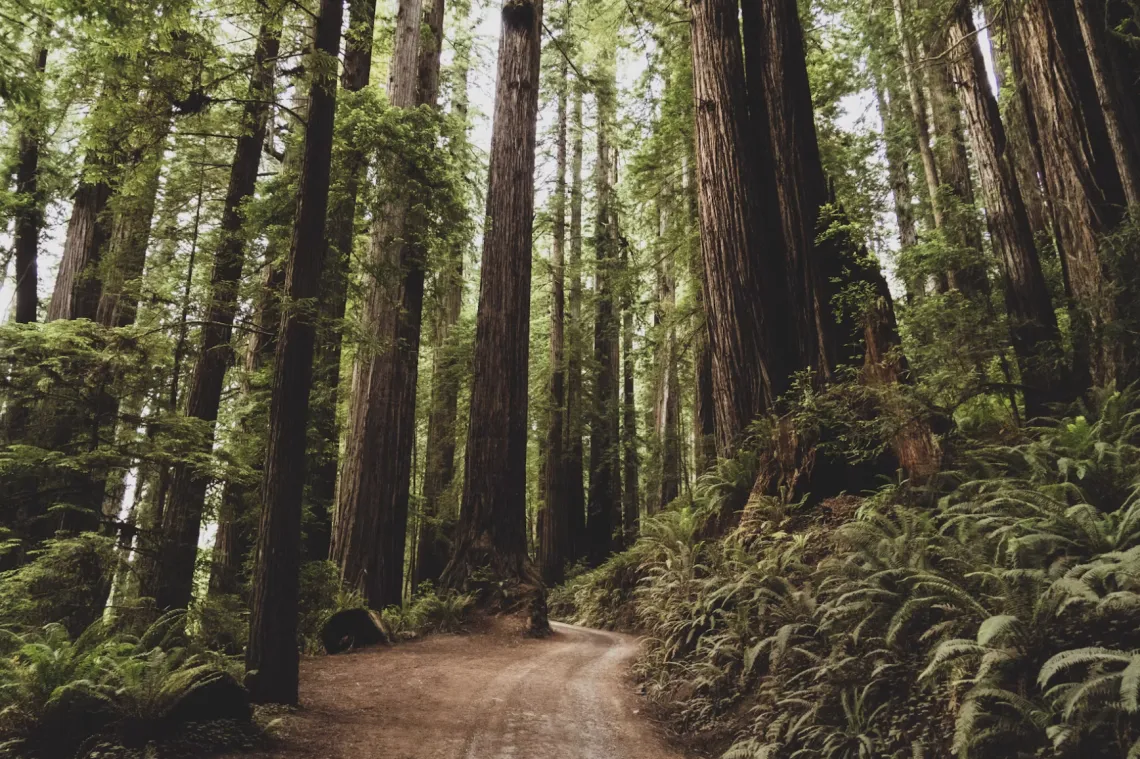
This magnificent tree is off-limits to visitors to protect both it and the surrounding fauna from the extensive harm from off-trail foot traffic, bushwhacking, and human litter.
The Largest Known Living Tree
General Sherman is the largest tree in the world by volume. It is located in the Giant Forest of Sequoia National Park. According to the National Park Service, General Sherman is estimated to have a volume of 52,500 cubic feet. It holds enough lumber to build about 120 average-sized houses, perhaps more wood than several acres of prime timberland. The tree’s trunk weighs about 1,400 tons, or about the same as 15 adult blue whales.
General Sherman is still growing larger. Every year, it adds roughly enough wood to create a 60-foot-tall tree all on its own. The tree is estimated to be over 2,000 years old. General Sherman is a giant sequoia, a distinctive reddish-orange tree species that grows along the west slope of the Sierra Nevada. Related to coastal redwoods, sequoias live for thousands of years, grow to titanic sizes, and their thick bark protects them from fire.
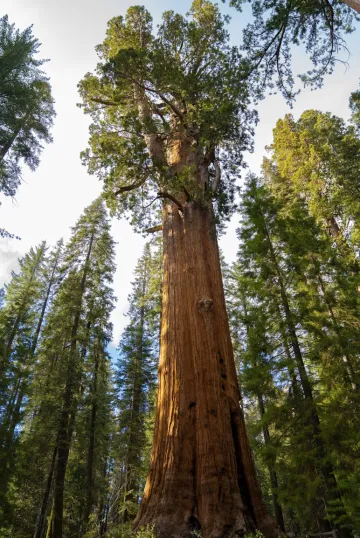
Unlike Methuselah and Hyperion, General Sherman is open to visitors. During the summer, Sequoia National Park even offers shuttles up to the accessible trail. Paved paths and fences help protect the shallow root systems from damage, so that anyone can come see this marvelous tree
Protecting California’s Ecosystems
As incredible as California’s ecosystems are, they are also fragile. 30x30 is an initiative, supported by the state executive order N-82-20, that aims to conserve 30% of California’s lands and coastal waters by 2030. The project is tied to an international movement that seeks to conserve natural areas to safeguard biodiversity and combat climate change.
Now, our national forests (which count toward the 30x30 goal) are under threat. The Trump administration plans to repeal the Roadless Area Conservation Rule. This means that 45 million acres of pristine national forests across the country, including 4.4 million acres in California, would be opened to road building, logging, mining, and other extractive industries. Make your voice heard, and show your support for the roadless rule during the public comment period, which ends on September 21st, 2026.
The incredible age of the Prometheus tree, possibly the oldest of its time, was not discovered until after it had been felled. Similarly, we must protect our ecosystems now, or else we will only fully understand their wonders after they are gone.