Scientists estimate only about 450 North Atlantic right whales remain. Right whales need to deliver 16 to 18 calves a year just to maintain their current population.
Multiple environmental and political issues threaten Florida's sanctity, natural beauty, wildlife and actual future existence. This page is dedicated to current issues that affect not only Nassau County, Fla., but other geographical areas as well. Please be not only cognizant - but also diligent in your efforts to help protect and preserve our natural environment. Thank you.
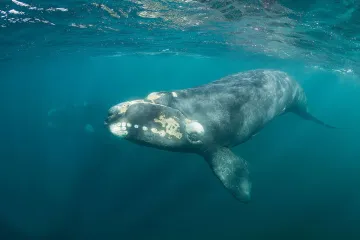
The endangered North Atlantic Right Whales return every year to Northeast Florida and Southeast Georgia to give birth and nurse their young. With less than 350 remaining for this species, it's crucial we continue to protect and advocate for their safety. Follow along here to stay in the loop.
endangered North Atlantic Right Whales to NE Florida and Georgia, where they give birth and nurse their young. With less than 350 remaining
Right Whale Update - 2020
Right Whale Update - 2019
Right Whale Update - 2018
Amelia River Dead Zone
Right Whale Update -- 2020
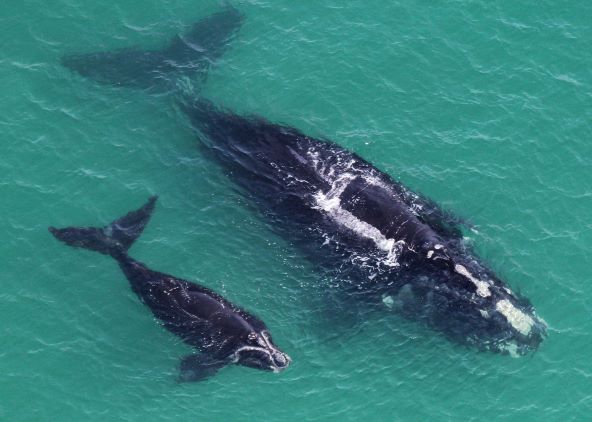
Very sad news to report. NOAA‘s partner, the Florida Fish and Wildlife Conservation Commission, spotted the 4th right whale calf of the season about 8 nautical miles off Georgia. Unfortunately the young whale has already been injured by what looks to be a propeller.
The injuries are concerning because of the severity and location of the wounds. One of the injuries appears to include damage to the calf's mouth which could hamper its ability to nurse and feed. Biologists estimate the newborn is just days old and the wounds were perhaps hours old.
The Mom is #2360, 'Derecha,' which means "right" in Spanish. Experts say the calf's two roughly parallel and s-shaped injuries were consistent with the propeller of a vessel.
Teams with the Georgia Department of Natural Resources (Wildlife Resources Division - Georgia DNR) and Clearwater Marine Aquarium Research (Clearwater Marine Aquarium) are out attempting (by air and sea) to try and find the mom/calf pair in order to assess the calf's condition.
The protection of these animals is literally in the hands of all mariners on the water and all businesses that service those vessels
NOAA is asking anyone with information regarding the calf's injuries and additional sightings to contact 1-877-WHALE-HELP (1-877-942-5343). The vessel that struck the animal may likely have propeller damage.
NOAA urges everyone to please give these animals their space. Mom/calf pairs spend the majority of their time at, or a few feet below the water's surface in the Southeast U.S. This is a critical and vulnerable time for right whale moms to bond with their calves - law requires staying away at least 500 yards by air (including drones) and by sea. . .
Derecha was first seen in December 1993. She is at least 27 years old. This is her 4th calf - she last gave birth in 2010.
Please remain alert, stay educated, and choose wisely how you operate your boat while traveling through a whale neonatal center
Click here for an article on the 2020 Right Whale calving season.
Right Whale Update - 2019
Seven rare right whale calves were spotted during the 2019 winter
birthing season off Florida's Atlantic coast.
Researchers say each new calf spotted this year is an encouraging sign
for the critically endangered whales. No newborns were spotted during
the 2018 calving season, and just five calves were counted during the
previous year.
Scientists estimate less than 400 North Atlantic right whales remain.
Right whales need to deliver 16 to 18 calves a year just to maintain
their current population.
Right whales typically migrate from the North Atlantic to give birth
off the coasts of Georgia and Florida from December through March.
In 2018, the Nassau County Sierra Club established a right whale
subcommittee called the Amelia Island Right Whale Action Group
(AIRWAG) to help raise local awareness of this gentle species that is
so critically endangered. For more detailed information you can
contact Julie Ferreira at 904-583-4388 or Candis Whitney at
904-759-0802.
Thank you very much in advance for your interest in participating with us!
Right Whale Update - 2018
Seven rare right whale calves have been spotted so far this winter off Florida's Atlantic coast.
Researchers say each new calf spotted this year is an encouraging sign for the critically endangered whales. No newborns were spotted during the last calving season, and just five calves were counted during the previous year.
Right whales typically migrate from the North Atlantic to give birth off the coasts of Georgia and Florida from December through March.

Black Bear Hunt
July 16, 2025
Florida Sierra Club Defends Bears!!Take Action Now to Stop the Florida Black Bear Trophy Hunt. The Florida Fish and Wildlife Conservation Commission (FWC) is preparing to vote on whether to authorize a controversial and scientifically...

No Ethanol
RYAM's Proposed Cellulosic Ethanol PlantSierra Club's statement on RYAM’s proposed cellulosic ethanol plant.The momentum is real, but the fight is not over, we need your help.Nassau County Sierra Group is opposing RYAM’s proposal to build an...
Living Green
No More Plastic Bags, Publix Sierra Club Florida has created a campaign to ask Publix to stop using single-use plastic bags at check out. Stop Using Plastic Bags, Publix aims to convince Publix supermarket chain to voluntarily stop distributing...
Current Issues
Avoiding Clean-Air RulesIn June, the Trump Administration announced two proposals to roll back restrictions on pollution from gas-and coal-fired plants.The administration proposed repealing Clean Air Act Section 111 carbon pollution...
Right Whale Updates
Nassau Sierra supports Right Whales!The North Atlantic right whale is considered critically endangered, with an estimated only 340 whales of this species remaining.Unfortunately the 2025 North Atlantic right whale calving season, which runs...