The Sierra Club Wastewater Residuals Team is charged with protecting public health and the environment from the harm caused by sewage wastes. These wastes - the solids - "biosolids" - and the liquids - "effluent" - contain unregulated and dangerous chemicals that contaminate soils, waters and food.
Our leaders are volunteers from around the United States: Chair- Darlene Schanfald - Washington Chapter; Edward Kenney - Washington Chapter; Nancy Muse - Alabama Chapter; Nancy Stevens - Florida Chapter; Doris Cellarius, Oregon Chapter.
We share information to educate and empower citizens, especially those in communities where these wastes are applied. We advocate for stronger state and federal regulations by working directly with activists to advocate for sustainable and safe management of sewage wastes.

"New Analysis Finds PFAS in 98% of Tested U.S. Waterways Across 19 States" ( June 25, 2025) From - Waterkeeper Alliance
~~~~~~~~~~~~~
Sierra Club Fact Sheet: “OUR URBAN AND INDUSTRIAL WASTE STREAM THREATENS US AND THE ENVIRONMENT”
Major Sewage Wastes Problems
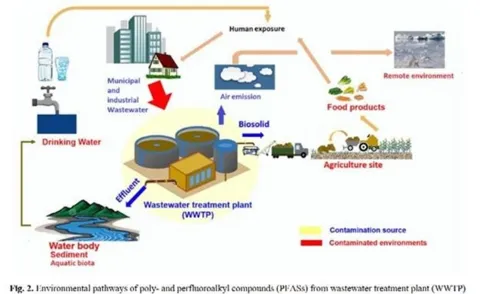
Typical sewage treatment plants produce toxic sludge that, when spread on farms, fields, forests, and gardens can seriously impact human health, livestock, food crops, forage, water, and soil. Some states have adopted regulations to try to correct this but the federal government does little. EPA actually promotes these dangerous practices. When ocean dumping of sewage was banned under the Clean Water Act over 30 years ago, the EPA began promoting the land application of sewage wastes. They are often given away free as "beneficial" soil amendments to farmers, landscapers and homeowners without disclosure of all of the harmful contaminants they contain. Millions of tons have now been spread on agricultural and forest lands. Toxic PFAS chemicals in the biosolids have contaminated crops and animals.
The claim that sewage is "treated" in a treatment plant does not mean the waste becomes "clean" or "safe". These plants can receive thousands of contaminants a day - mixtures of toxic chemicals such as PFAS, dioxins, flame retardants, drug-resistant pathogens, pharmaceuticals, toxic metals and microplastics. The plant separates sewage solids from the liquid waste stream. Though the solids are placed in digesters where microbes feed on some contaminants, few are destroyed by this "treatment". Some contaminants actually transform into more toxic forms.
Solid sewage wastes and liquid effluent contain similar contaminants. Effluent is released into rivers or groundwater or applied to farms, parks, or forests where it can seep into surface and ground water - waters often used as drinking water sources.
To keep PFAS from entering sewage and effluent EPA recommends that sewage plants require industrial dischargers to test for and then regulate releases of PFAS to the sewer system:
https://www.epa.gov/newsreleases/epa-issues-guidance-states-reduce-harmful-pfas-pollution
Several states have already demonstrated the benefits of leveraging their state administered NPDES permit programs to identify and reduce sources of PFAS before these forever chemicals enter treatment facilities and surface waters
“The memo recommends that states use the most current sampling and analysis methods in their NPDES programs to identify known or suspected sources of PFAS and to take actions using their pretreatment and permitting authorities, such as imposing technology-based limits on sources of PFAS discharges. The memo will also help the Agency obtain comprehensive information through monitoring on the sources and quantities of PFAS discharges, informing other EPA efforts to address PFAS. Several states have already demonstrated the benefits of leveraging their state administered NPDES permit programs to identify and reduce sources of PFAS before these forever chemicals enter treatment facilities and surface waters. Michigan, for example, is partnering with municipal wastewater treatment facilities to develop monitoring approaches to help identify upstream sources of PFAS. The state has been able to leverage that monitoring information to work with industries, such as electroplating companies, to substantially reduce PFAS discharges. North Carolina has also successfully leveraged its NPDES program to develop facility-specific, technology-based effluent limits for known industrial dischargers of PFAS. “