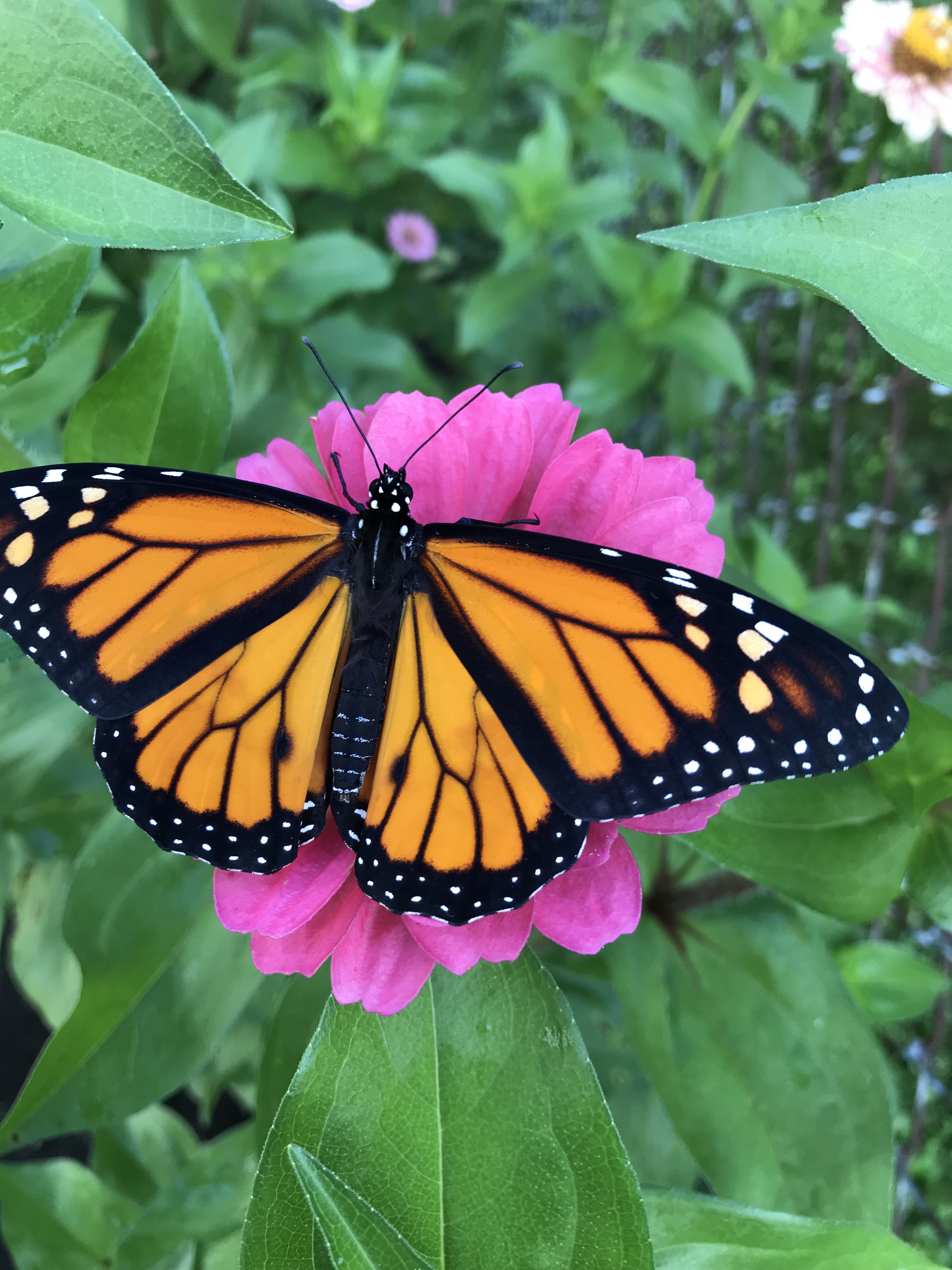
The NWCC (Northwest Cook County) Sierra Club is currently forming a group in conjunction with the Illinois Chapter’s Monarch/Pollinator team to support the monarch/pollinator movement. Although the monarch butterfly was chosen as the symbol of our campaign, we recognize that it is one of many insects that are in trouble from loss of habitat and pesticides.
CAMPAIGN MISSION:
1. Support the movement across Illinois to stop the decline of monarchs and other pollinators by supporting policies and practices designed to protect and increase habitat for monarchs and other pollinators.
2. Support policies and practices that protect monarchs/pollinators from other risks, such as pesticides.
3. Build Group capacity The Illinios Chapter has established objectives, as well as several objectives that the NWCC team can select from.
The objectives fall under the headings of Legislative and Policy Initiatives and Outreach and Education.
If you are interested in being a part of our team to support this campaign, please contact NWCCSierraClub@gmail.com.
NATIVE PLANTS MONARCHS LOVE
Here are some of their favorite foods. Monarchs love common milkweed.
Monarchs choose common milkweed (Asclepias syriaca) because it is one of the sole host plants their caterpillars can eat to survive.
Monarchs can actually lay their eggs on over 70 different species of milkweed across North America.
Other common host plants for larvae include these on this chart.
Common Milkweed (Asclepias syriaca) The most widely available and used by monarchs in the Midwest. It is incredibly hardy and thrives in full sun and various soil types.
Swamp Milkweed (Asclepias incarnata) A favorite for egg-laying, it features fragrant rose-pink flowers. It is ideal for moist or wet soils and works in rain gardens.
Butterfly Weed (Asclepias tuberosa) Known for its vibrant orange flowers, it prefers dry, sunny locations and is a smaller, well-behaved choice for formal gardens.
Prairie Milkweed (Asclepias sullivantii) Similiar to common milkweed but less aggressive and better suited for garden settings with rich, loamy soil.
Polk Milkweed (Asclepias exaltata) A unique choice for partially shaded or woodland gardens, featuring drooping white flowers.
Whorled Milkweed (Asclepias verticillata) Features thin, needle-like leaves and late-season white blooms, making it great for extending the breeding season.
The point is that monarchs need a plant in the Asclepias genus to lay their eggs on. Nothing else will do.
Milkweed leaves provide all the essential nourishment monarch caterpillars need to grow at an extraordinary rate. Monarch caterpillars are milkweed specialists. The caterpillars eat only milkweed. They voraciously consume the leaves, but they will also eat the stems, flowers, and even seed pods.
In just 10 to 14 days, a monarch caterpillar increases its body mass by nearly 2,000 to 2,700 times its original hatching weight. To achieve this growth, a single caterpillar typically consumes roughly 200 times its own weight in milkweed leaves. This constant gorging provides the energy and nutrients required for the larva to progress through five distinct growth stages, known as instars, before forming a chrysalis.
First Instar (2-6 mm): Newly hatched and almost translucent with a solid black head. It has tiny, barely visible "nubbies" instead of long filaments
Second Instar (6-9 mm): The signature yellow, black, and white stripes appear. The front filaments are visible but shorter than the length of the head.
Third Instar (10-14 mm): The stripes become more distinct. The front filaments are now roughly the same length as the head.
Fourth Instar (13-25 mm): The caterpillar grows significantly larger. The front filaments extend well beyond the head and may have a slight bend.
Fifth Instar (25-48 mm): The final larval stage. The filaments are much longer than the head, often appearing in an "S" shape or touching the ground. At the end of this stage, it will find a spot to spin a silk pad and hang in a "J" shape to pupate.
Beyond being a necessary food source and habitat for eggs, many milkweeds provide a powerful biological defense for the next generation. Many milkweeds contain toxic compounds called cardenolides (cardiac glycosides). Monarch caterpillars are immune to these toxins. They ingest and store them in their bodies, making both the larvae and the future adult butterflies poisonous and unpalatable to predators like birds.
Beyond being a necessary food source and habitat for eggs, many milkweeds provide a powerful biological defense for the next generation. Many milkweeds contain toxic compounds called cardenolides (cardiac glycosides). Monarch caterpillars are immune to these toxins. They ingest and store them in their bodies, making both the larvae and the future adult butterflies poisonous and unpalatable to predators like birds.
Once adults, monarchs will also get nutrition from other plants including these which are arranged in the order they bloom. The idea is to have monarch food ready from April to October.
Nectar Plants (For Adult Butterflies)
Wild Blue Phlox (Blooms April-June)
Golden Alexanders (Blooms May - June)
Wild Lupine (Blooms May-June)
Golden Alexanders (Blooms May - June)
Wild Lupine (Blooms May-June)
Purple Coneflower (Blooms June - August)
Black-eyed Susan (Blooms June-September)
Wild Bergamot (Blooms July-August)
Joe Pye Weed (Blooms July-September)
Blazing Star (Blooms July-September)
Ironweeds (Blooms July-September)
Goldenrods (Blooms August-October)
Asters (Blooms August-October)
To help support these butterflies, you can find regional seeds through the Xerces Society Milkweed Seed Finder or purchase native varieties from specialized nurseries.
Getting Your Milkweed Seeds Started
Milkweed seeds require cold stratification before planting, most types for at least 60 days. There are many ways to accomplish this but we are going to try what is trending right now, recycling plastic milk jugs/containers. Seeing as milk jugs were something we did not have on hand, using cat litter plastic containers was the next choice for our experiment. You want to use a clear or opaque plastic. If you use an opaque one like we did, you need to put in some extra drainage holes in the bottom. Toss the lids in the recycling bin, you won't need them as you want water to enter the container when it rains. Here is what you do:
#1 Gather the materials you will need.
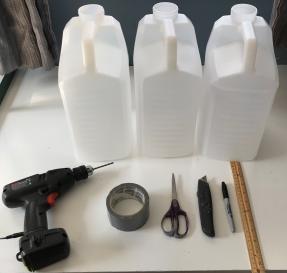
#2 Drill, or puncture, the drainage holes in the bottom.
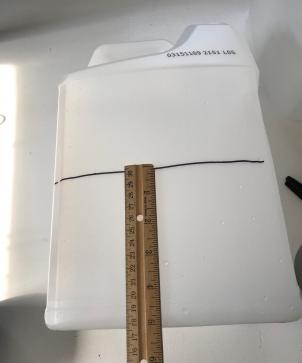
#3 Using the marker, make your cutting mark about 5 inches from the bottom.
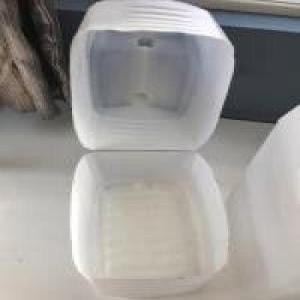
#4 Make the cut around 3 sides of the container, leaving one side uncut to form a "hinge". We used the box cutter for this.
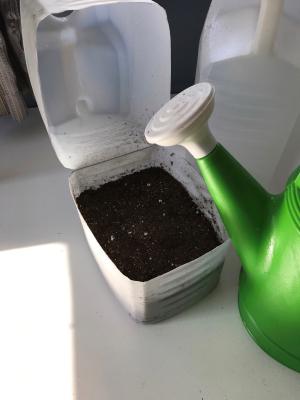
#5 Add about 4 inches of seed starter soil. DO NOT use the kind with the moisture control added to it. Put the container where it can drain and moisten the soil, being careful not to water forcefully which would compact the soil. Using a watering can or spray nozzle at your sink is your best bet.
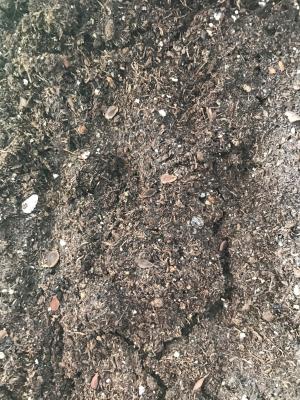
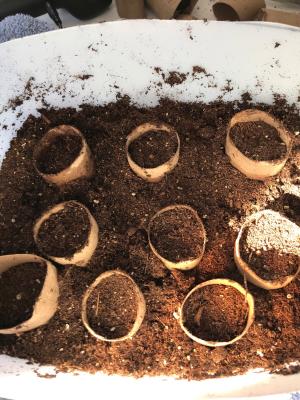
#6 Sprinkle your seeds and gently press onto the dirt. Another method is to cut paper towel or wrapping paper tubing into about 4 1/2 inch pieces and press it all the way to the bottom of the container. Put a couple seeds in each paper roll section. The idea here is that the plants will be easier to extract when it is time to plant. We are trying both methods. After you have placed the seed in the dirt put a layer of more dirt on top, no more than 1/4 inch.
#7 Now it is time to seal it up! Close the lid, which is the upper half of the container, and place the duct tape completely around the container, being careful to create a tight seal around the cut that you made in the container. It is imperative that the tape completely seals the 3 cut sides. If you are planting more than one type of milkweed you will want to label the container with the name of the plant.
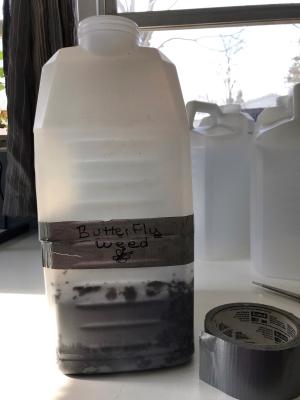
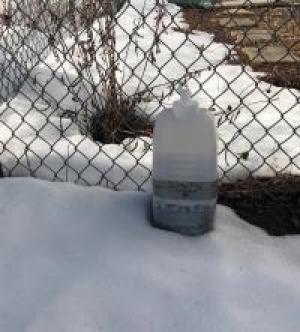
#8 Place your growing container outside where it will get some sun. Attaching it to a fence or pole is a good idea and just wait for Spring! We will be sure to let you know if it worked for us. Let us know if it worked for you.
Herbicide Drift and Impacts to Pollinators
The Illinois Monarch Team recently invited Robert Hirschfeld and Kim Erndt-Pitcher from Prairie Rivers Network for a presentation on herbicide drift and impacts to pollinators. PRN recently released a report Hidden in Plain Sight , that documents how PRN has been monitoring symptoms of herbicide drift damage to non-target broadleaf plants and trees across rural and urban Illinois.
The damage is startling and pervasive, as the drift from herbicides like 2,4-D and dicamba causes long term damage to trees and other plants sometimes miles away from where it has been sprayed. Damaged trees or other flowering plants are then not available as a food source providing nectar and pollen and serving as hosts for pollinators. Take action here.
This link will take you to a recording of the session.
(Passcode is wu$dc5Ec)