Resisting the Whitewashing of Parks
This past month, Colorado Sierra Club Chapter staff and outing leaders Becky Dickson, Cliff Zimmerman, and Steve Welter hosted a series of events focused on two national historic sites in eastern Colorado, the Sand Creek Massacre and Amache National Historic Sites. These outings took volunteers through some of the difficult chapters of American history, now caught in a broader conflict over how our nation's past is presented on public lands. Attendees were joined by Gerry Seavo James, former Deputy Campaign Director of the Sierra Club's Outdoors for All campaign and now co-director of The Inheritance, who filmed the outings for a documentary set to explore the struggle over history and memory in the USA’s national parks and public lands.

The outings came amid the Trump administration’s attempts to sanitize important chapters of our nation’s history. Trump’s Executive Order 14253 and Doug Burgum’s Interior Secretarial Interior Order 3431: Restoring Truth and Sanity to American History led to the removal and/or review of national parks’ materials that address topics including displacement of indigenous peoples and Japanese internment. These executive orders threaten one of the most fundamental purposes of our shared national parks and public lands: to serve as public classrooms entrusted with presenting history transparently, free from political pressure.
In James’ previous role with the Sierra Club, his work to challenge those orders included providing colleagues and partners across the country with resources to host outings and bring people directly into impacted places to participate in efforts to save them. The Colorado Chapter’s outings put that support and approach into practice.
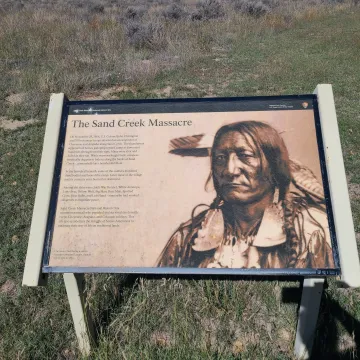
Public Lands as Public Classrooms
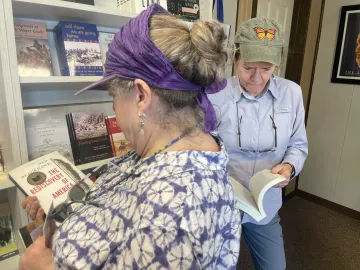
Through museum exhibits, guided tours, and site visits, participants learned full truths of these sites’ past events which included lesser-taught histories to many people, including those with longtime roots in Colorado.
“Our national parks, monuments, and memorials are not just about pretty places and pristine areas: they are about our history…keeping a full history of ourselves helps us make sense of our present. If we erase the ugly parts of our history, how will we process our current wars, the ongoing massive injustices?” said Becky Dickson.
It was especially meaningful to Dickson to host these educational events as her ancestors began homesteading northeast of the Sand Creek Massacre National Historic Site (SCMNHS) 24 years after the atrocities occurred. She feels a personal obligation, attributed in large part to her family’s proximity in time and place to the events, “to try to educate others…and remind ourselves of the grim behavior we are capable of, and try to be our better selves.”
The Outings Experience
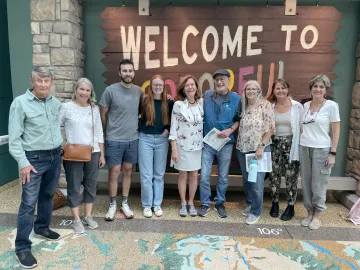
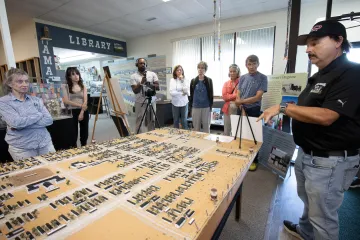
In September, attendees visited the History Colorado Center to see exhibits including, “The Sand Creek Massacre: The Betrayal that Changed Cheyenne and Arapaho People Forever.” This served as an educational primer on the sites’ significance to Colorado history before our outing to their physical locations a couple weeks later.
Over Indigenous Peoples’ Day weekend, the group did a two-day visit to the respective Sand Creek Massacre and Amache National Historic Sites in the eastern part of the state. We honored the resilience of the surviving members of the Cheyenne and Arapaho tribes, and of the Japanese American community impacted by the massacre and internment at the respective sites.
"The historic significance of the events that took place cannot be emphasized enough and should never be forgotten," said outing participant Donna Urban.

Sharing Responsibility for Retaining History
The multigenerational, multiracial efforts, and the unique tribal partnerships with the National Parks Service curate, carefully maintain, and thoughtfully share records of the stories held by our public lands and our fellow Americans who lived and died on them.
For example John Hopper, the German-American founder of the Amache Preservation Society interviews Japanese American descendants of interment and engages his majority Hispanic students in making signage for donated museum items that give life to the stories. Staff also carry, in their pockets, an arrowhead given to them by a Native descendant of a family impacted by the Sand Creek massacre, with a message to continue telling the full truths of the site in face of political winds: “Stick with the POINT.”
Safekeeping Natural Heritage
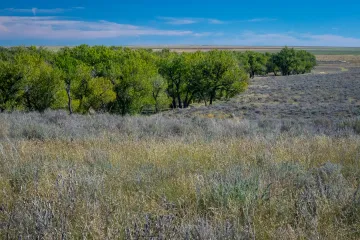
Our park system protects our wildlands in vital ways; in addition to memorializing the area, designation of Sand Creek as a national historic site in the year 2000 meant resources were made available to steward the land. Cheyenne and Arapaho tribe members worked with the federal government and archaeologists to identify the massacre site (some of which had since been turned into a golf course) and to establish the area as a national historic site. Thus began the task of restoring the flora to what it was ~160 years ago.
As monarch butterflies floated over our heads, park staff told us how memorializing the site has benefitted the butterflies' ancient migration paths to Mexico, as well as other animals returning to the land. “There was a pall hanging over the land; birds and animals were scarcely seen… But, this seems to have changed now…With the fairly recent formation of the park, and return of Native Americans to the site performing ceremonies, the land is beginning to heal.”
Blog Contributors
Alexis Schwartz
Becky Dickson
Cliff Zimmerman
Donna Urban
Gerry Seavo James
Photo/Video Contributors
Alexis Schwartz
Anthony L.
Gary Sprung
Gerry Seavo James