If you are looking for a way to make a difference in your world but are not sure where to start, may we suggest volunteering at a local Weed Wrangle? If you haven't heard already, Weed Wrangles are organized events where volunteer teams remove invasive plant species from natural areas to allow native species that have been pushed out to return. Let me give a very quick lowdown on invasive species:
Invasive plant species is a hot topic in the environmental world today, but they have been in Indiana since the first Europeans brought them 200 centuries ago. Two highly successful invasive plant species in North America today support a multi-billion dollar industry: lawn grass (desirable by most), and dandelions (undesirable by most). In general people wouldn’t think of these two plants as invasive species because it is almost impossible to imagine our landscape without them. The invasives that attract the most attention in the environmental world today, however, are those that have entered natural areas, such as parks and roadsides, the removal of which requires the physical effort of volunteers. This is where you come in! Indiana is leading the country in the public team effort to remove invasive species, and your volunteer effort is needed.
Please read this story of one diehard Columbus community volunteer and educator who shares her invasive species remediation story here.
Jennifer Ehara
Winding Waters Group Executive Committee.
Meet Buffy Dunham
My name is Buffy Dunham. My career started in social work and religion studies, but eventually evolved to environmental advocacy, in particular the study of native plant species and the removal of the invasive species that threatened them.
My native plant journey started at the Morton Arboretum in St. Charles, Illinois, where I got a job as a naturalist guide. The education I received there about native species and ecology started me on the path to where I am now. While at Morton Arboretum I also became a steward for Horlock Hill Prairie, and the head of propagation at the Natural Garden, one of the earliest plant nurseries growing native plants in the Chicago and Midwest region. I gained enough experience in these positions that I was later invited to be an instructor for native plant propagation at Morton Arboretum.
My husband and I moved to Columbus in 2000 to a house adjacent to Noblitt Park. At the time I was employed at Indiana Dunes State Park as lead in their Fire Ecology Program conducting vegetation surveys to monitor the effects of wildland/prescribed fire for 20 years. During my time at Indiana Dunes State Park, I also enrolled in the SCC Invasive Species Management Program certification program. I spent countless hours travelling between the Dunes and Columbus, but my certification in this program was worth the effort.
In those early years in Columbus, I would walk the People Trail in Noblitt Park through Mill Race Park, and was initially delighted in the native plants. Over the years I became saddened and distraught as I noticed invasive species increasing while the native plant presence decreased, and my beloved wildlife seemed to diminish. I was happy to notice, however, that someone was doing a little invasive control. I was never able to see the people doing the work but later found out it was Dennis Tibbetts and Rebecca Lorenz from the Sierra Club Winding Waters Group who had been freeing trees from wintercreeper. It was later that I could make a connection with Dawn Slack, who was actively raising awareness of invasive species in Indiana, and I was connected with the Winding Waters Group in Columbus. After about a year, we founded the Blazing Stars CISMA (Cooperative Invasive Species Management Area) in Bartholomew County in 2021.
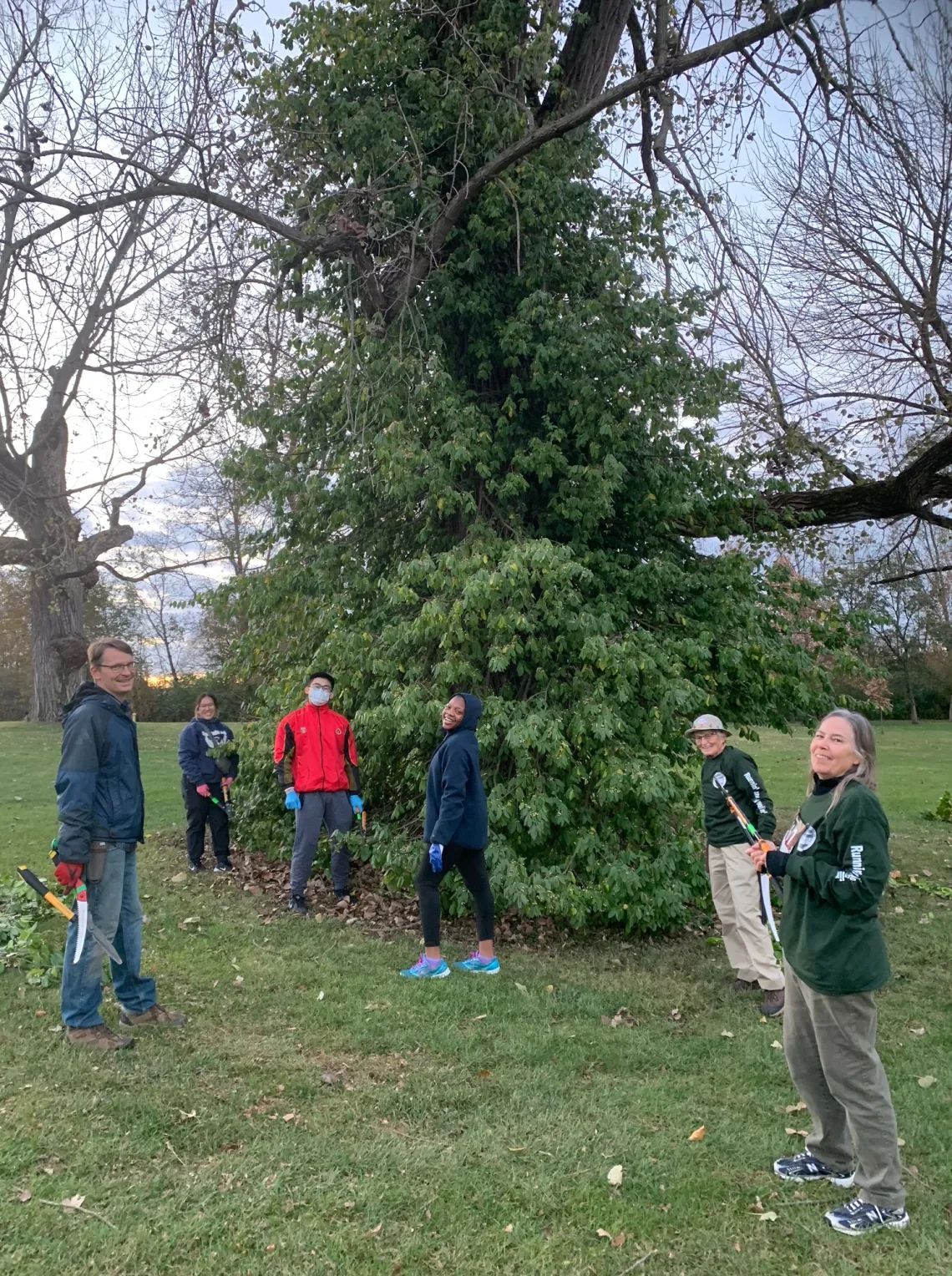
Initially the Blazing Stars group was conducting Weed Wrangles with the main mission to raise awareness and educate the public as to the impact of invasive plants and how to control them. Weed Wrangles were held throughout the county, and these events have changed the look of our city and county parks by allowing for the return of native plant species to areas formerly occupied by invasives. The removal of the large woody invasives created a clearly visible difference in the work area, giving much satisfaction to volunteers from the public. We have also had multiple students and student athletic teams join us in our work, and are thrilled to have reached the younger generation with our message. The United Way offers work teams every year as well, spreading the word across the community.
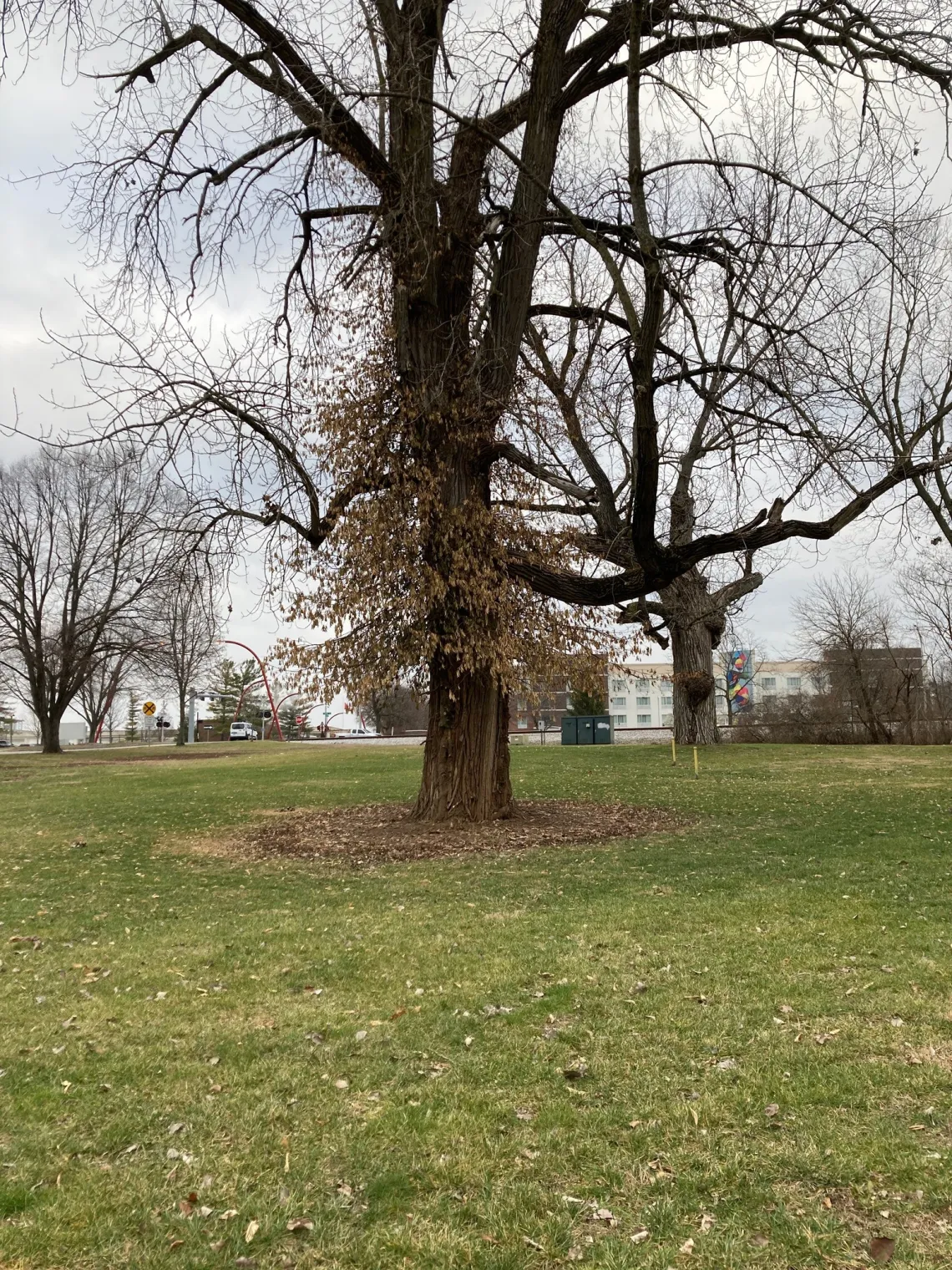
While early CISMA Weed Wrangles had a long-term return protocol, they did not yet have the goal of focused restoration of a specific area. This changed at a Winding Waters Sierra Club gathering in 2022, when interesting conversation led to action, a hallmark of the Winding Waters Group folks. As a result, the Blazing Stars birthed the Noblitt-Mill Race Strike Team, supported by Winding Waters members as well as others in the community.
The Strike Team we created is a group of dedicated and trained volunteers who work on invasive removal tasks in specific areas toward the goal of restoration. I took on the lead role in the Strike Team, and with the help of many, we have been making a visible and impressive difference in Noblitt Park and Mill Race Park.
My Call for Action:
Most of the work of the Noblitt-Mill Race Strike Team occurs in winter, beginning now through late March, and we would love help to complete the Noblitt target area. My hope is that the Noblitt Park Weed Wrangle and Blazing Stars Strike Team work will be a demonstration to the greater public and city leaders of what can be accomplished by returning the important ecological functions of our parks’ "wild” areas. I would like to change the standard assumption that natural areas are not "messy, unmowed" low quality areas, and seen by some as good spots for dumping trash, but as critical habitat for LIFE.
After my many years studying invasive plants and native habitats, and working in invasive remediation, I believe that our parks are not yet at the tipping point at which they cannot be restored. As invasive plant species are removed, I delight in seeing native plant coverage returning. One of the additional benefits is more bird species; cute Carolina wrens, blue birds, and red shouldered hawks to name a few. Our parks, both here and in the rest of Indiana, could be even more ecologically diverse and beneficial if only we, the community and our leaders, realized the potential value. What my experience has shown me is that the web of life is real and we are all interdependent. I want to do as much as I can on my time on earth to make a difference and support this incredible web of life. Please join me. We need you!
Email buffdunham@aol.com or connect at bartholomewinvasives.com/join-us to be put on the Noblitt-Mill Race Strike Team or volunteer for a Weed Wrangle. Outside of Bartholomew County, you can find your local CISMA at sicim.info/cismas. Come learn, have fun, be active, and contribute to the survival of your community’s natural areas.