Read previous posts in this series: Part I: Web Searches and the Data Center
Part II: Powering a Data Center
In the first post of this blog series, I introduced what really happens during a web search, and how data centers play a role in that. In Part II here, I will explore what goes into the powering of a data center.
You have probably experienced the warmth that comes out from the bottom of your refrigerator, or the glow of heat coming from your child’s room radiating from their computer after a couple hours of gaming or a long homework session. Simple motors, such as in a refrigerator, create heat as they function, and have to expel that heat to protect the motor. Computers create heat in the chip processing area, and also have to expel that heat. Imagine the heat that might be produced by a data center with a gazillion times more processing power than your home computer. That’s a lot of heat. Because there has been very little evolution in cooling technology for decades, data centers cool their space the same way you cool your home, with air conditioning, fans, or coolant, and these methods require massive amounts of electricity and water.
Electricity and water needed by data centers have to come from somewhere. Indiana does not require data centers to create their own electricity or source their own water, so they must tap into existing power and water sources. As we all know well, electricity and water do not have infinite supply, are not easy to harness, and are not cheap to consume. Electricity has to be produced, while water has to be found and collected. Electricity can only be produced by consuming an energy source, and water can only be collected if it’s already there in the first place (other than atmospheric water harvesting, which isn’t happening in Indiana, yet). This means that a data center can only function by purchasing massive amounts of electricity and water sourced from the existing electric grid and water supply. (Whether Indiana has enough electricity in the grid and enough water in the ground to fulfill this need will be touched on in Part IV.)
So we now know that data centers must connect to the existing electric grid for their electric supply. There are many energy sources used around the world to make electricity, such as burning raw materials (coal, methane gas, diesel, biomass), solar, nuclear fission, hydropower, wind power, geothermal, etc. Each source produces electricity but also comes with baggage on the production and/or result end. The dirtiest source – coal – requires the mining and transport of the coal on the production end, and produces electricity as well as toxic coal ash in the ground, and poisonous fine particulate matter and CO2 in the air, on the result end. One of the cleanest electricity production methods – solar – has baggage on the cell production end, which requires mostly glass, but also plastic polymer, aluminum, silicon, copper, and other metals, and produces electricity with nothing on the result end other than power. Data centers are connected to the power grid, and unless they make their own energy, they use the electricity supplied to them, regardless of whether it's made by coal, nuclear, methane gas, or solar power. Clearly, this means that data centers that run on solar-supplied energy run “clean,” while those that run on coal power run “dirty.” In other words, the same data processing occurs everywhere, but with different environmental impact depending on the electricity source. Before researching for this blog, it occurred to me that if I use AI on my laptop at home, I would be making an impact on the environment in Indiana too, but I didn’t know what that was. Was my web search powered by coal (bad), or solar (good) power?
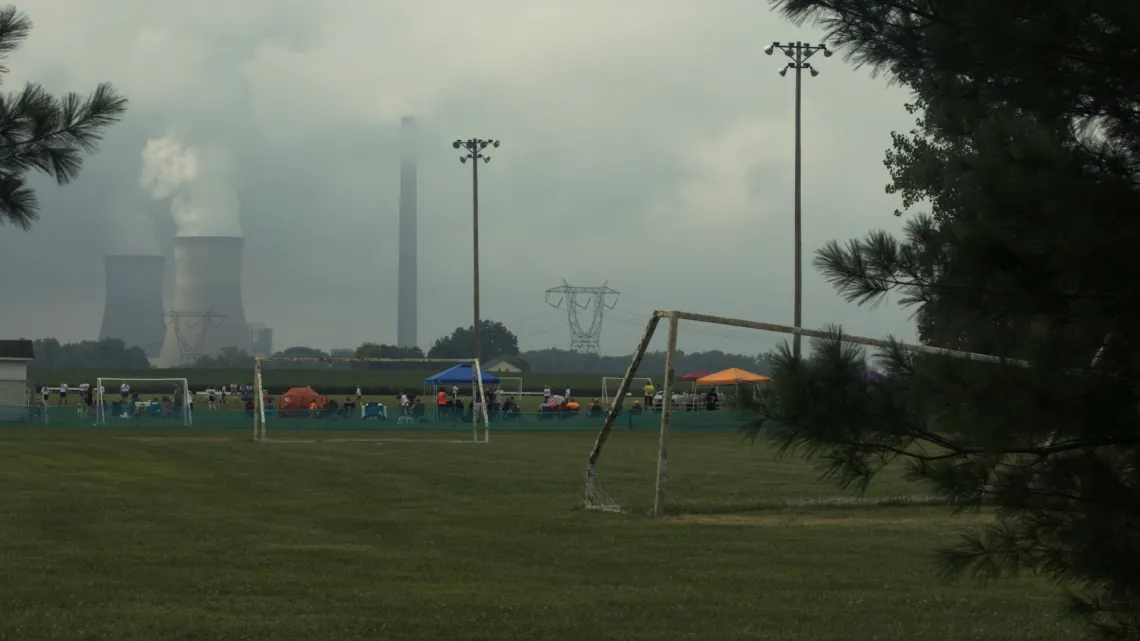
To answer this, I had to research the main energy sources used to make electricity in Indiana, and here are the numbers: Indiana’s energy production is roughly 85% fossil fuel and 15% renewable, one of lowest rates of renewable energy in the country. Simply put, in Indiana, roughly 85% of the energy used to produce data is made using fossil fuel, which means 85% of the time a Hoosier uses AI, they are burning fossil fuels to do so. If I use the internet, or do an AI-assisted search, that act is contributing to the burning of fossil fuels. A simple google search doesn’t feel so innocuous any more.
I now realize it also had not occurred to me that data centers use electricity in THREE phases: pre-build phase, construction phase, and operational phase. All aspects of pre-build require electricity, such as making the raw building elements needed to construct the center (concrete, steel, cables, cooling equipment, etc.), the computers, the chips, as well as the transport of these items to the building site. Next, electricity is needed to construct the center itself. Finally, electricity is needed to run the data center long term. It is essential to take all three stages into consideration when thinking about total power that a data center uses. The amount of electricity needed to power Indiana’s present and and future data centers will be touched on in Part IV of the blog. But you can already guess that it will be A LOT.
In the next post in the blog series, I will move on to researching the topic of water needed to support data centers. Look out for part 3 next week!
Jennifer Ehara
Winding Waters Group Executive Committee
and Hoosier Chapter Sierra Club Communications Team