After postponing once due to impending thunderstorms, the Winding Waters Spring hike in Selmier State Forest in North Vernon took place on April 3. Only 30 minutes from Columbus, Selmier State Forest was a first-time visit for all in the group. Wow, was it worth the wait!
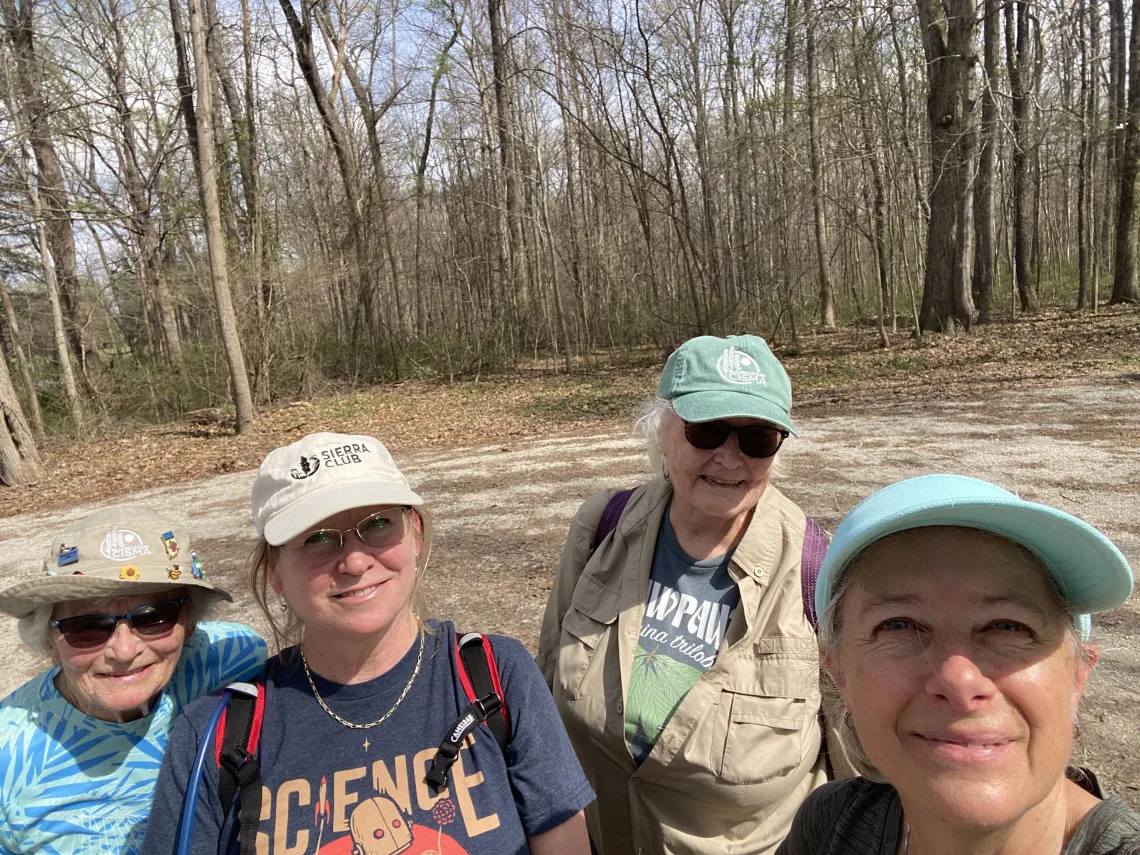
Selmier State Forest in the Norman Uplands became a classified forest nearly 100 years ago, and has been managed as a State Forest since 1944. The unassuming 350 acres across from a modern golf course did not disappoint! The “self-guided trail” left the parking lot and meandered through second-growth hardwood forest toward the Muscatatuck River along old country roads turned walking trails. The river runs along the eastern border of the forest, flowing past steep bouldered river banks and deeply cut caverns. Although a smooth and easy hike, there were elevation changes as the trail led down toward the river.
Winding Waters Group hikers spent over 2 ½ hours walking a mere 2 miles, being continually distracted with amazing views and countless wildflowers blooming at peak season. Although the main attraction was supposed to be the rare native Eastern hemlock, the “hike” ended up being a wildflower ID “crawl.” Many wildflowers were unknown to the group, such as false mermaid, spreading chervil, two-leaved toothwort (endemic and endangered), beaked cornsalad (no joke!), lyreleaf sage, and Tennessee starwort.
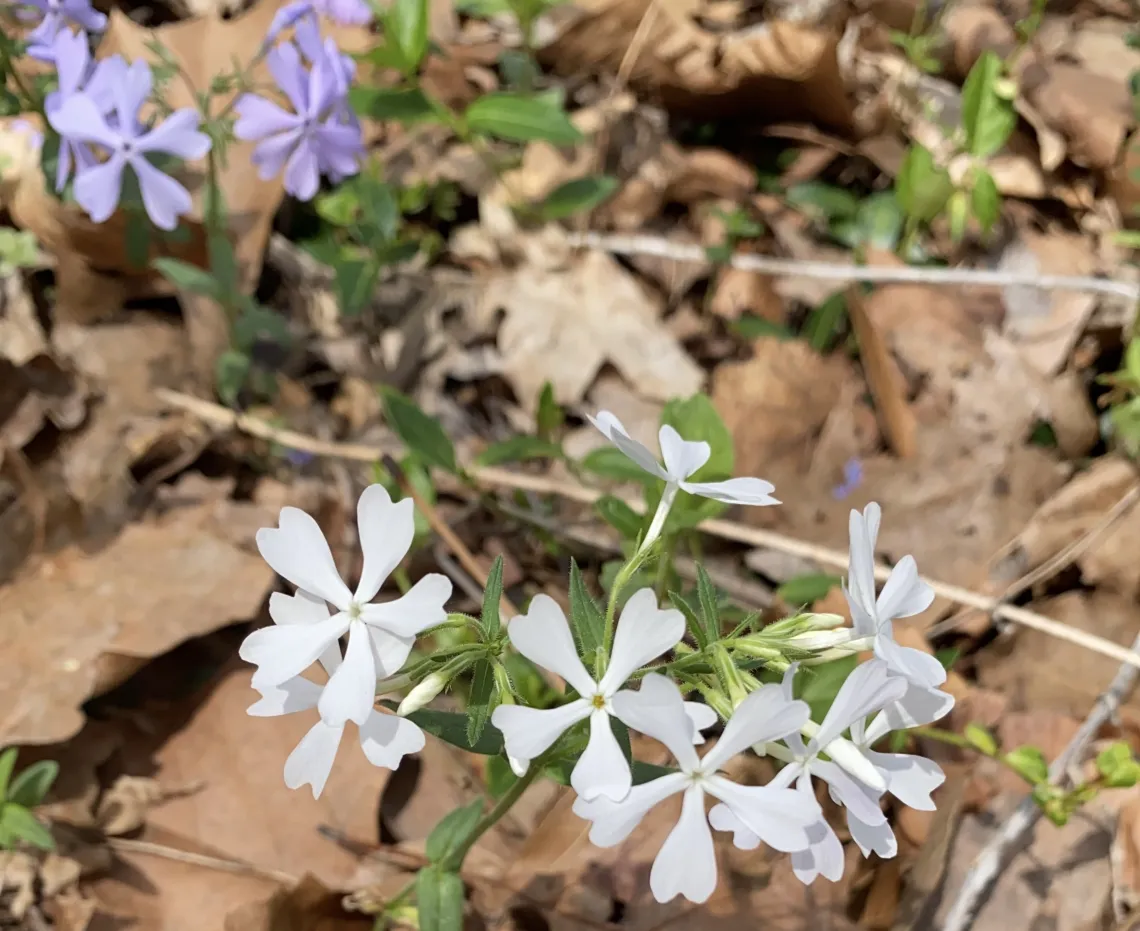
The group spotted 4 color iterations of phlox (purple, blue, pink, and white), 5 color iterations of violet (purple, striped purple, yellow, white, and white striped), 4 color iterations of Virginia bluebells (purple, pink, blue, and white), and 3 color iterations of spring beauties (pink, purple, and white).
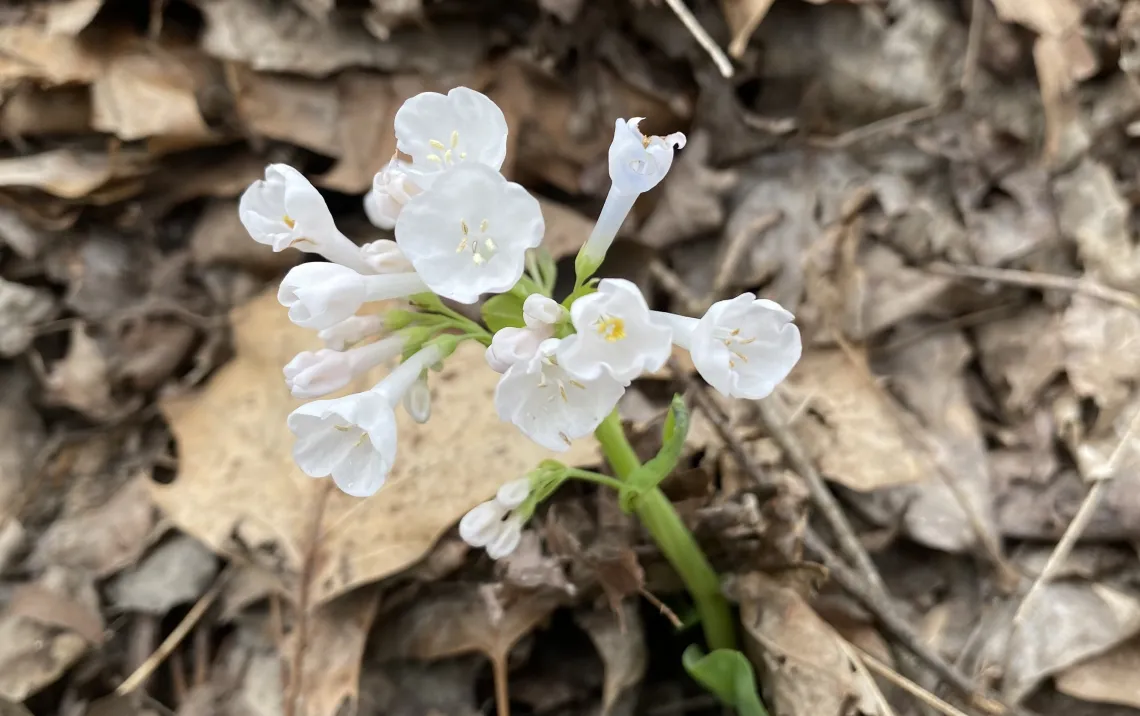
Some of the other exciting wildflower finds were fields of flowering wild ginger, 9’-tall trout lilies, 2 orchid varieties: crane fly orchid leaves and putty root leaves (too early for blooms), running strawberry bush, twin leaf, and flowering Ohio buckeye trees.
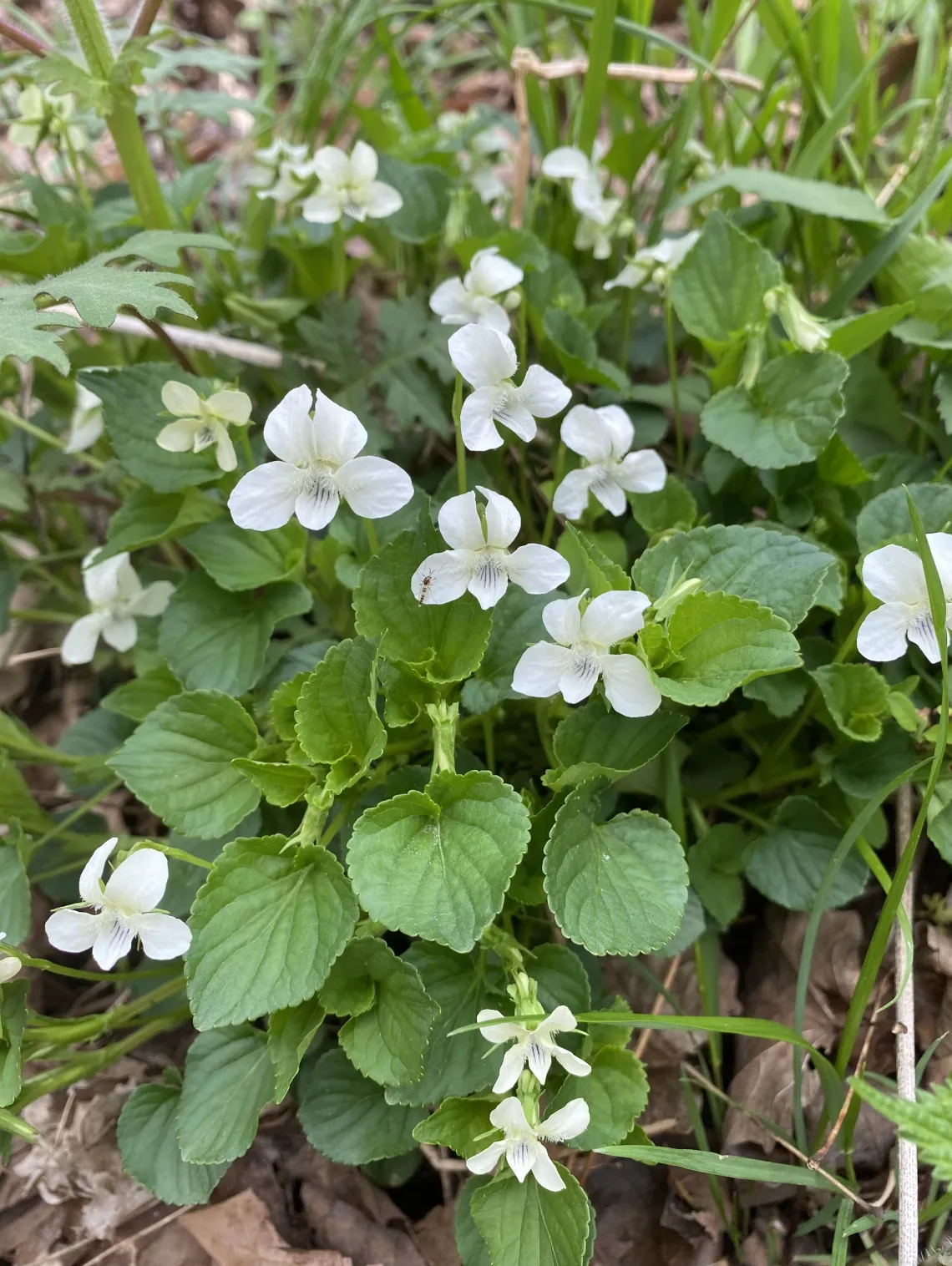
The half-way point took us through a pioneer cemetery, where we saw field pussytoes, spiderwort, more violets and spring beauties, and even a morel mushroom. Multiple butterfly species were sighted throughout the forest, from the tiniest white flitters to yellow swallowtail, which were likely visiting the blooming spicebush. All told, the group spotted more than 30 species of native plants and wildflowers, and all hikers felt it was the most prolific wildflower-spotting hike they had ever experienced.
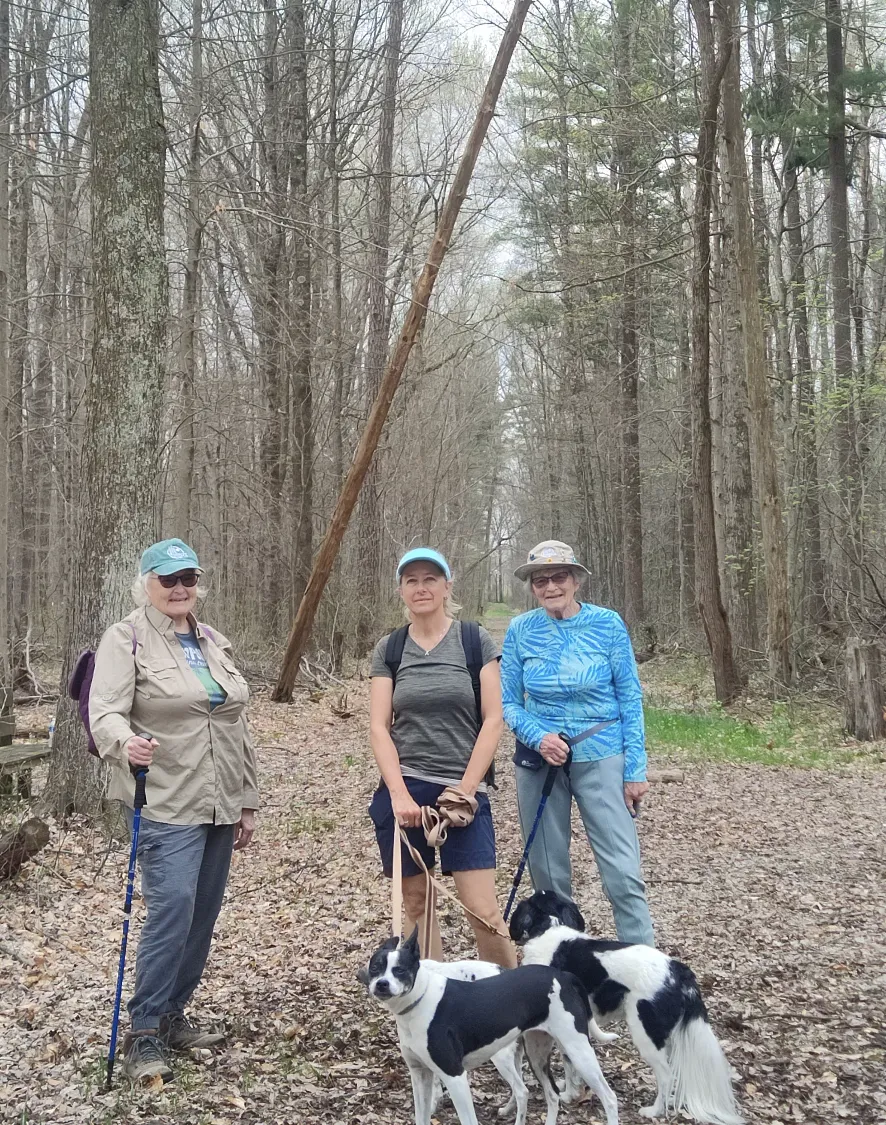
If you have never visited Selmier State Forest in North Vernon, Indiana, you won’t be disappointed!
Jennifer Ehara
Winding Waters Group Executive Committee
and Hoosier Chapter Sierra Club Communications Team