Twinkling night skies, fireworks, bubbly on the beach, campfires, and fireflies all sparkle magically and all epitomize July. Yet among these, fireflies are in a class of their own. While some people shirk at insects, fireflies enthrall kids and adults alike, bringing joy to a 9-year-old equally as to a 90-year-old. Surely it is the world’s most beloved insect, one that enthralls and attracts. When was the last time you caught a firefly, watching it walk between your fingers, feeling the light tickle as it escaped between your fingers, abdomen pulsing as it silently floated away? What other human-insect interaction brings such pure delight?
As a child in Illinois, we made firefly jars to keep the magical creatures in our bedrooms. (Disclaimer: I would encourage any reader to consider not capturing fireflies in jars as I did 50 years ago.) First, we would use a hammer and nail to poke holes in the lid of a pasta sauce or peanut butter jar. Then we would get some leaves or grass to put in the bottom of the jar, sprinkled with water from the tap. Next, we moved outside, just at dawn, to begin the hunt, carefully shaking caught fireflies into the jar without allowing those already trapped to escape. Holding such magic in our hands, watching the pulsating abdomen glow as it walked the entirety of the inside of the glass was the stuff of dreams. “I’m here, I’m beautiful, See me.”
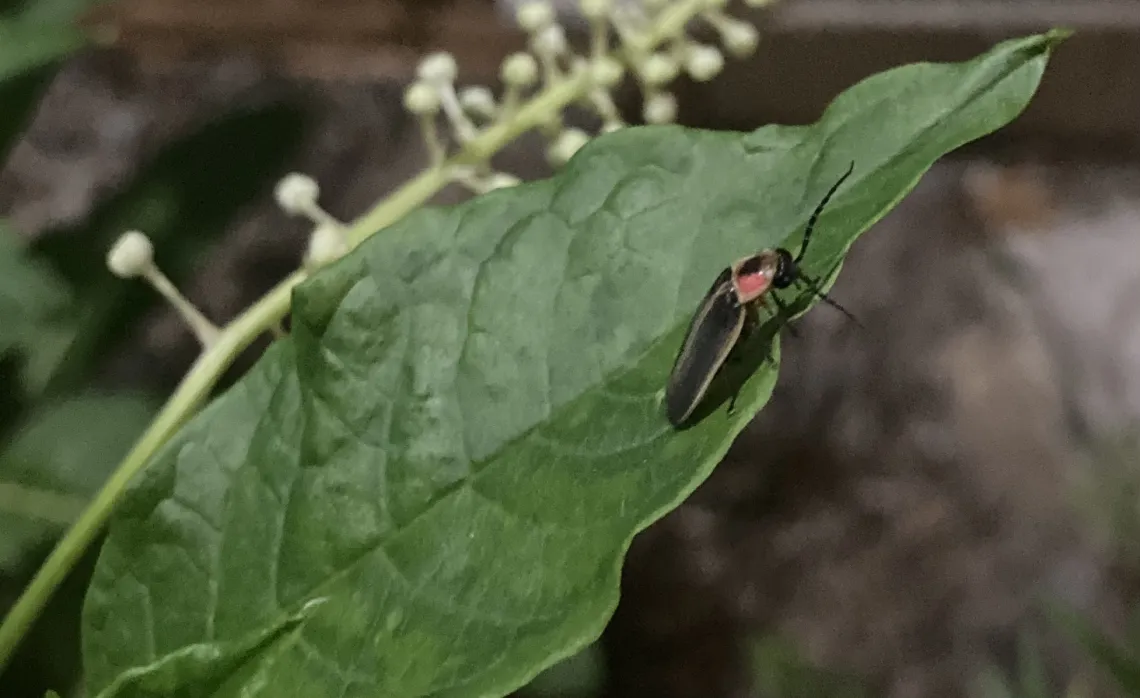
Fireflies are summer in Indiana. There are over 140 species in North America, with Indiana claiming more than 40 of these, a larger number than any surrounding state. Perhaps you can name 40 vegetables or 40 tree species or even 40 US states off the top of your head. But can you name even one firefly species? I could not, so I looked it up. The Say’s firefly, or angled candle firefly, is the Indiana state insect designated in 2018, and has a broad range from southern Canada to northern Mexico, and from the East Coast to Arizona. The most common firefly in Indiana is the Common Eastern firefly (please tell me you can remember that one!). Perhaps the rarest is the cypress firefly, only discovered by western science in the last decade, and found occasionally in pockets of undisturbed marshland where bald cypress generally grow. Beanblossom Bottoms, in Beanblossom Indiana, is home to the cypress firefly.
Tonight, on a steamy July evening that happens to be World Firefly Day (July 5), more fireflies are glowing than my eyes can count, like an optical illusion, endless sparks of magic all around me. Watching their show somehow affirms my sense of place. They belong here and I belong here in our shared space. Yet firefly numbers are dropping worldwide, and in the US, urban and rural areas alike are seeing declining numbers. In Japan, firefly numbers are so imperilled that resort areas with survivor populations promote firefly viewing package tours. Once-healthy populations across central Europe and the Mediterranean now mainly exist in isolated rural areas. What happened? Entomologists suggest that three factors contribute to global population decline: pesticides, habitat loss, and light pollution. The reader can likely explain why these three factors would contribute to population decline in fireflies, but perhaps has not yet considered her own role in that decline.
Pesticides, whether sprayed by the ton on farm crops or from a small hand-held sprayer in a homeowner’s yard, are designed to kill. A farmer does not intend to kill fireflies when she sprays for crop pests, just as a homeowner does not intend to kill fireflies when he fumigates his yard against mosquitoes. But insect poison is just that, and regardless of the intended target, all insects are impacted.
Habitat loss is a no-brainer to anyone that witnesses parking lots being paved, forests lost to wildfire, or urban sprawl. We all need housing, we enjoy how the expanded lanes on the highway ease our drive, and we know that we cannot stop wildfires.
Light pollution, or the loss of natural darkness due to artificial light, competes with a firefly’s whole reason for being. Blazing porch lights, street lamps, and even eco-friendly solar path lights all stunt a firefly’s ability to reproduce by brightening the naturally dark night. Night is no longer dark in much of the firefly’s natural range, likely interfering with reproduction. Unfortunately we have come to expect light at night, keeping our exterior house lights on at night to deter a break-in, driving under the safety of street lights on the way home from a late dinner, or delighting at the beauty of a glowing city from above when coming in to land.
How You Can Help
Firefly populations, in tandem with all insects worldwide, are in decline. Insects are an essential part of the food chain, having existed longer on this earth than dinosaurs or mammals. A decline in insect populations naturally affects all living things. The dear reader surely agrees that a decline in insect populations is bad and ought to be reversed. Easier said than done, but not impossible, so let’s start again.
Pesticides is one of the largest and strongest markets in the world. Farmers, homeowners, the US Forest Service, and the flower industry, to name just a few, buy into the belief that pesticides are necessary in modern life. You, however, do not need to buy into the lie. You have control of what you buy and what industries you support. The best way to help is to evaluate whether you use pesticides in your home or in your life, and if you do, find alternatives. Mosquito fogs can be replaced by citronella candles, conventional produce can be replaced by organic in your grocery cart if affordable, and the purchase of non-organic flowers can be avoided.
Habitat loss happens worldwide, and an individual undeniably cannot stop suburban sprawl, but one can preserve, create, and restore habitat. Preserve: fireflies lay their eggs on the ground in leaf litter. Collecting or mowing leaf litter automatically destroys any eggs that might be laid there, so leaving leaf litter to sit until spring allows insect eggs to overwinter and then hatch in spring. Create: habitat can be a balcony of native plant pots, or a corner of a manicured yard replaced with native plants. Habitat can be a grass lawn that is mowed less often or replaced with native sedges. Habitat can also be acres of mowed fields being restored to native grasses and wildflowers. Just think about it: nearly weekly, the lawnmower’s blades run the length of your entire lawn, not only cutting grass, but also chopping any creatures in the grass. Young fireflies and other insects don’t stand a chance against the lawnmower. Restore: habitat can be restored by participating in a Weed Wrangle to remove invasive plants. The kind reader could even consider supporting environmental groups such as the Hoosier Environmental Society, the Xerces Society, or a local CISMA. And of course please continue to buy native plants every spring from the Winding Waters Group native plant sale!
Light pollution One cannot ask the airport traffic control tower to turn off runway lights at night, or ask the city parks department to extinguish safety lights. But one can make small changes at home. Consider where you use exterior lights, and whether their usage can be reduced or eliminated. The less light around your home, the more inviting to fireflies.
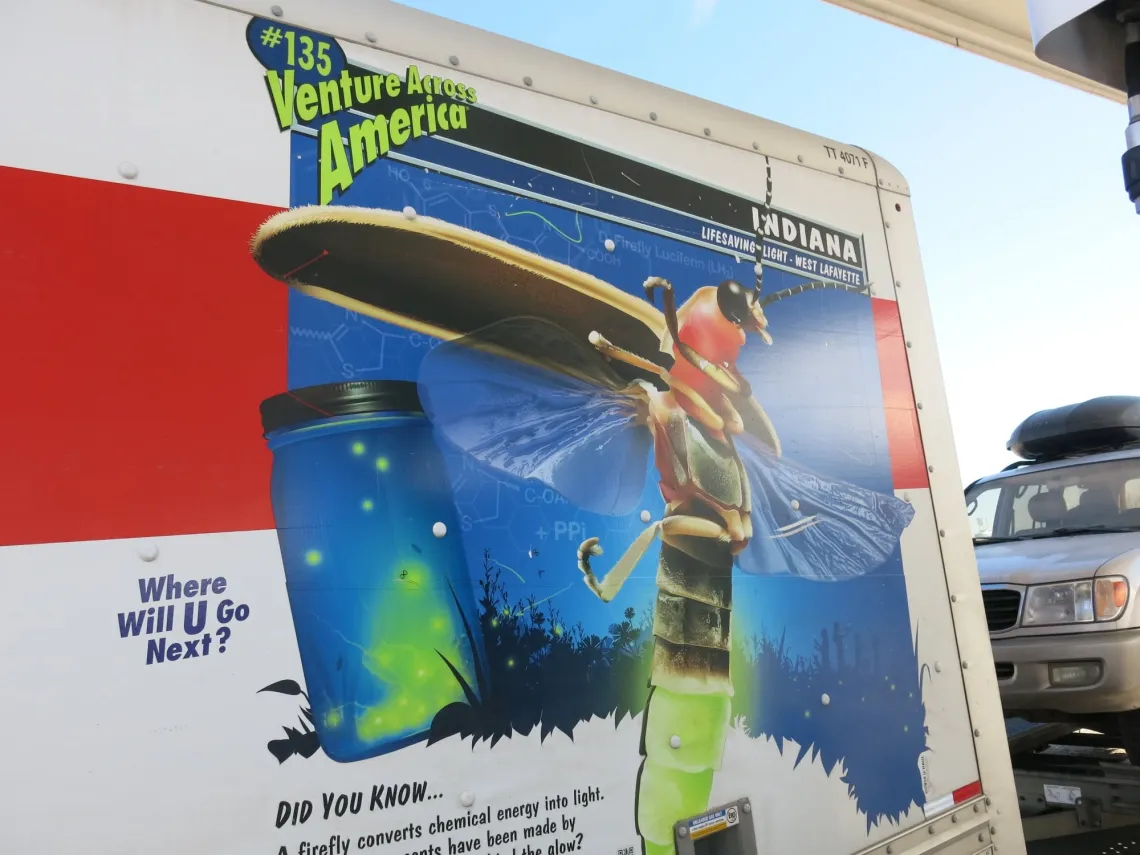
If you’re interested in learning more about fireflies and how you can help, the topic is hot this summer! There are dozens of non-profits dedicated to firefly habitat restoration and recovery. The Indianapolis Star also printed a firefly story on July 5th. The general tone of the non-profit websites I visited to research this blog was a hopeful one. It’s not too late to make changes and save fireflies. But a movement requires everyday people, and helping fireflies and other insects recover can only succeed if enough people commit to making needed change. Are you one of those people? Is leaving leaf litter until spring a change you are willing to make? Is turning part of your lawn into a native plant garden worth the effort? Can you consider non-toxic substitutes to insect control both in your house and your yard? Will you buy organic food products whenever you can afford it for the sake of insect health? For many people, these are big changes, which nonetheless have big rewards. You might find that by saving the fireflies, you save yourself. Helping fireflies to remain in our shared space, our shared world, is worth the effort.
Jennifer Ehara
Winding Waters Group Executive Committee
and Hoosier Chapter Sierra Club Communications Team