Bees and summer. Bees pollinate the flowers blooming all around us. Sweat bees land on our arms to collect our sweat (is that actually true though?). Bees visit our picnic spreads, attracted by the sweet smell of watermelon, jello cubes, and pop. Leave your pop out long enough and it becomes a bee trap. Much of the food on our plates every day would not be possible without bees for crop pollination. Bees make the honey that we all relish. Bees impart a sense of place. With bees buzzing my head I know summer is here and all is right in the world.
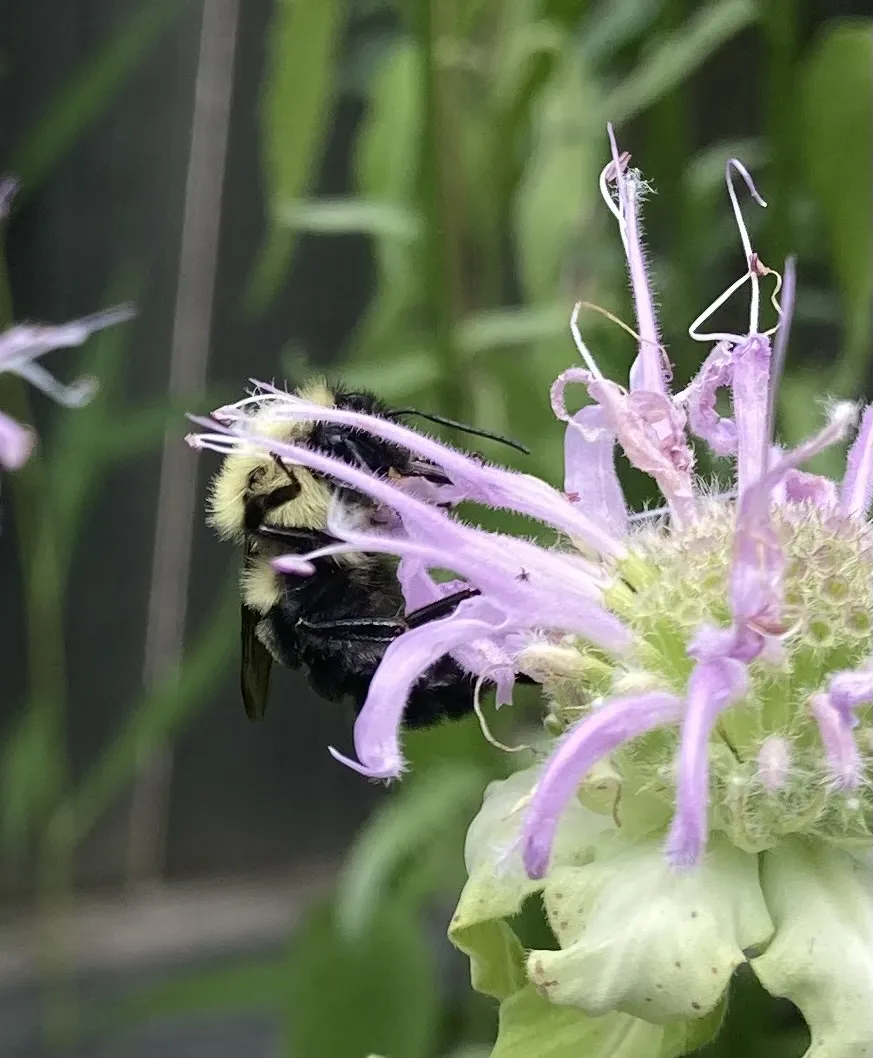
It would not be an exaggeration to say that bees may also impart a sense of dread. I remember vividly the first time my young child was stung by a bee on the bottom of her bare foot while playing kick the can. That memory includes such emotions as panic (is she allergic to bee stings?), helplessness (her pain was unbearable), and paranoia (will the other kids get stung too?). I justify my reaction by saying that I have never seen a movie scene in which a bee gently lands on a picnic blanket and the picnickers delight in its presence. “Oh look, honey, what a lovely bee that just joined us for lunch!”
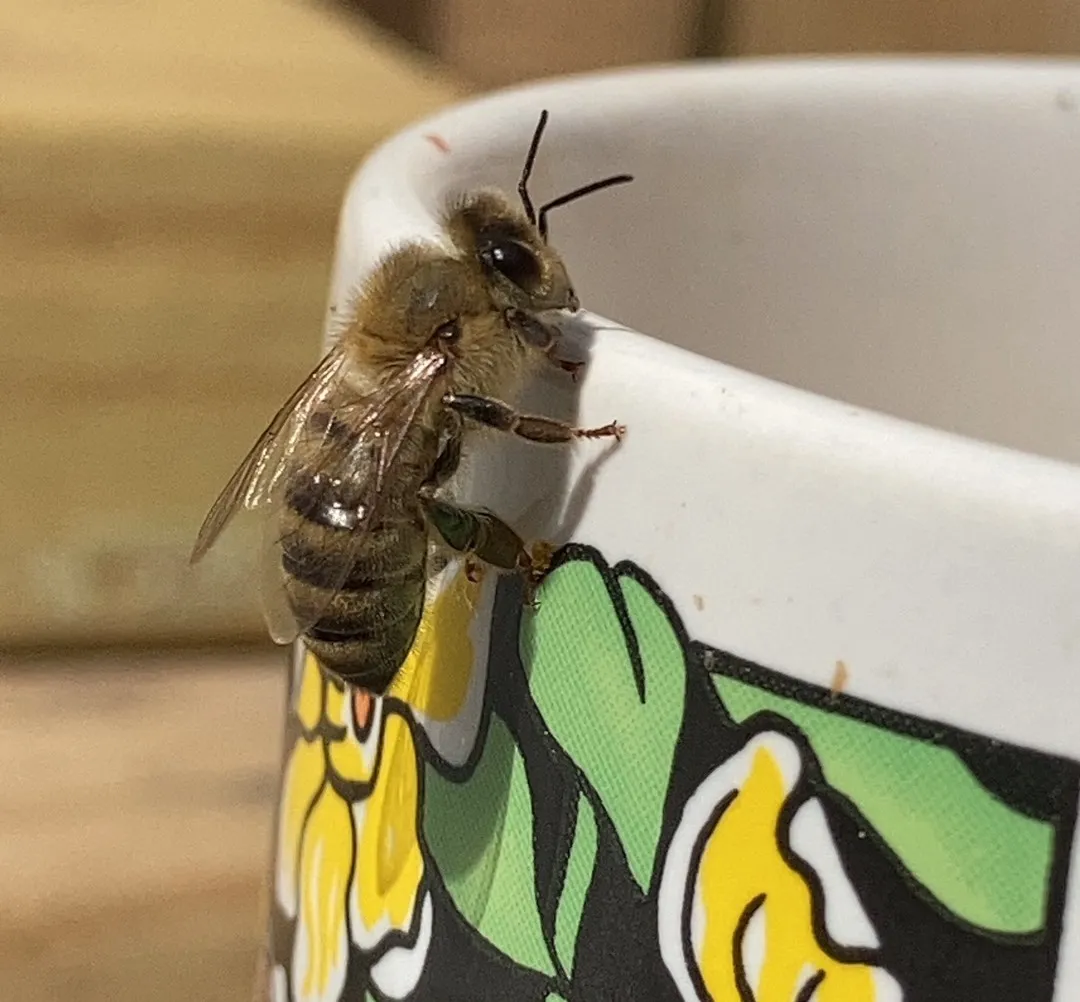
So now it’s time to un-mesh the blanket image of bees that seems to be prevalent today. What do you conjure in your mind when you hear the word “bee?” Maybe the domestic honey bee (yes, only one of two domesticated insects, can you think of the other one?), or a bumble bee, or maybe a sweat bee? There are, in fact, more than 400 species of bees just in Indiana, and perhaps 25,000 in the world, yet I would guess that the “bee” that most of us conjure is the domesticated honeybee, generally the Western honey bee in North America, which is not even native to the Western Hemisphere at all. There are in fact no native North American bees that make honey.
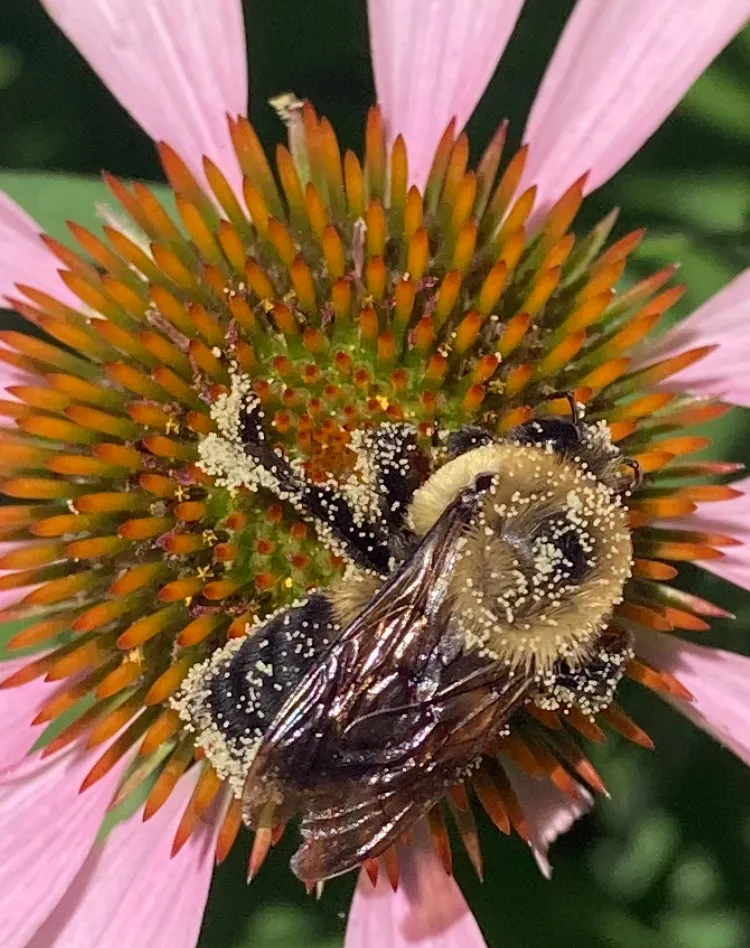
In reality, bees are as varied as any insect. Native bees are as small as a peppercorn or as large as your thumb. Most are solitary but some are social. Some are hairy and others are sleek. Some nest in the ground and others in a pile of leaves. Some have banded thoraxes and others are black or even neon green. Some native bees sting, but unlike honeybees, they have little reason to, and their stings are not as severe. And yes, sweat bees do land on you to collect your sweat, and yes they will sting you, but only if threatened. So if you pictured the honeybee, bumblebee, or sweat bee when you imagined what a bee is, the world of bees just grew from 3 species to over 400 native species of bees in Indiana alone.
Fun facts:
🐝 Carpenter bees burrow, but do not eat wood.
🐝 Most native bees collect pollen exclusively from particular flowers. That means they are born from their eggs around the same time their partner flowers are in bloom.
🐝 Bees evolved from wasps. Wasps are important pollinators, but they are carnivores and generally don’t collect pollen.
🐝 Bears in the Western Hemisphere did not evolve to eat honey, because there were no honey bees here before they were brought by colonists.
🐝 Many native bees look like flies.
🐝 Bees that buzz are making the sound to shake loose the pollen they are collecting.
Bees numbers in decline
I would guess that many people reading this blog know that bees are in peril. You have probably heard of colony collapse disorder, or that dwindling bee numbers are threatening much of American food production outside of corn and soybeans. That would be in relation to the domestic honey bee. Did you also know that native bee numbers are also dropping? We learned in Part 1 about fireflies and Part 2 about dragonflies that population numbers are dropping due to habitat loss and pesticides. But information is power, and we already know what we have to do to help bees.
Habitat loss Both native and domesticated bees need safe places to live. Most domesticated bees, which I won’t talk about this time, live in hives managed by humans. Native bees, however, live in the wild. Some are social, like bumble bees, and form colonies which nest together in underground burrows, or in the depths of a plant, or even in a hole in a tree. Most other North American bees are solitary and small, and nest in holes in the ground, hollow plant stems, under tree bark, or in deep grass and sedges, for example.
Pesticides There is no new information to share here differing from the first two blogs in the series. Pesticides kill insects as they’re designed to do.
How you can help
Habitat loss Unlike fireflies and dragonflies, native bee species are each so unique that there is no one habitat to protect. The most obvious efforts to protect bees is to preserve, create, and restore habitat, just as in protecting firefly and dragonfly habitat. Preserve: Wild bees nest or overwinter anywhere: under your home’s siding, in a hollow stem, in a hole in the ground, or under fallen leaves. Mowing less often would leave ground nesting bees in peace. Allowing fallen leaves to rest until spring would allow overwintering bees to survive the winter. Waiting to clean up your flower garden in the spring also provides overwintering habitat for bees. Create: Plant a pollinator garden in place of your usual annuals. You’ve heard me say that a few times! All bee species require pollen to feed themselves and their babies. Without flowering plants, bees cannot survive. (And without flowering plants getting pollinated, we could not survive.) This could be as simple as selecting native wildflowers for your garden or window boxes, or planting native flowering trees such as redbud or dogwood instead of big-box invasive trees. It could mean volunteering at a pollinator garden planting event, such as those that Winding Waters Group volunteers regularly attend. Restore: Turning a corner of your lawn, which is in fact species of invasive grasses and inedible to native insects, into a pollinator garden with plants native to Indiana not only beautifies your yard, it will also attract bees, butterflies, and hummingbirds and reduce the time you spend mowing! Or consider participating in a Blazing Stars Weed Wrangle. Blazing Stars invasive plant species removal in Mill Race Park and Noblitt Park has resulted in the freeing of the native plant seed bed. Only a year after invasive species are removed, a variety of native wildflowers naturally return to fill the area freed of invasives. More native birds and butterflies return to the natural area that has been restored by thousands of volunteer hours each year!
Pesticides As I already pointed out in Parts 1 and 2, pesticides are one of the largest and strongest markets in the world. Farmers, homeowners, the US Forest Service, and the flower industry, to name just a few, buy into the belief that pesticides are necessary in modern life. You, however, do not need to buy into the lie. You have control of what you buy and what industries you support. The best way to help is to evaluate whether you use pesticides in your home or in your life, and if you do, find alternatives. Mosquito fogs can be replaced by citronella candles, conventional produce can be replaced by organic in your grocery cart if affordable, and the purchase of non-organic flowers can be avoided. This part of the story doesn’t change regardless of the insect being profiled, but YOU can change.
One additional aspect that my blog subjects– fireflies, dragonflies, and bees– share is their place in the animal world food chain. Insects are an essential food source for birds, spiders, bats, snakes, skinks, fish, even other insects! As insect numbers decrease, that food source decreases for these predators. Those insects that happen to escape predators fall to the ground upon their death and decompose, nourishing the earth and all the living things in the soil that help them to decompose. Don’t think for a minute that with a problem so great as habitat loss and widespread pesticide use that your efforts would be futile. Every effort you, gentle reader, make toward protecting insect survival also protects the world in which you live.
In case you missed it, the Republic Newspaper recently reported a story about a rare bee spotted in Johnson County at Betley Woods at Glacier’s End nature preserve, highlighting that with concerted efforts, endangered species can survive and recover.
Jennifer Ehara
Winding Waters Group Executive Committee
and Hoosier Chapter Sierra Club Communications Team