Stefan Petranek is an image-based artist and associate professor of Photography and Intermedia at Herron School of Art & Design.
Stefan will have his laser etched archival inkjet print shown at the Sierra Club Hoosier Chapter exhibition, Environmental Justice in Indiana, in May and June at the Indiana Interchurch Center. More information on the exhibition can be found here.
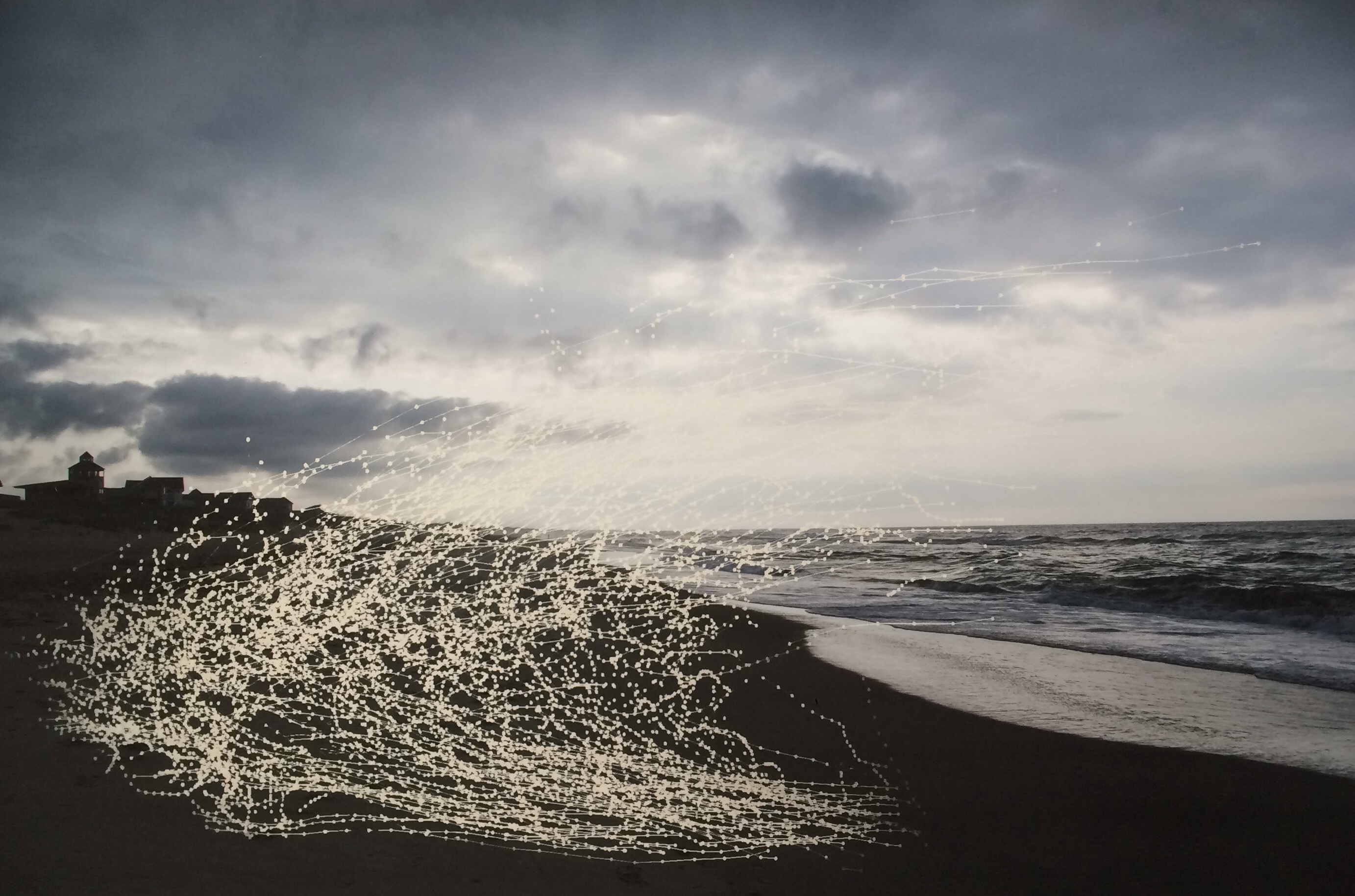

Stefan Petranek's Atlantic Hurricane Paths will be showing at the exhibition.
Q1: What is your biggest inspiration as an artist?
The cultural critic Marshall McLuhan once wrote: “I think of art, at its most significant, as a DEW line, a Distant Early Warning system that can always be relied on to tell the old culture what is beginning to happen to it.” As I age I feel a deeper imperative to create art that speaks directly to current social issues. This helps keep myself grounded, giving my artwork a connection to the human experience. It allows me to work toward something that feels larger than my individual expression.
Over a year ago, I watched Jeff Orlowski’s film Chasing Ice which documents James Balog’s creation of time-lapse videos of glaciers in retreat across the globe. The often-invisible effects of climate change on the earth were at once made undeniably tangible, fostering an immensely effective sense of urgency in the viewer. But when the film showed Glacier National Park in the U.S. and predicted that in 40 years all the glaciers will be gone, it struck me much more deeply. When I was in high school I visited Glacier and the realization that my grandchildren won’t be able to see what I saw, gave me a profound sense of loss and guilt. The film made me realize how important the personal significance of the landscapes we experience with our own eyes are to answering the question: how can we as a society motivate ourselves to take action against the causes of climate change.
Q2: What role do you see artists having in the environmental or social justice movements? How important is art in these contexts?
As an artist who is interested in the intersection of science and culture, I have taken on several projects that explore not only how our understanding of nature is effected by advances in science and technology, but also how they impact our humanity. As the 2020 deadline set by the Paris Accords to decrease global CO2 emissions by 20% of 1990 levels approaches, I have found myself compelled as an artist and human being to address what is possibly the most important cause of this century.
I believe art can play a critical role in finding a mechanism to stimulate people’s attention to this issue through interactive visuals that usher people past the topic’s polarizing politics and allow them to engage in how climate change will affect their personal relationship to the planet. This power to tap into the sentimental headspace of an individual is really what constitutes the power of art and it frames my thinking in how I approach topics such as climate change in my art practice.
Q3: What do you think are the biggest environmental challenges we face in Indiana?
Air and water pollution. CO2 and other global warming causing gasses are a serious issue in Indiana. The Rockport Power Plant in Spencer County for example is listed as one of the top 20 C02 emission contributors in the nation. The power infrastructure of Indiana is still too heavily dependent on coal, and while the energy is cheaper to produce it is too costly in terms of climate and environmental impact.
I also harbor concerns about water quality of natural water courses in Indiana. I don’t feel the regulatory framework for the state adequately protects water over economic development.
Q4: What is your one hope for the future of the environment in our state?
That even though we may live in the mid-west climate change still impacts us and we have a role to play in reducing our emissions.
Instagram: @spetrane