Mary Blitzer
At the Sierra Club we toss out the phrase grassroots advocacy a lot. But what does it really mean? If we study the history of the grassroots movement it can help us understand our current reality, where our norms and even the very rule of law are being challenged.
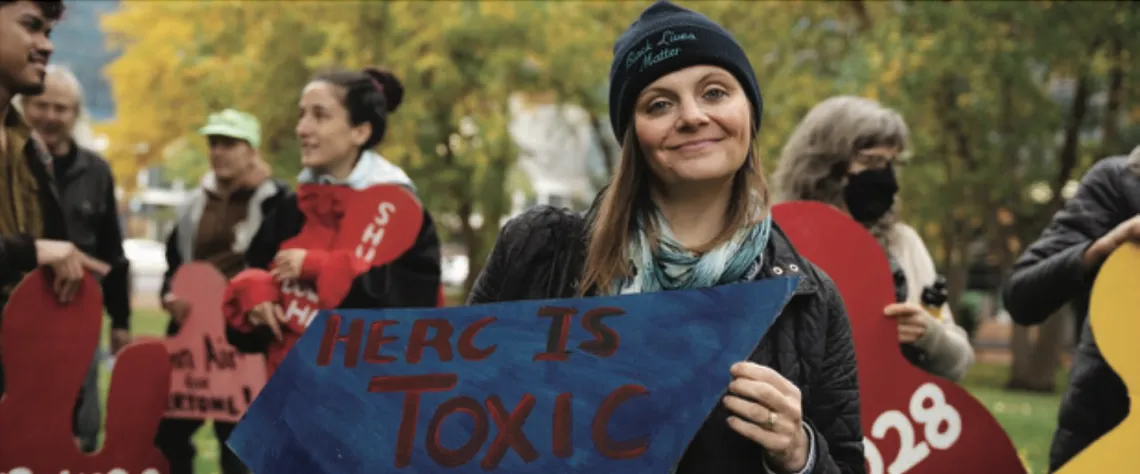
In the early 1900s, people started using the term “grassroots advocacy” to describe volunteers and community members gathering locally to push for change. This movement includes tactics familiar to us at the Sierra Club, from house parties to signature gathering to mass demonstrations.
The history of grassroots advocacy is inspiring, filled with stories of struggle, loss, controversy, and sacrifice, often spanning generations. White women won the right to vote in the United States in 1920 after decades of activism (or centuries, depending on your viewpoint), during which activists were fined, arrested, and jailed in deplorable conditions. However, due to discriminatory laws and practices, many Black women were still denied the right to vote until the passage of the Voting Rights Act in 1965. Landmark civil rights legislation (1964) and voting rights (1965) came after centuries of violent struggle by Black Americans. These hard-won victories represent the tireless efforts of those who fought for justice and laid the foundation for future civil rights advancements.
The Sierra Club was founded in 1892 with the mission to “make the mountains glad.” Our first fight was a loss. Hetch Hetchy Valley, which John Muir thought was more beautiful than Yosemite Valley, was dammed. Yet through this loss, we organized and built power to protect other parts of Yosemite National Park. One hundred and thirty-three years later, we continue this work with a more just and inclusive understanding of what fighting for our planet means. As of 2024, the Sierra Club’s Beyond Coal campaign has helped secure the retirement of 72% of coal-fired power plants in the U.S. – 381 out of 530 plants - resulting in cleaner air for millions of Americans.
As Minnesotans, we can justifiably be proud of our civic engagement. We continue to rank at the top of the nation for voter turnout with 76% of eligible voters casting ballots.
We are also genuinely supportive of environmental protection. In 2024, 5 out of 6 Minnesota voters supported renewing the Environmental and Natural Resources Trust Fund to protect drinking water, air quality, wildlife habitat, and access to parks and trails. That’s pretty amazing. This commitment to conservation has remained strong for over 30 years, with over 75% of Minnesotans consistently supporting it. So, the next time someone claims that there is little support for environmental protection, remind them of this remarkable history.

The North Star Chapter of the Sierra Club played a significant role in major home runs for the environment in the 1970s, including the Minnesota Environmental Policy Act, which requires formal environmental reviews, and the Minnesota Wild and Scenic Rivers Act, which ensures the protection of these rivers.
Chuck Dayton, the first lobbyist for the North Star Chapter, was instrumental in the successful (and still ongoing) fight for the Boundary Waters Canoe Area Wilderness (BWCA). Looking to harness the grassroots power of all of the people who love the Boundary Waters Canoe Area Wilderness, Chuck once had as he says, “the third best idea I’ve ever had, after the two women I’ve been married to.” His idea was simple: he filed a Freedom of Information Act request with the Forest Service to get a list of everyone who had ever led a paddle-only trip into the Boundary Waters. That list of 30,000 names became an instant grassroots advocacy group known as The Friends of the Boundary Waters. And just lately, in 2023, we passed the historic 100% Clean Energy law, requiring all utilities in Minnesota to provide 100% carbon free electricity by 2040.
None of these wins came from nowhere. In the 1970s, we had major environmental tailwinds coming from years of activism, shifting public sentiment about pollution by experiencing impacts first hand, and media phenomena like Rachel Carson’s groundbreaking book, Silent Spring. The 100% Clean Energy bill resulted from a large coalition of environmental and labor groups organizing tirelessly over 10 years amid pent-up frustration within the DFL party after not having full control for a decade.
We know that we will fight and sometimes lose. Despite years of struggle, the Commerce Department declaring the Line 3 tar sands pipeline unnecessary, and tremendous organizing from Native and environmental groups, the pipeline was permitted, and oil began flowing in 2021. Our work is a struggle, and we must keep struggling.
Our opponents are organized, persistent, and extremely well funded. We, the people, will need to work harder. While it is hard to know exactly how much mass action will be needed, history shows us that it took hundreds of organizations working together and shifting political winds to achieve the partial victories we continue to fight for.
Wins and losses are part of our political system in America. The advocacy we do now is crucial for current defensive work and future wins. We must:
- Stay motivated - take time to be outside, stay active within your community, and keep your spirits high.
- Stay informed - consume news from reputable sources in moderation, ensuring it’s manageable for your mental health.
- Stay organized - go to a rally, bring a friend to a Sierra Club outing, call your representatives, and volunteer for the Sierra Club or another organization.
No one can predict which action will ultimately make the difference, but history shows us that persistent, organized effort can achieve real wins. Our best chance for success is in collective action.
Mary Blitzer is the Deputy Director of the Sierra Club North Star Chapter. She is a proud mom of two and is honored to fight with all of you readers for our collective planet.