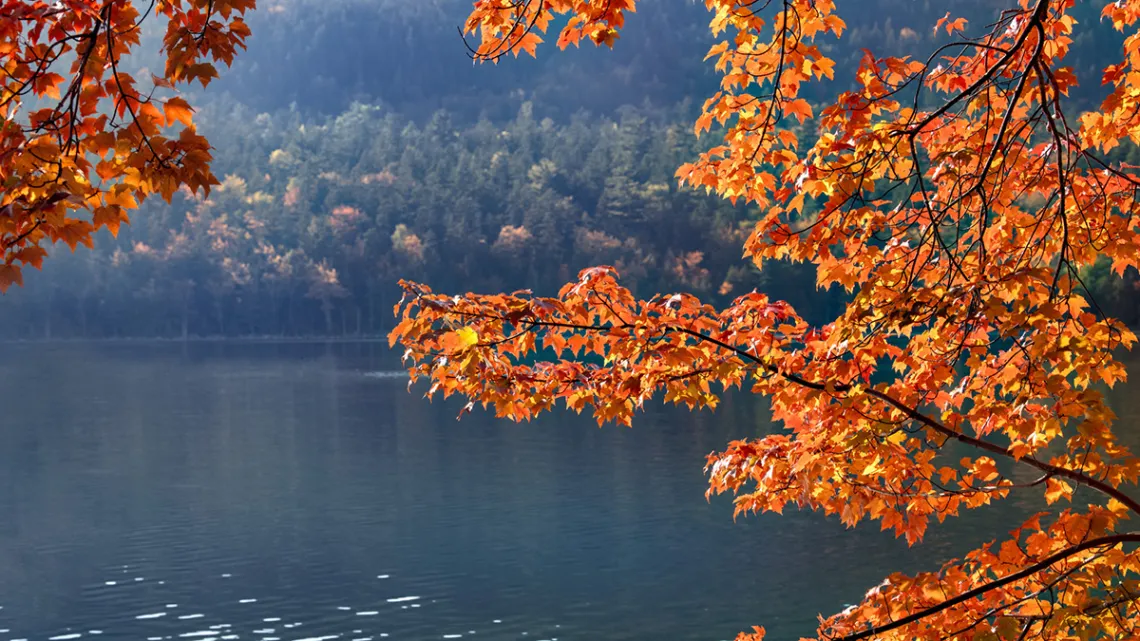
Oh oh oh it’s magic, you know! Chlorophyll, where did you go?
The natural world is shouting in color. Forests across Minnesota are a vivid patchwork of gold, orange, crimson, and purple. Yet behind this yearly spectacle lies a magical, physiological, shift inside each tree. As the days shorten and nights grow cooler, trees begin preparing for the long winter ahead. One of the earliest steps is to degrade its leaves of chlorophyll, the green pigment in plant life.
As the green fades, other pigments that have been hiding in plain sight begin to emerge. Carotenoids, making yellows and oranges, were present all along but masked by the chlorophyll. But, the reds and purples must work harder to appear. They come from anthocyanins, which are actively produced in response to sugar concentration and light. The brighter the days and the cooler the nights (without frost), the more vivid the reds.
A healthy growing season sets the stage, but drought, disease, or warm autumn nights can mute the tones. Fall colors are not just scenic—they directly indicate tree health, climate shifts, and ecological resilience.
In recent decades, as the climate warms and weather becomes less predictable, the once-reliable cues for color change are gone. Warmer autumns can delay the timing, reduce pigment production, and narrow the window during which leaves glow their brightest.
For those who walk through forests in October or plan a fall foliage road trip, the colors you see can be a visual story. They tell us not about a single tree, but about the cumulative resilience and vulnerability of nature.