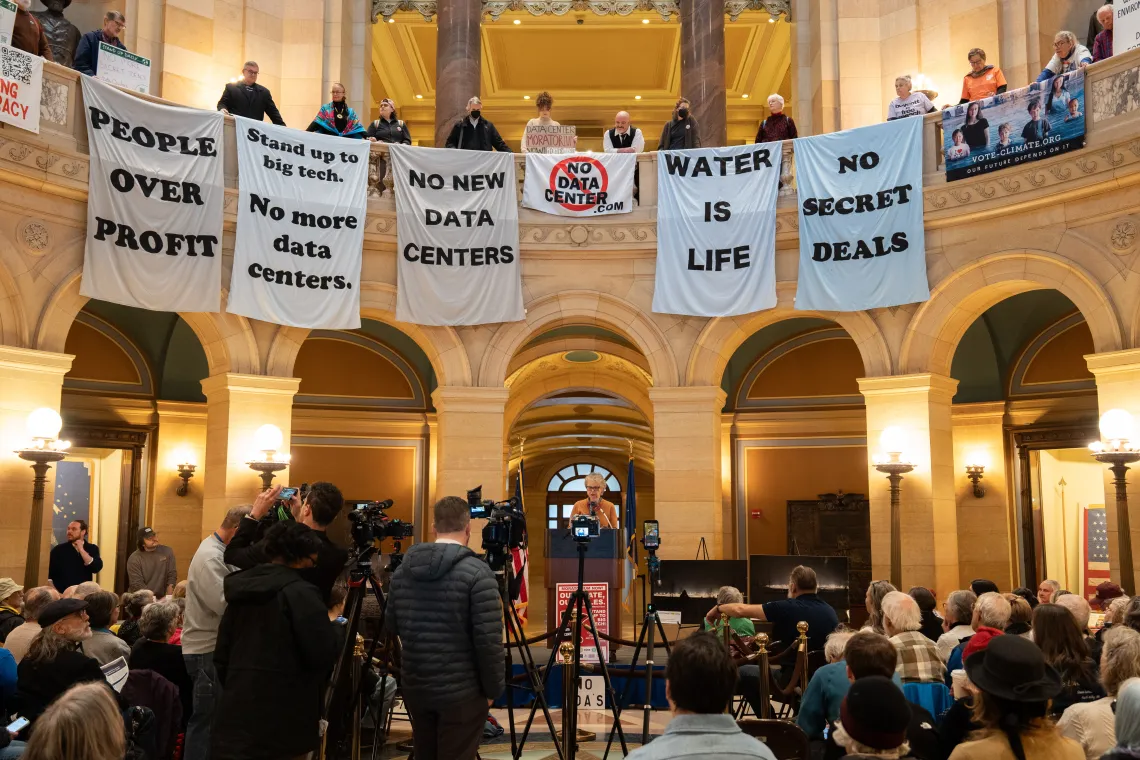
Minnesotans became aware of hyperscale data centers only a few years ago. These massive energy- and water-guzzlers are often situated in rural communities, planned by mysterious developers, and shielded from public scrutiny by non-disclosure agreements (NDAs) between local officials and developers, as well as low standards of environmental review. The North Star Chapter has been organizing statewide legislative responses to the myriad problems data centers pose, and we are hopeful about what will be possible in 2027. But for now, a great deal of the organizing has been local: at city council and planning commission meetings, through lawsuits organized by residents, on facebook pages, in letters to the editor and town halls. And it appears that local responses are working and will continue to be required.
We interviewed three activists—Aubree Derksen of Pine Island, Nancy Aarestad of Farmington, and Margaret Sullivan of the Twin Cities—about their take on the struggle so far, and what they will need going forward.
Aarestad and Derksen learned about proposed data centers in their communities through messages from their neighbors. Sullivan was involved in a climate study group through Indivisible, and picked data centers as “her” issue. The more information the activists uncovered, the more dismayed they were by what they found.
All cite environmental concerns. Aarestad lists them: “Water (I have a well that may be directly affected), air pollution (diesel generators close to homes), high electricity need, light pollution, the destruction of our land and trees and animal habitats”.
Derksen says, “We’ve learned more from news articles about the project than we have from the city, developer or the environmental review. The city and developer told us in the fall they didn’t know what they were building or who it was for, and that there were no talks about tax abatements. But now we have the emails going back to November 2024 that [the project] was a data center with Google and they would only engage in talks if the city offered a tax abatement.”
In addition to raising awareness and bird-dogging local officials, all have been involved in state legislation. Sullivan helped set up a list of communities threatened with data centers, and is organizing with Sierra Club to rally members in affected areas. The Farmington and Pine Island groups have both filed lawsuits against the development and are seeking support from all concerned environmentalists. All agree the fight is far from over, especially with no moratorium possible this legislative session.
Sullivan suggests that opponents should consider running for local office. “A loudly anti-data-center platform can set the terms of public debate. Even if a candidate doesn’t win, in the end, elevating and establishing public discussion would be huge. Nobody wants to live near a hyperscale data center.”
Most of all, these activists need your support. Aarestad says, “The future is bleak for all humans across this country if decent guardrails aren’t put in place soon. If you think you live in a location where they would never put a data center, think again.”
Some good news: The city of Rosemount, where one data center is mid-construction, has enacted a one-year moratorium on any new data centers and the Nobles County Board denied a zoning change the 640-acre Geronimo project needed to proceed. These are great victories for local activism.
Support local data center activists
With a lot of the data center action being local, you may want to support these local activists. You can join their facebook groups, join in local actions as an observer or testifier, or contribute to their fundraising campaigns.