By Marty Dunlap
Over the last few years, I have worked closely with the Butte County Department of Water, members of the Vina Subbasin Board and Stakeholder Advisory Committee, domestic well owners, farmers with small acreage, the citizens of Chico and environmentalists to ensure all stakeholders’ voices are heard in creating a fair, practical and balanced Groundwater Sustainability Plan (GSP) for the Butte County Vina Subbasin.
My observation in attending many meetings and reviewing multiple reports is that regardless of a reported chronic lowering of groundwater levels (on average 20 feet over the last 25 years), the primary supposition is that there is no reason for concern. That everything is going to be okay.
I have further observed that decisions being made regarding the continued dropping of groundwater levels by unregulated pumping is being controlled by the agricultural representatives’ domination on various local Boards. The lack of consideration of the needs and rights of all beneficial groundwater users and uses is coming at significantly and predictable risk to domestic well owners, farmers with shallow wells (e.g., vendors at the Farmers Market), and groundwater dependent ecosystems (GDE), particularly within the city of Chico.
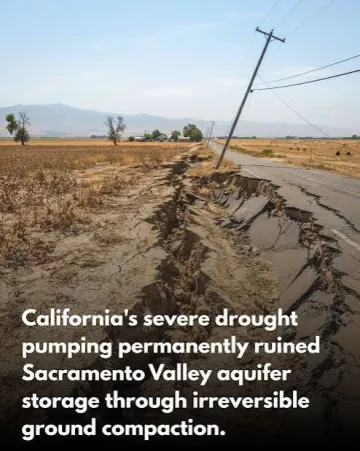
The knowledge exists about what happens when groundwater is pulled down too low. Trees die and creeks and wells dry up. Demanding evidence by the representatives of the agricultural sector of possible damage that could occur for the other groundwater stakeholders is unnecessary. One does not need to be a “rocket scientist” to be aware of the evidence derived from other regions where excessive pumping of groundwater has had irreversible consequences. The lack of healthy tree canopies in regions such as the San Joaquin Valley, Owens Valley and the Ogallala Aquifer in the Midwest provide the evidence and consequences of excessive groundwater pumping. Over time, the same will happen here unless cautionary principles are adopted in our decision-making.
One of the ongoing objections to the criteria established in the 2022 GSP is that all stakeholder groups were not considered in the setting of the minimum threshold (MT). The primary group with whom consultation occurred was with folks from the agricultural sector. Yes, it is true that agriculture uses 90% of the Vina Subbasin groundwater but that doesn’t mean that the agricultural sector gets 90% of the “say” in what are the preferred approaches to follow in maintaining the health and sustainability of the Vina Subbasin groundwater.
All stakeholders’ interests must be fairly balanced. An imbalance in including all beneficial uses and users’ interests in the Vina Subbasin groundwater was created by the establishment of an extremely low minimum threshold (MT) in the 2022 Groundwater Plan. To allow for fairness in the way we manage our groundwater, the assumption of risks by some stakeholders and the benefits gained by other stakeholders need to be balanced across all stakeholders.
This imbalance can be rectified in the five-year Periodic Evaluation happening now for the Vina Subbasin Groundwater Sustainability Plan. The Plan and its respective amendments are due in January 2027 and will be voted on by the Vina Groundwater Sustainability Agency (GSA) Board at their December 9 meeting.
Let the Vina GSA Board know what your thoughts are about balance and fairness regarding our shared groundwater either by letter or attending their meeting at 5 pm in the Chico City Council Chambers. See https://groundwaterforbutte.org/ for more information.