The recent wildfire scorched 4,176 acres around Lake Perris & the San Jacinto Wildlife Area. This ecological catastrophe comes after decades of continued efforts to develop the area. Restore what remains and enact protections now!
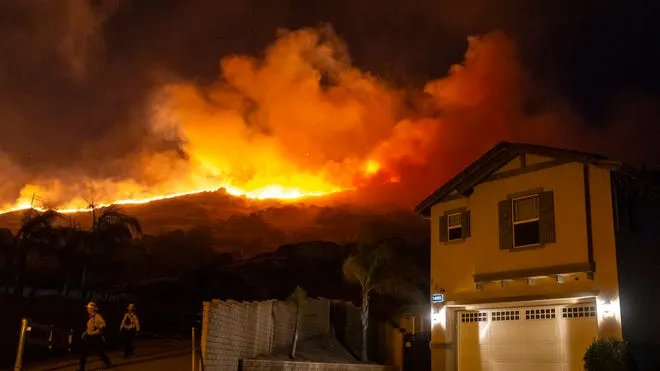
Beginning in the late morning of Friday, April 3, 2026, a brush fire broke out East of Moreno Valley, near Gilman Springs Road, and South of State Route 60. This area consists of and is directly adjacent to the Lake Perris State Recreation Area and the San Jacinto Wildlife Area. CalFire reports that the cause is still under investigation.
Hundreds to thousands of homes and residents were directly affected and even evacuated from the Rancho Belago neighborhoods of Moreno Valley and Northern Perris due to the Springs Fire this week. Even more people were affected by the vast amount of smoke which blew South-Southwest into the San Jacinto Valley areas. Moreno Valley is the second most populated city in Riverside County, with about 215,000 residents.
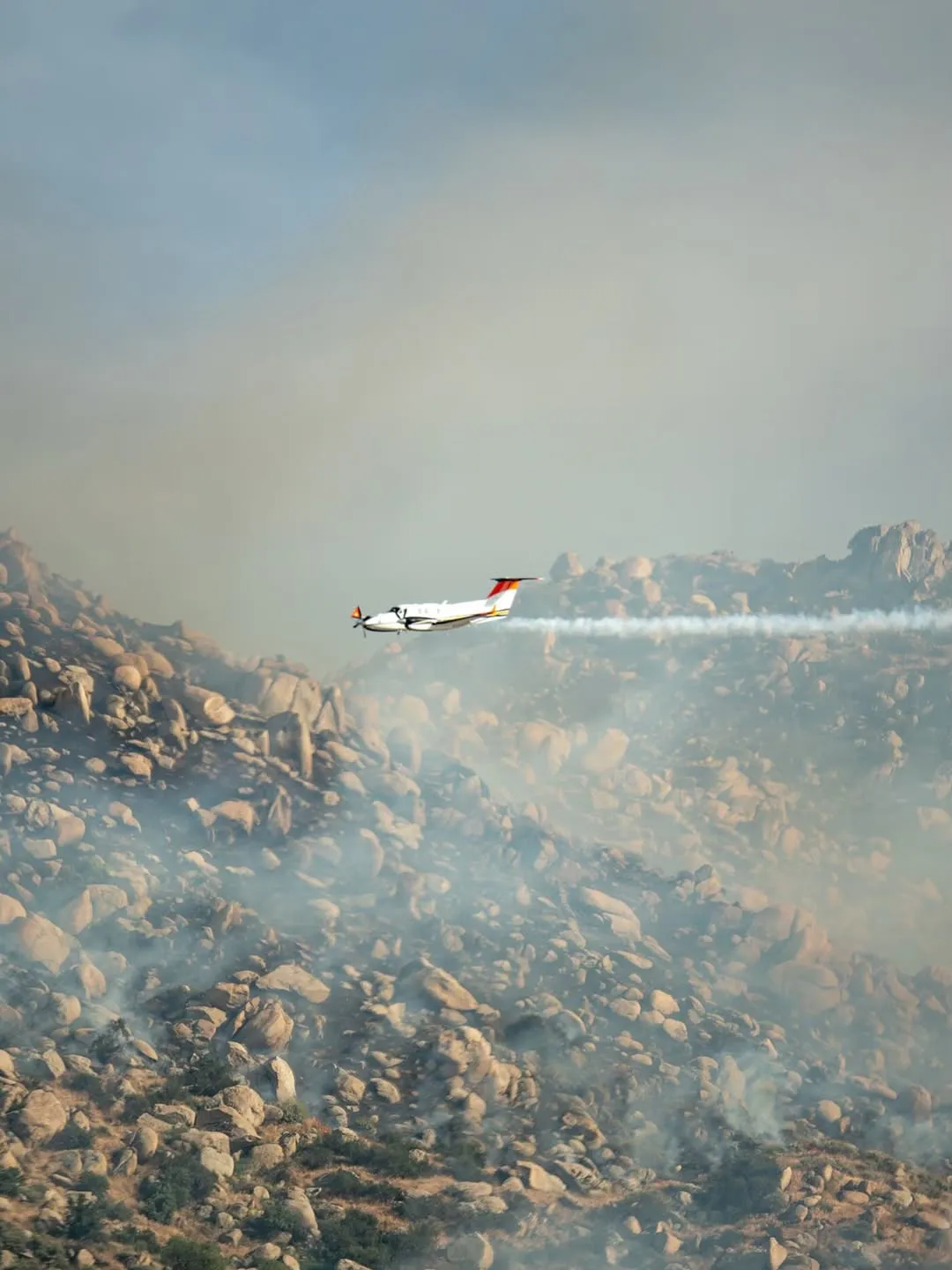
Moreno Valley College, which is located nearby, closed its campus due to the deteriorating air quality, and prompted students and staff to leave immediately.
South Coast AQMD reported smoke from the Springs Fire caused particle pollution levels to increase to moderate to unhealthy air quality index (AQI) levels Friday afternoon and into Saturday around the Perris, Lake Elsinore, Moreno Valley, Menifee, Hemet, and surrounding areas.
Evacuation centers were established at Valley View High School in Moreno Valley while residents with pets and livestock were instructed to go to the San Jacinto Animal Shelter.
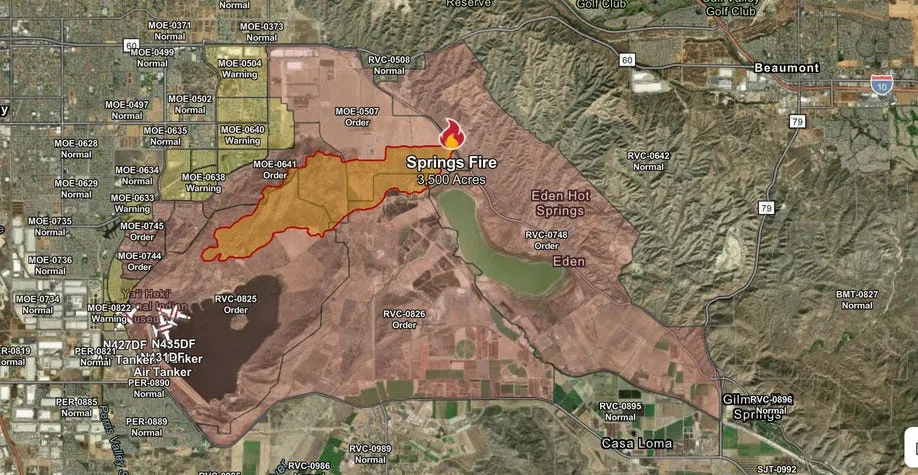
Coincidentally at the same time, similar evacuation orders were given out by authorities for the "Crown Fire" in the Soledad Canyon and Crown Valley Road areas near Acton, California, in LA County. That blaze burned 385 acres.
Fire crews reportedly deployed 2 air tankers, 23 engines, 2 helicopters and bulldozers Friday. Over 250 personnel from fire departments all across Southern California were involved.
Both fires were fueled by the Santa Ana winds with gusts up to 50 miles per hour. These winds allowed the fires to rapidly spread through areas with highly flammable brush. The National Weather Service’s high wind advisory stood in effect until Saturday afternoon.
David Gomberg, a meteorologist with the National Weather Service’s Oxnard station, said even though the vegetation is still moist from recent rains, the winds and dry conditions are still enough to spread flames over grassy areas.
The area affected by the Spring Fire was likely dry and flammable due to a few reasons. The San Jacinto and Casa Loma fault systems occur parallel to the San Jacinto River and the Badlands area. The earth’s tectonic movements created Mystic Lake and continue to pull apart the lake basin. The ground cracks, heaves, and settles as Mystic Lake is subsiding incrementally year after year. The pumping of groundwater and diverting it to other areas by different agencies for at least 100 years has lowered the area's water tables, increasing the basin’s rate of subsidence and drying up the grasslands all around.
With the popular transit artery that is Gilman Springs Road nearby, it would not be surprising if this wildfire was caused by someone throwing out a lit cigarette or something like that into the dry grasslands. This is just an assumption and we will all have to wait to learn what the true cause of this fire was when CalFire finishes their investigation. Regardless, with the Santa Ana winds able to feed it, this area had all the right factors in place for a wildfire to occur.
According to the City of Moreno Valley’s “2040 Project: Environmental Impact Report” from 2021, section 4.18.1.1 states that threats from wildfire hazards is determined based on a number of factors including fuel loading (vegetation); topography; climatic conditions such as wind, humidity, and temperature; and the proximity of structures and urban development. Figure 4.18-1 “California Fire Hazard Severity Zone” shows that this area has been long established as a Very High Fire Hazard Severity Zone.

Keep all of this in mind when considering the projected future for the San Jacinto Valley.
All governing bodies in the area continuously consider proposals which will increase developments for housing, commercial, manufacturing, and distribution centers. The City of San Jacinto and County of Riverside have reviewed and approved developer requests for zoning and land use changes for many years.
Moreno Valley’s Eastside along Gilman Springs Road, where the Springs Fire occurred, could be home to one of, if not the largest distribution and logistics complex in the world: The World Logistics Center. 40 million square feet of warehouses approved to be built next to the San Jacinto Wildlife Area. It has been litigated against, settled in court, and now approved after almost 15 years of consideration by city council despite overwhelming opposition.
Other proposed and approved projects include highway widening, urban road interchanges, and the Rancho Belago Estates Specific Plan & Annexation Project. This project was submitted to Moreno Valley in late 2025 by the company who owns the adjacent land and who will build The World Logistics Center, Highland Fairview. They have proposed to annex 2,378 acres near Gilman Springs Road, where the Springs Fire occurred, to develop up to 3,150 single-family residences; and 37 acres of mixed-use including space for an elementary school, hotel, retail centers, and a golf course.
Remember this is all at the cost and destruction of the San Jacinto Wildlife Area, its ecosystem of endangered species, and risking the lives of those future residents by situating them next to 40 million square feet of warehouses, the pollution that industry will cause, and the high risk wildfire and earthquake zone.
Cin-Ty Lee, Professor of Geosciences at Rice University, and long time resident of Moreno Valley said this in regards to the Rancho Belago Estates Project:
“The planned footprint of the housing complex along the north side of Gilman Hot Springs Road has long been known to be a geologically hazardous region. This area is called the San Timoteo Badlands because it is nearly impossible to build permanent structures. During wet years, the slopes of the San Timoteo Badlands can become more heavily vegetated. In the ensuing dry years, these vegetated slopes become massive fuel stores for wildfires. Houses built along this stretch will be very close to these fire hazards. We also know that there is a vicious cycle that begins with rain, flooding, growth of vegetation, fire, and then mass wasting. Natural and man-made runoff from this development is likely to exacerbate slope instability. This runoff also will affect the environmental and ecological health of the Mystic Lake basin and the San Jacinto Wildlife Refuge. This refuge is probably the most important inland wetlands of all southern California, drawing visitors from well beyond California. Placing 3,000 single family homes would put lives at risk due to these geological hazards, which are inevitable. We do not know when such disasters will happen, but it will happen. The only question is when. I urge you to carefully consider these issues and not put lives at risk.”
The San Jacinto Wildlife Area (SJWA) western boundary adjacent to Lake Perris is where the Spring Fire occurred. The area is a combination of wetlands, uncultivated grasslands, alkali flats, dairy farms, and cropland which remains a mecca for grassland species and birds. The Box Springs Group has been on the forefront of defending this sensitive land area since our formation around 1990. Back then, the Moreno Highlands Project was proposing to develop 7,600 houses next to the SJWA. The SJWA has been under constant threat due to development by corporations and the nearby municipal authorities. In 2001, the National Audubon Society recognized the northern San Jacinto Valley as an Important Bird Area (IBA) of Global Concern, based on scientific criteria. In 2013, the National Audubon Society recognized the San Jacinto Valley IBA as warranting special attention and protection. 5 of the 24 Priority Species for North America are found here: Black-necked Stilt, Long-billed Curlew, Swainson’s Hawk, Tricolored Blackbird, and Western Sandpiper. This designation means that there are initial signs of population decline and enough potential threats to warrant a close watch on their status. This area is home to over 300 species of threatened and endangered animals and plants.

Ignoring the risks to Mystic Lake and the health and survival of the San Jacinto Wildlife Area will jeopardize both wildlife and the surrounding communities. Development will tilt toward short-term gains at the risk of long-term impacts on water, air quality, habitat loss, extinction of species, increased emergency demands and response times, increased traffic, increased illnesses, and yes even more wildfires.
Another detail that needs to be mentioned in this environmental overview of the Springs Fire, is the red substance used by fire fighters in these circumstances. According to reporter Jacob Margolis from a 2025 article with the LAist, he states researchers at USC tested samples of red fire retardant and “found toxic heavy metals including lead, arsenic, cadmium and chromium, which can accumulate in the environment and pose risks to humans and wildlife according to federal and state environmental agencies"
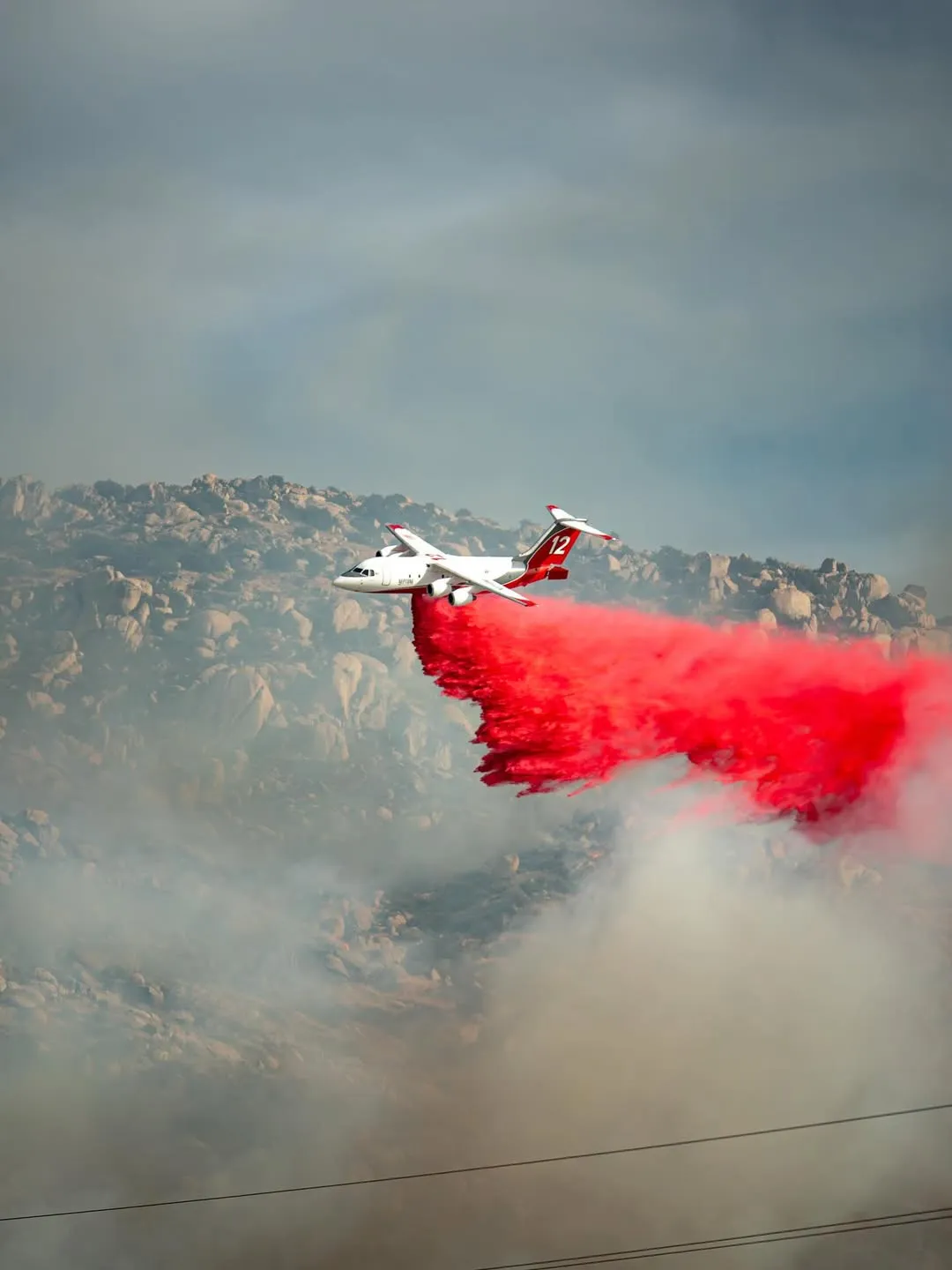
At this time, CalFire has reported that the Springs Fire has been virtually contained.
The Lake Perris State Recreation Instagram stated the park will be open to all activities with no restrictions starting Easter Sunday. The fire burned approximately 3000 acres of park property.
Moreno Valley College stated their campus is no longer classified within the Springs Fire evacuation area. Classes and events will resume as scheduled on Monday, April 6 via their Instagram.
If you are in a wildfire situation, South Coast AQMD recommends to limit your exposure by remaining indoors with windows and doors closed or seeking alternate shelter; avoid vigorous physical activity; run your air conditioning and/or an air purifier; if possible, do not use swamp coolers or whole house fans that bring in outside air; avoid burning wood in your fireplace or firepit and minimize sources of indoor air pollution such as candles, incense, pan-frying, and grilling; if you must be outside, a properly fitted N95 or P100 respirator may provide some protection.
The Box Springs Group of Sierra Club implores all readers to join our organization, reach out to stay connected, donate to our efforts, inform one another about this critical habitat and irresponsible developments, and most importantly: speak with the local officials to protect and restore the San Jacinto Wildlife Area!
For more information on our the issues we are dedicated to and how to get involved, please visit https://www.sierraclub.org/san-gorgonio/box-springs/issues
Report & Compilation by:
Ismael Gonzalez. Vice-Chair, Box Springs Group, Sierra Club.
Photos by @cwfliqs
Sources:
CalFire: Incidents: Spring Fire
CalFire: Incidents: Crown Fire
“Wildfire Smoke Advisory Due to Springs Fire” by South Coast AQMD
“Save Mystic Lake” Prepared by the Save Mystic Lake Working Group, Sierra Club (2025)
“MoVal 2040 Project EIR: Environmental Analysis: 4.18 Wildfire” City of Moreno Valley (2021)