On June 9, 2026, the San Jacinto River Coalition (SJRC) and Texas Health and Environment Alliance (THEA) gave an update about the clean-up process for the San Jacinto River Waste Pits Superfund Site (SJRWPSS).
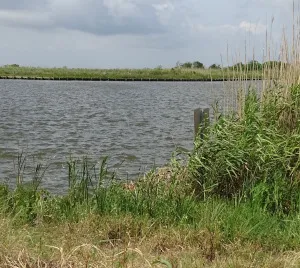
After over 18 years (2008) when the U.S. Environmental Protection Agency (EPA) put the SJRWPSS on the National Priority List for possible clean-up, this Superfund site is now in the Remedial Action phase.
The EPA had to face continual and consistent resistance by the responsible parties (RPs), Waste Management and International Paper, who pressed the agency three times with plans that would have limited their budgets and liability for the SJRWPSS clean-up.
Removal of waste from north of I-10 pit will be about 230,000 cubic yards of material. The Sand Separation Area will be monitored, and natural recovery and institutional controls will be implemented.
To EPA’s credit it held strong to complete waste removal and since it signed the Record of Decision in October 2017, after 3,121 days of pressure by the RPs, the RPs agreed on May 26, 2026 that they would implement the EPA plan and not the ones they pushed.
The cost of waste removal has increased from the 2017 estimate of $100 million to $250 million due to delay, the need to remove more waste material, and inflation. If the companies don’t fulfill the EPA required waste removal plan, the EPA can charge them a penalty of $71,545/day, require that the companies pay up to 3 times the cost of waste removal, and the EPA can take over the waste clean-up.
EPA rejected the RPs attempt to mix waste samples which would dilute the samples and give a misleading picture about how much waste has been removed or needs to be removed. EPA has insisted on community engagement and oversight during the process with an onsite EPA presence and will be available during some days onsite to answer the public’s questions in person.
National Oceanic and Atmospheric Administration (NOAA) involvement with planning for waste removal led to an aquatic resource relocation plan which salvages as much aquatic life as possible during waste material excavation and dewatering.
A 10-foot wall will be built around the waste site and a 12-foot coffer dam will be constructed around this wall. It may take up to 7 years to remove all waste and transport it to a registered and acceptable hazardous waste site for final disposal.
The current schedule, which ends in 90 days (plus weekends and holidays), requires securing a contractor by October 2, 2026. It will take about 389 days before construction for waste removal begins. There will be quarterly inspections of the existing cap on the SJRWPSS during waste removal. The existing cap has kept the waste temporarily in place until it is removed.
There are also plans by the Texas Department of Transportation to raise and reconfigure I-10 East, which is right next to the north pit of the SJRWPSS, so that loose barges can’t strike the I-10 bridge at the San Jacinto River.
The Houston Sierra Club will continue to monitor the implementation of the waste removal plan and coordinate with THEA, the SJRC, and others who want a permanent and safe environment for people and the Galveston Bay Ecosystem.
Photo by Emma Pabst.