By Brandt Mannchen
On a halcyon day, October 10, 2026, 9 am to 3 pm, bright, breezy, and cool, the Sierra Club joined the Big Thicket Association (BTA) for the 62nd annual “Big Thicket Day” celebration at Collier’s Ferry Park in Beaumont, Texas.
A word about Collier’s Ferry. As early as 1750, this route was used by Native Americans, explorers, settlers, priests, soldiers, and traders from Spain, France, and Britain. Later Collier’s Ferry was operated by a family for 50 years and was the main crossing of the Old Jasper Road and an alternative crossing for the Opelousas Trail, which ran from Liberty, Texas, through Beaumont, to Louisiana.
The ferry route was run by a variety of people and lasted from 1831-1950 (119 years)! In 1879 the largest number of cattle recorded in a single day, 23,000, crossed Collier’s Ferry.
Today Collier’s Ferry is a Beaumont park and has four boat ramps, a 1.8-mile walking trail, playground, picnic tables, parking lot, and begins the 7-mile roundtrip Lake Bayou Paddling Trail which begins on the Neches River and winds through Lake Bayou and then circles back to the Neches River. I saw many people fishing (yes, they were catching fish) and kayaks, and motor-boats were seen on the Neches River throughout the day.
The BTA began the program with a business meeting that was one of the most interesting that I’ve attended. There was a U.S. Coast Guard and Port Arthur Color Guard posting of the colors, National Anthem, invocation, pledge of allegiance, poem reading, and roll call/establishment of quorum for BTA directors. The newly elected directors were then introduced. Awards were given to deserving individuals for their contributions to Big Thicket protection.
Wayne Prokopetz, Big Thicket National Preserve (BTNP) Superintendent, gave a summary of the year for this first designated National Preserve. Superintendent Prokopetz talked about the work that was done finding all the past oil/gas well locations in BTNP.
When this effort began, they thought there were a few score of wells but by the time GPS locations had been established at least 285 wells were found. The National Park Service (NPS) was given $7 million to mitigate oil/gas damage and is working to plug all known abandoned oil/gas wells. In 2025, four wells that were in the Neches River, were plugged and decommissioned.
The cost of decommissioning all wells in BTNP will, at a minimum be $200,000-$500,000/well, using contractors from the Railroad Commission. That means that at a minimum, to decommission the 285 wells currently found, will cost from $57,000,000 to $142,500,000.
Editorial comment: The oil/gas industry needs to pay it’s fair share for the damage they have done. Instead taxpayers are footing the bill. That’s not fair!
NPS has spent a lot of time restoring Longleaf Pine to the forests of BTNP. The next planting that volunteers can participate in will be the first weekend in December of this year.
BTNP has taken a hit on the number of employees that work for it. There was a staff of 31. Now, 11 of those staff that conduct prescribed burns and fight wildfires have been transferred to another agency. They can be used by BTNP, but must be contracted from that other agency. Currently, there should be a staff of 24, but four positions aren’t filled, so there is only a 20-person staff for the over 113,000-acre BTNP.
Editorial comment: Slim pickings due to President Donald Trump’s firing of many federal public land employees. This makes it very difficult to manage a diverse and internationally important National Preserve. Shameful!
A lot of trail maintenance has been conducted by seasonal employees with repair of boardwalks being a high priority. Interpretation for school groups has increased to 56 and some are home school groups which in the past have been difficult to reach. Superintendent said that the BTNP is in good shape. However, he did mention there will be a reorganization of the NPS.
Editorial comment: The reorganization of the U.S. Forest Service has left it with fewer employees to manage and protect the National Forests. Reorganization under President Trump of the NPS means further reductions in employees that protect our public lands. Definitely not good!
The keynote speaker for “Big Thicket Day” was the Sierra Club Lone Star Chapter’s former Executive Director, Ken Kramer. Ken talked about “Texas Water Challengers – 2027 and Beyond”.
The four challenges that Ken talked about included: 1. Groundwater management; 2. Uncertainty in planning for future water supplies; 3. Funding for water supply, wastewater, and flooding projects; and 4. Water for the environment which includes instream flows and freshwater inflows for bays and estuaries.
Ken’s assessment was right on the mark and as you might guess water for the environment will probably not get funded or will be funded very little by the Texas Legislature. Keeping water in our streams and rivers and our bays and estuaries is important if you love our coast, like to fish, and enjoy the natural areas on our shorelines.
There were several booths set-up which were peopled by conservation organizations and venders selling their wares. A nice free lunch and water was served by BTA, and ice cream was available!
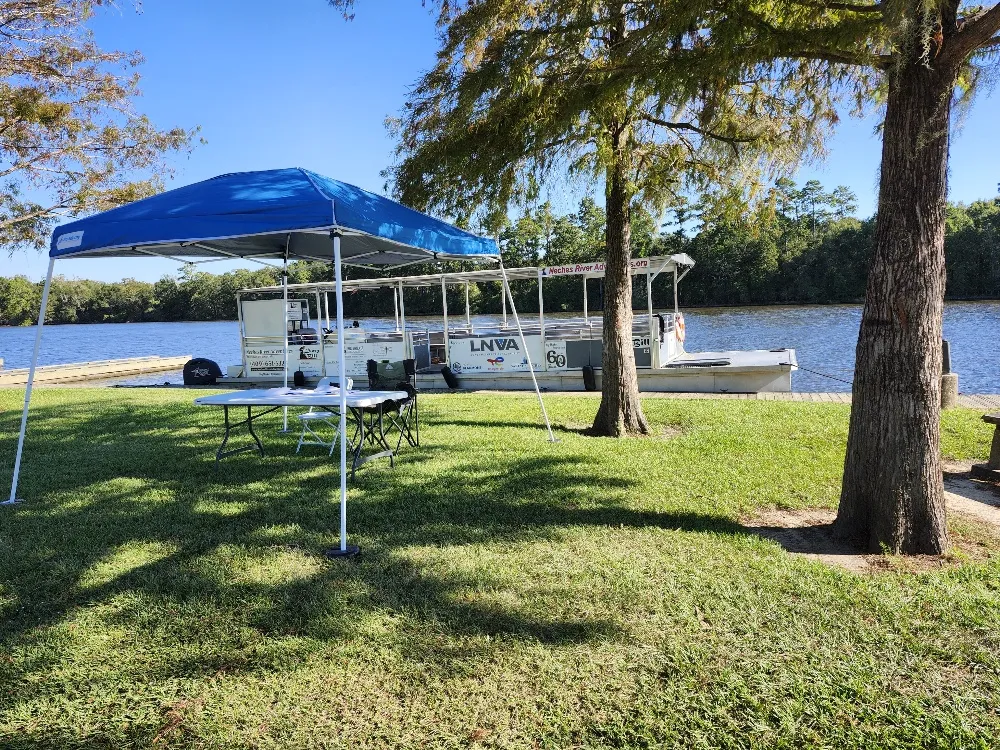
The last thing I did for the day was take a ride on the BTA’s “Ivorybill” 45-foot pontoon boat which handles 28-30 people per trip (they made 5 trips that day). It was a fun 30-minute visit to the Neches River and Lake Bayou. A good introduction into why BTNP is considered a “water park”.
A lot of Bald Cypress, Water Oak, Willow Oak, Red Maple, Honey Locust, Green Ash, Black Tupelo, and Overcup Oak were seen with Spanish Moss hanging decorously on tree limbs. The water depth ranged from 30 feet to 3.5 feet and you could almost feel the “Big Thicket” as the forest closed in on you as we motored through Lake Bayou.
A great time was had by all! I encourage all Sierrans and the public who haven’t been to BTNP to come and see for yourself what a wonderful and splendid National Preserve we have in Beaumont and Houston’s backyards.