By Brandt Mannchen
George Mitchell Nature Preserve (GMNP) is in southern Montgomery County in the Spring Creek Floodplain and adjoining uplands. After my initial visit to see this area in January 2026, I can verify that it’s bigger and much wilder than many forested parks and nature preserves that I have seen in Harris and Montgomery Counties.
There are several hiking and biking trails in GMNP and you get a chance to see Spring Creek, extensive wetlands, and tributaries that provide habitat for wildlife and riparian (streamside) and bottomland hardwood vegetation.
GMNP has been the work of Montgomery County, The Woodlands Land Development Company (now Howard Hughes), and The Woodlands Township. This partnership started in 2003 and resulted in the opening of GMNP in 2007. Bayou Land Conservancy has a conservation easement on the 1,800-acre GMNP, which helps ensure that this preserve will be protected in perpetuity.
GMNP is part of the Spring Creek Greenway, an agreement between Harris and Montogomery Counties, to develop hiking/biking trails and manage parks on both sides of Spring Creek with a goal of 12,000 acres protected, used for recreation, and serving as natural flood control.
When you first park your car at GMNP, off Flintridge Drive, you become cognizant of the very sandy soils that the forest and wetland ecosystems grow and live in. There are many large Loblolly and some Shortleaf Pine trees in the uplands and a host of hardwood trees, shrubs, vines, and other vegetation including:
Yaupon Holly, American Holly, Cherry Laurel, Red Bay, Post Oak, greenbrier species, Farkleberry, Southern Red Oak, Winged Elm, Trumpet Vine, Resurrection Fern, Elephant-foot, St. Andrew’s Cross, Black Hickory, and others. The entire landscape is rolling and slopes toward Spring Creek with 10-foot earthen winding loop trails that help you get around.
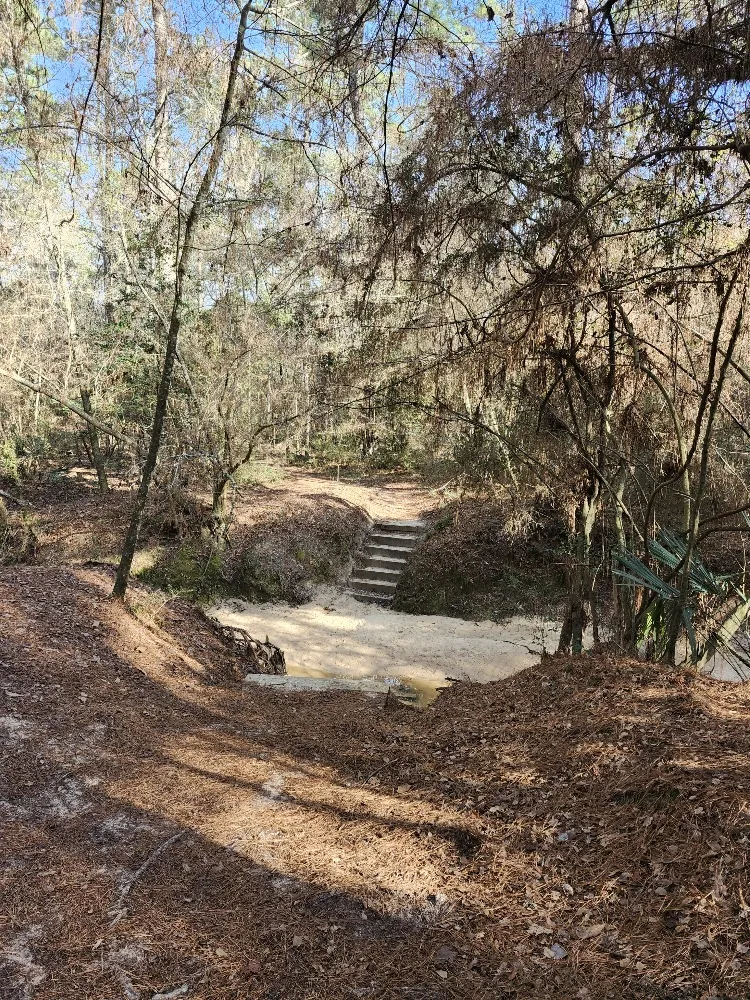
As trails slope toward riparian woodlands and bottomland hardwood areas on lower slopes and in the floodplain you pick up Sebastian Bush, Eastern Hop Hornbeam, Dwarf Palmetto, American Hornbeam, American Sycamore, grape species, Turk’s Cap, Inland Sea Oats, Switch Cane, Little Hip Hawthorn, River Birch, American Elm, Black Willow, Water Hickory, and more Water Oaks.
I was impressed by the bird and frog song I heard. It was delightful to see flocks of Cedar Waxwings feeding on Yaupon Holly berries and Northern Flickers (Yellow-Shafted) perusing the living and dead trees looking for a meal.
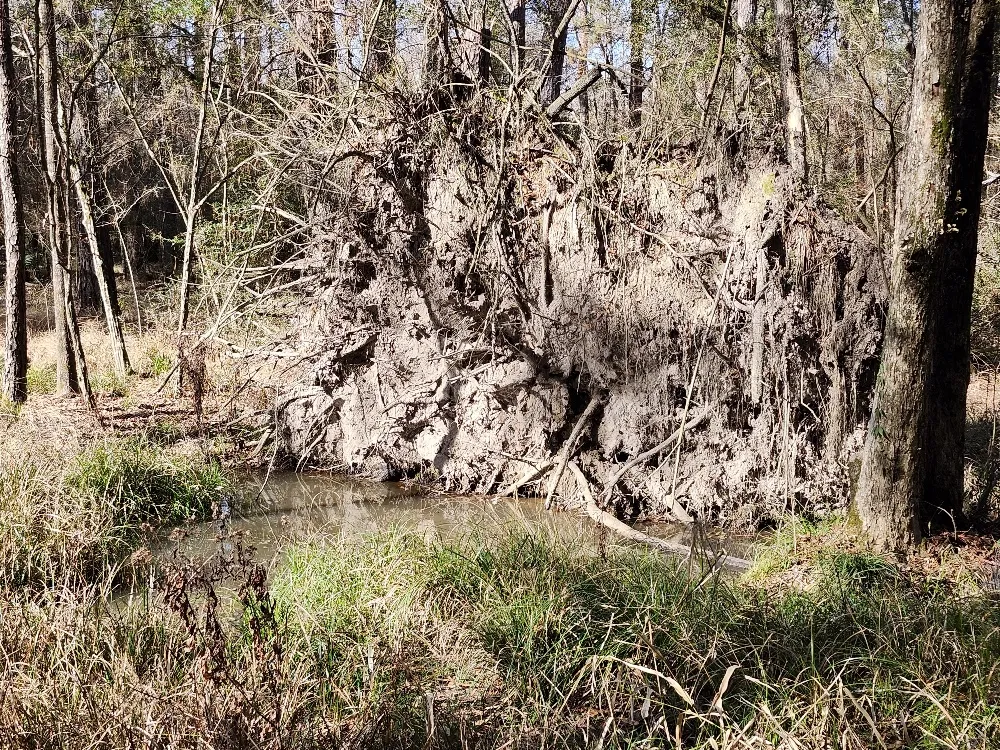
There’s a lot of downed wood (called coarse woody debris by scientists) and standing dead trees (called snags) including some tree blowdowns with tip-up mounds and vernal and ephemeral ponds created where the root systems used to be and now where amphibians and invertebrates live.
American Crows, Turkey Vultures, and Black Vultures flew overhead along with the sound of hawks circling high in the sky over the 90-100-foot pine trees. Gray Squirrels climb high in the canopy, looking for acorns and other things to chew on. I saw a White-tailed Deer dash away into the underbrush while hiking on the West Trail.
In addition, there are large areas where herbaceous wetlands exist which are great for aquatic life along with the natural sloughs, swales, and abandoned channels that streams have created over 100’s and 1,000’s of years in the floodplains.
Unfortunately, feral hogs, non-native mammals, Chinese Tallow, Nandina, Japanese Climbing Fern, and other non-native plants are found in GMNP. I highly recommend an active program to treat and reduce the numbers of these species, so they don’t overwhelm the native forests and wetlands that occur here.
All in all, you can’t go wrong driving to GMNP to see our natural Southeast Texas Forest and streams. Enjoy the fresh air, natural sounds, solitude, wildlife, and beauty. This is worth protecting and seeing any day!