By Autumn Featherstone
My name is Autumn Featherstone, I’m a 19-year-old student studying environmental and sustainability studies at the University of Utah, and I just finished my 6-month internship with the Sierra Club Utah Chapter. I have had a passion for protecting the environment since I was a little kid, and got involved with some local environmental groups when I was in high school, but I wanted to get more of a feel for what this kind of work would look like professionally. When I saw that the chapter was looking for an intern, I knew I had to apply.
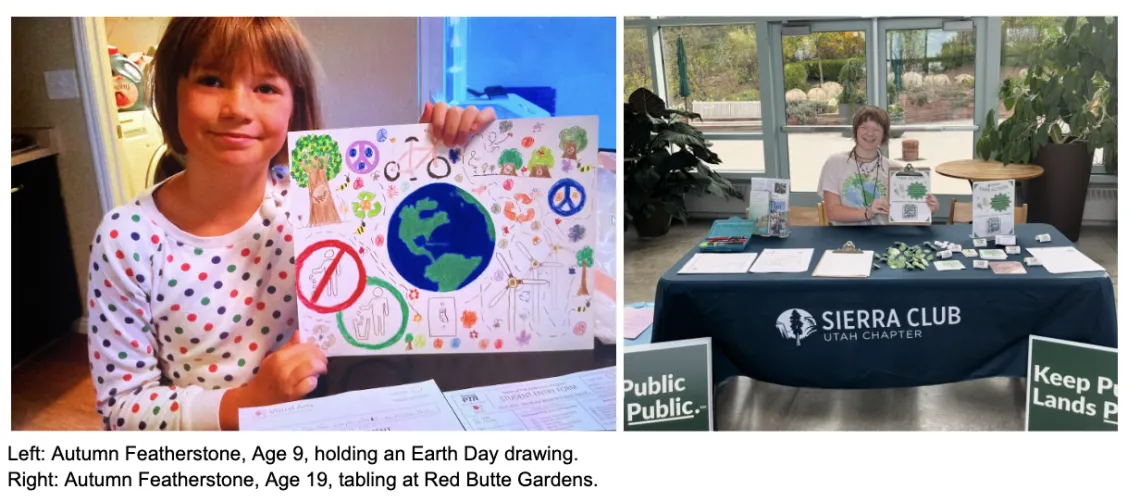
During my interview process, I was told that my job would be focused on helping implementation for different environmental programs in Utah, including the Clean School Bus Program, Home Energy Rebates, and Climate Pollution Reduction Grant. We talked about how refreshing it’ll feel to get to work implementing programs that will positively benefit our environment, instead of always playing defense. I had no idea what was coming.
The week before my first day, almost all of the funding for the different programs we were supposed to be working with got frozen under executive orders from the Trump administration. Instead of working to help implement the funds from the IRA, we were left to defend the grants that had been promised to Utahns and try to bring them back. All of this during my first week. I would be lying if I said it wasn’t a bit overwhelming.
We got to work with a team of eager volunteers to discuss our goals and strategies. We knew we wanted the funds to be released, but how were we going to do that? And there was another upcoming threat: Trump’s “Big Beautiful Bill”, the budget bill that proposed slashes to these programs altogether, alongside other important environmental programs.
We hosted several strategy planning sessions to outline our goals and determine the best tactics and strategies to achieve them. Ultimately, we decided that to reach our goals, we needed the support of Utah Members of Congress. We decided to focus on lobbying and gathering letters and public comments to send to members of Congress to pressure them to release the critical environmental grants that had been promised to the state of Utah.
We organized 5 constituent lobby meetings with Utah members of Congress to share our personal stories as Utah community advocates, explain the importance of funding critical environmental programs, and ask them to lift the freeze on these grants and to vote to keep them protected in the future.
We also wanted to get messages sent from members of the public. To do this, we created an action alert that made it easy for the public to send letters to Congress. We promoted it and collected letters while tabling at public events and by amplifying it on social media.
“Would you be interested in contacting your member of Congress to protect clean energy?” was the phrase I repeated thousands of times, trying to get people to send their message. We attended rallies, non-profit fairs, campus events, and more. Some people were genuinely engaged with what we had to say, others walked past without a glance, but overall, we had solid success.
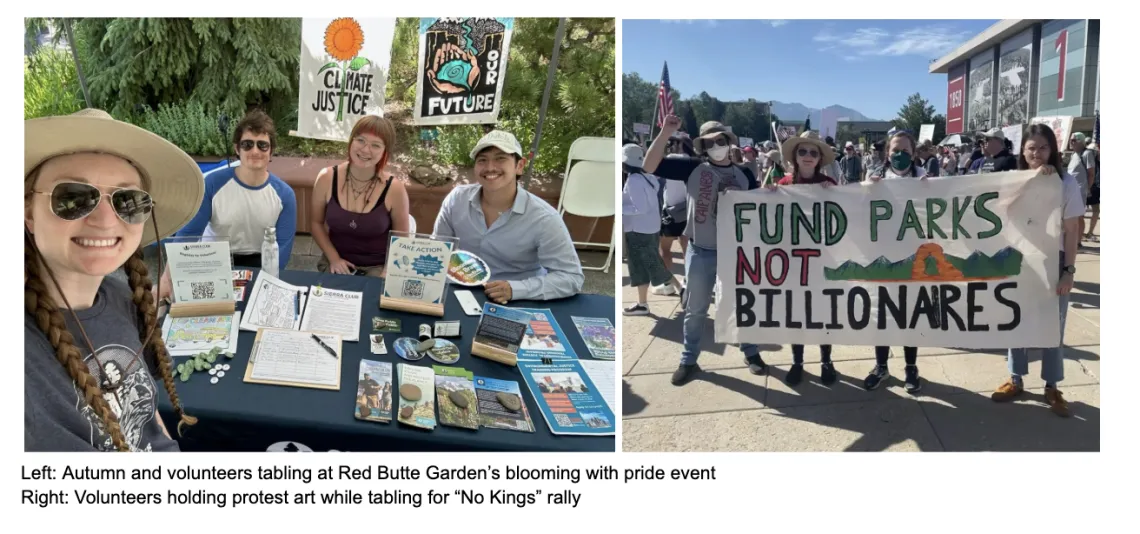
After months of tabling and gathering letters, we had over 1,100 letters sent, but the vote was approaching, and we knew we had to do something more. We decided to do a petition drop.
In the matter of three days, we gathered all of the public comments we had collected in Utah, as well as letters from across the country, making a total of over 11,000 letters and public comments, and headed to Senator Curtis’s office to make our delivery. Watching the letters pile up in the hands of one of Curtis’s staff members was incredible, as I saw the evidence of all the hard work we had put into this campaign.


Left: Volunteers and members of the public holding public comments and protest art outside of Senator Curtis’s provo office
Right: Volunteers handing stacks of letters to staff from Senator Curtis’s office outside the office
A week later, the results came in. The awful budget bill passed 51-50, with both Utah senators voting in favor of it. We were incredibly disappointed. Moments like these, it's hard to find the motivation to keep organizing.
But not all was lost. Many of the grants that we wanted to see protected will remain intact, including $75M for the state’s first-ever Climate Pollution Reduction Plan, $50 million for the Great Salt Lake, and $42 million to launch the first-ever electric school bus pilot program, allowing our school buses to release 21,720 fewer tons of carbon into the atmosphere in Utah.
Throughout this process, we also got to grow as organizers and develop our community advocacy and organizing skills to be able to make change in the future. It doesn't matter who is in office, so long as we have the skills and leadership to advocate for ourselves and our communities. As government roles and administrations inevitably shift, it becomes even more important for community advocates and nonprofits to keep the pressure up and ensure that funding streams for implementing environmental programs stay in place, and that key environmental funds remain intact. As we grow grassroots power, we lay the foundation for future campaign wins and long-term victories.
This experience has taught me so much, and I am so grateful to all of the support from staff and volunteers who made it possible. I am sad to see it end, but I will be leaving the Sierra Club more prepared and confident to continue fighting for my communities and our planet.