Photo by Ava Curtis
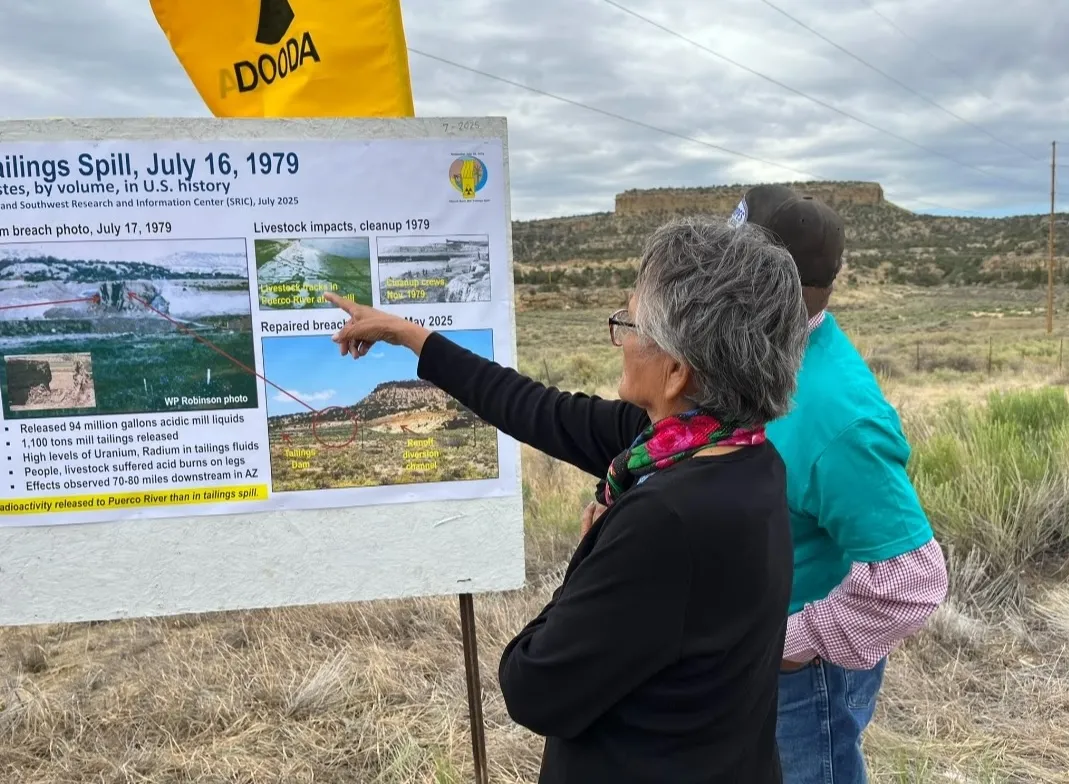
On July 16th, 1979, the largest uranium spill in the history of the United States took place at Church Rock, New Mexico. It occurred just before sunrise when an earthen dam at the nearby uranium mill, owned by the United Nuclear corporation, failed, releasing 94 million gallons of radioactive water and 1,100 tons of uranium waste across Arizona, New Mexico, and Navajo Nation. After this spill, United Nuclear took little action; the company cleaned around 3,500 tons of downstream contaminated soil, amounting to a total of about 1% of the total affected soil. Mill operations continued around two weeks after the spill and there were no other attempts to clean the radioactive contamination.
Rich in uranium, the 12.5 million acres of Navajo Nation, which extends into New Mexico, Utah, and Arizona, has been a target location for many nuclear energy companies to operate uranium mills and facilities. Due to the neglect of these corporations in their operations incidents like these were allowed to happen; for nearly two years prior to the incident, cracks could be seen on the outside of the earthen dam that broke in Church Rock. Despite this, the U.S. government authorized United Nuclear to continue operations after a short 5 months, likely so that mass layoffs from the mill would not occur. Very little testing of the area had been done at this point; the CDC had only tested the radiation levels of 6 people before declaring that there was no major threat to human health.
Residents of Navajo Nation have been employed by United Nuclear and other companies like them for decades now, helping to mine, transport, and process the ore without many adequate safeguards. When the mill eventually closed in 1982, many Navajo people of the region lost their jobs there, especially since many Native people of Church Rock were employed as uranium miners. Notably, due to this line of work's exposure to nuclear radiation, many still experience chronic health issues.
The health issues that the nearby residents and workers of the mill are experiencing are still vague and unexplored; there has been very little investigation or study into the exposure of the people of Church Rock. However, according to the many of the residents themselves, cancer is highly prevalent among the Navajo population. There is also evidence of a lack of critical nutrients for the development of babies' nervous systems due to Navajo mothers' exposure to uranium. Beyond this, a comprehensive health study into the Church Rock population's exposure to radiation is still needed to fully understand the struggles of these people.
Due to the spill as well as the mill's continued operations shortly afterwards, Church Rock was designated a "Superfund site" in 1983. Despite this title, the spill is yet to be cleaned up and very little aid has been provided for the surrounding community.
Since its initial occurrence, this incident has gone largely unpublicized and the people of the surrounding areas have gone without reparations. While the uranium mill at Church Rock closed, the people of the surrounding area are still feeling the effects and impacts of their operations; as of 2017, many were still using the radioactive drinking water for bathing, consumption, and the watering of livestock.
Commemoration Event
The event began at 6 AM on July 19th with a prayer from members of Navajo Nation, followed by a walk to a spot where the initial spill site is visible. As of now, the site is still hazardous for human health, so walking to the site itself was not possible. After returning from this walk, many members of the Church Rock community spoke to the attendees; the primary speaker was Larry J. King, a Church Rock local and Native Environmental Justice spokesperson who has fought for a cleanup at the Church Rock site for over 25 years now. He spoke mainly about the lack of response and attention that this issue has received from lawmakers and U.S. governmental institutions, despite other similar issues garnering much quicker response and more widespread attention. Several other members from other environmental and Native American organizations addressed the attendees as well, some of whom were directly involved with the uranium mill during its years of operations. At the end of the day, there was a closing prayer before the event dispersed.
Reflecting on the event, Abbie Nistler, a Sierra Club Utah Chapter volunteer, said, "The redwood pond road commemoration shows how the navajo communities' voices have been overlooked in the process of mining uranium. Indigenous voices need to be listened to … The commemoration shows how many governing bodies need to work together to clean up the redwater pond spill. The US EPA and navajo EPA need to work together while keeping communities' needs in mind. It takes a lot of coordination".
This commemoration event comes as Utah's legislature, spearheaded by Governor Cox, prepares to shape the state's nuclear future; in these efforts, Governor Cox seeks $1.8 million taxpayer dollars to boost Utahns' support for nuclear energy as the future of their power grid. This campaign of advertisements will likely feature the governor as a key spokesperson on this issue. The campaign with also consist of both "education events" that will be open to the public and private gatherings of investors, interested companies and energy stakeholders who could determine Utah's energy future. Notably, this campaign is not an opportunity for community engagement and to gauge constituent support but rather a decision to sway the opinions of Utahns towards nuclear power through the use of their own tax dollars.
This campaign also arises as the state, through the private energy company Anfield Energy, attempts to revitalize the Shootaring and Velvet Wood Uranium Mills in Southern Utah, both of which closed in the 1980's alongside the Church Rock Uranium Mill. As can be seen by the Church Rock spill, the desire for a rushed return of these mills into operation would be detrimental to the surrounding environments and populations. The lack of oversight and precautions that would arrive with these mills would create similar neglectful conditions to the ones that allowed the Church Rock incident to occur.
The state has a responsibility to its people and natural settings to both prevent and reconcile incidents like Church Rock rather than endorsing the conditions that create them. Submit a comment for Governor Cox at https://cs.utah.gov/s/submit to share your thoughts on his irresponsible spending of tax dollars for the detriment of Utahns.
Author

Liam grew up in Salt Lake City, UT and is currently pursuing a major in English Literature at the University of Utah. He is the Sierra Club's Conservation and Administrative Intern for the 2025 Summer Semester. When he's not teaching swim lessons, he can be found reading as a method of procrastinating his creative writing. As a frequent cyclist and train-rider, he believes strongly in public transportation and environmental urban development. Growing up in Utah, local environmental issues such as the Great Salt Lake, Salt Lake Valley air pollution, etc. are very important to Liam, and he seeks to help alleviate these issues in any way he can. He's looking to pursue a career in the legal field so that he can fight for environmental justice by using his reading, writing, and research skills.