12 Pet Brands That Specialize in Sustainability and a Circular Economy
Feed, comfort, and entertain your best friend in closed-loop fashion
Illustration by Ekaterina Goncharova/Getty Images
You should be able to love your pet without participating in an unsustainable and wasteful pet economy. For generations, the animal care industry has been marked by excessive packaging, futile novelty toys, and an abundance of single-use plastic. What’s an eco-conscious pet owner to do?
As a consumer, you have a lot of power to help instigate change. That can often begin with just changing the day-to-day choices you make about what you buy and from which company. Fortunately, there are more and better choices out there to help you love on Fido and Fluffy without damaging the earth. The smaller-brand market abounds with not only food waste turned pet fare but also toy and gear repair programs, in-brand recycling programs, and even cat condos crafted from dumpster treasures.
Here are some pet brands that will help you and your four-legged friend walk the circular talk.
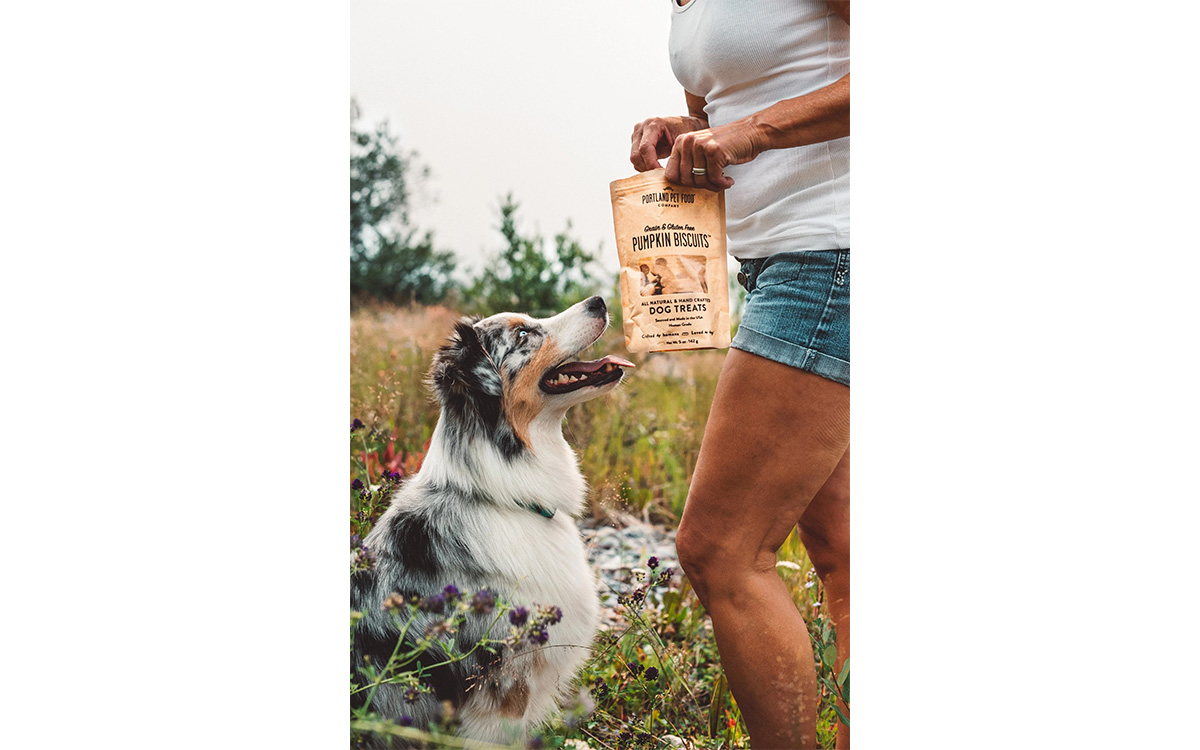
Photo courtesy of Portland Food Company
Here is a classic Oregon take on sustainable pet food: Portland Pet Food Company partnered directly with local breweries to turn spent barley malt grains into Brew Biscuits. These premium dog treats helped divert 13,000 pounds of the nutritious, fibrous brew waste from landfills in 2024 alone. Portland Pet Foods upcycles practically all the main ingredients—salmon, bacon, sweet potatoes, eggshells, and spent grains—thanks to a partnership with Pacific Northwest meat and seafood vendors happy to find a home for those “ends and pieces,” and with the nearby farmers who grow the 15,000+ pounds of sweet potatoes deemed too small or oddly shaped for market. What’s more, through an alliance with TerraCycle, Portland Pet Food allows customers to send many products’ packaging back, where it’s fully recycled. Good news for cat people: In 2022, the brand expanded to include upcycled goodies for felines.
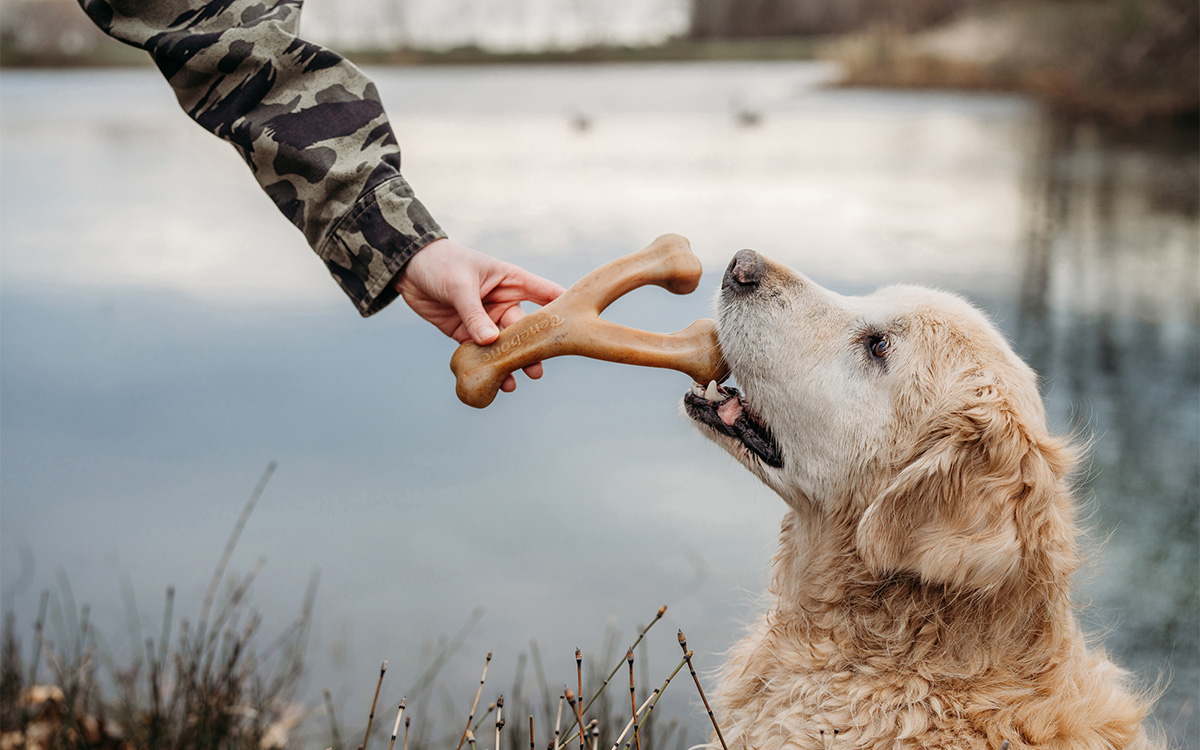
Photo courtesy of Benebone
Benebone makes it easy to give your dog’s chew toys a second life. Once Buddy has chewed through at least five of any brand of dog chew, you can create an account on their site, add the $10 recycling label to your cart (you’ll get it back in $10 credit for new chews), attach the emailed label to your box, and drop it at your local UPS outlet. Benebone will keep your dog’s loved-to-death wares out of landfills, crafting new chews from the wreckage.
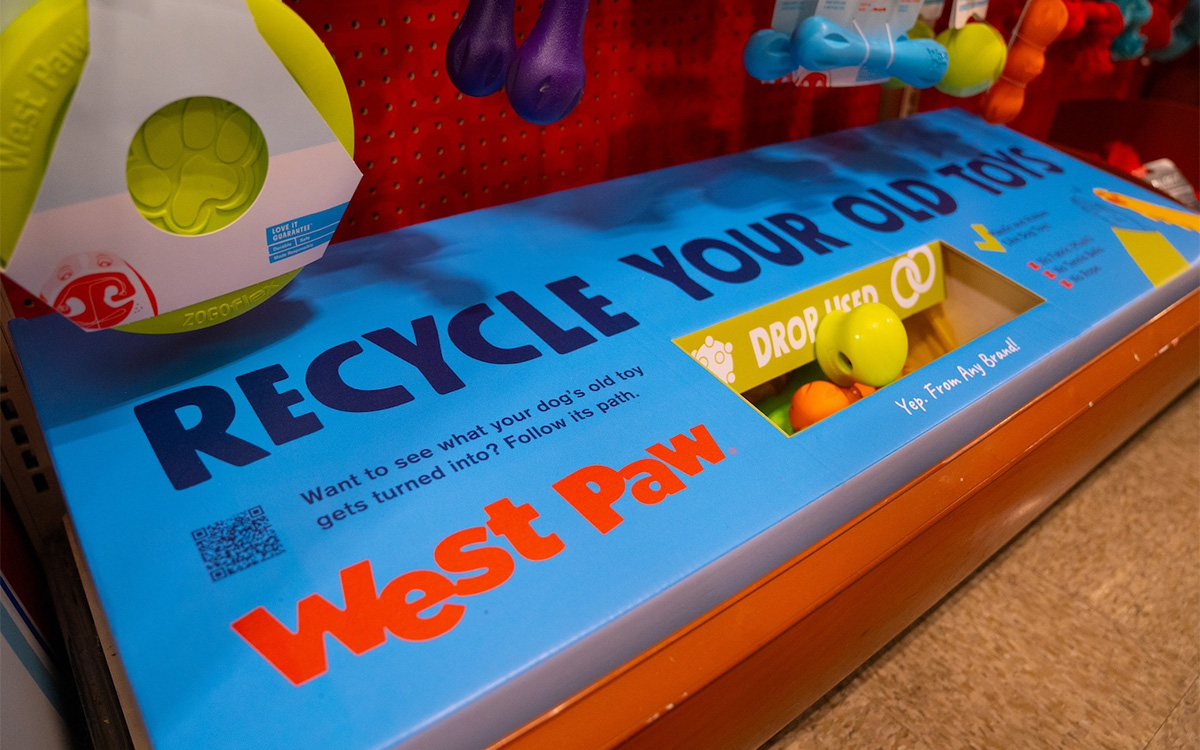
Photo courtesy of West Paw
What exactly is a circular economy for pets?
Learn more about how to mindfully feed and care for your dogs and cats, and help green up the pet industry while you're at it
Spencer Williams, the founder of West Paw, grew up on a ranch in Montana and knew harvested animals’ organ meats were going to waste or compost. In 1996, he founded West Paw with an eye toward investing in supply chains that would support both rural economies and land-conservation efforts. The company’s beef sticks for canines bear QR codes that allow consumers to trace ingredients back to grass-fed cows on regenerative ranches. West Paw will also help you reincarnate dog gear from recycled polyester fibers and repurposed ocean plastic. Inspired by Patagonia’s provocative 2011 “Don’t Buy This Jacket” campaign, West Paw’s “Join the Loop” recycled-gear program empowers consumers to send in or drop off chewed up, loved-to-near-death dog toys to be washed, chipped into little bits, and remolded into new products that can theoretically be recycled infinitely.
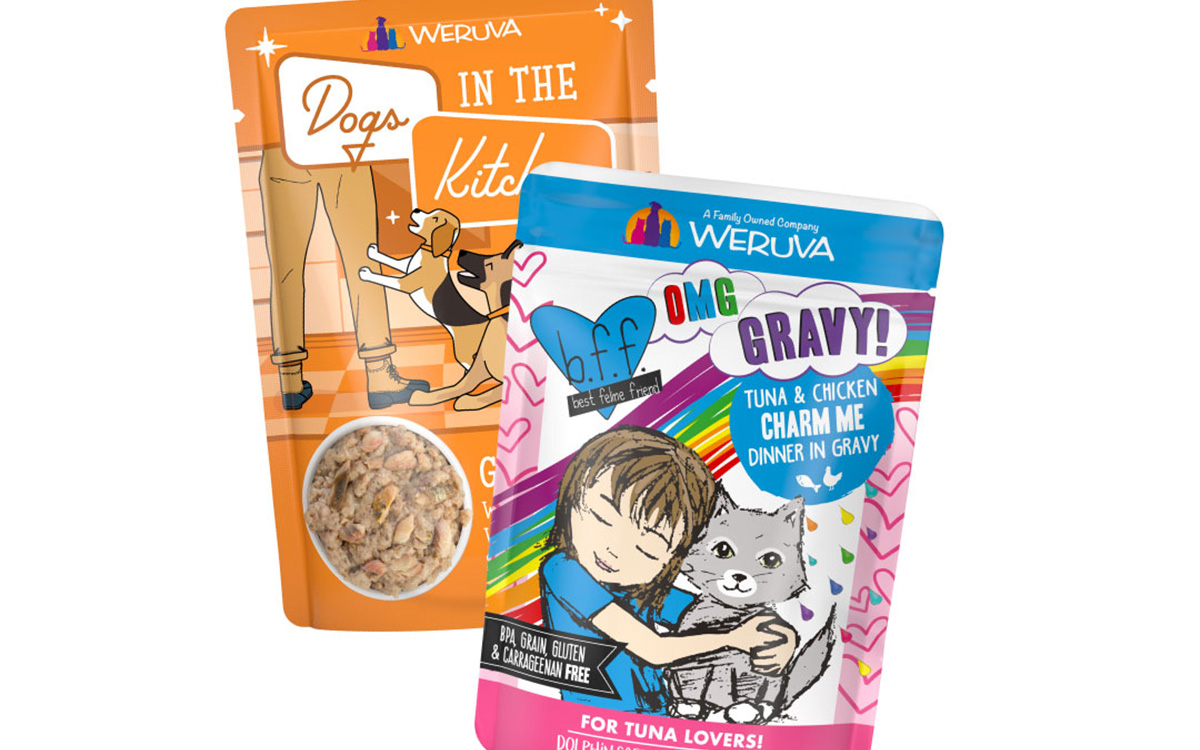
Photo courtesy of Weruva
It’s notoriously difficult to recycle pet food containers, as they often require multilayer or multipolymer materials that are difficult to separate, and also because oily residue left by kibbles and other food particles tend to complicate mechanical recycling operations. Massachusetts-based Weruva has found a way to circumvent that issue via its unique Werucycle Program, launched circa 2022 in an effort to make a dent in the 300 million pounds of annual pet food waste that ends up in landfills. Feed your canines and felines Werucycle-eligible products, clean them out thoroughly, and send them back to Weruva’s headquarters. Thanks to the brand’s partnership with a specialty material recovery facility, Weruva staffers will ensure empty pouches and treat bags are repurposed into plastics for park benches, children’s playground equipment, parking block filler, and more. As of Earth Day 2025, Weruva had recycled almost 300,000 pieces of pet food packaging.
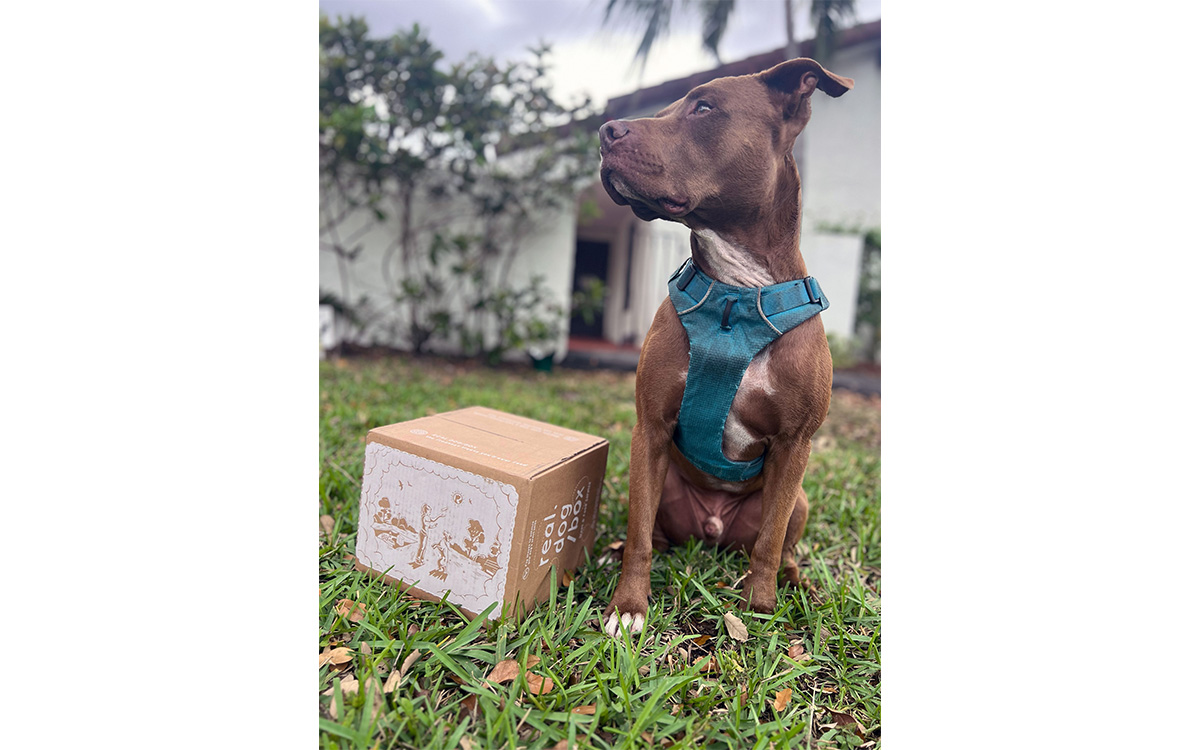
Photo courtesy of Real Dog Box
The team of certified canine nutritionists behind Real Dog Box custom-tailors monthly assortments of treats, toppers, meatballs, and/or chews made from food industry byproducts like lamb ribs, “anchovy bits,” duck heads, and pig ears upcycled into nutrient-dense treats delivered to your front door. The products come in reusable bags tucked into recycled cardboard boxes. A subscription runs from $12 to $60 a month, and with text access to nutritionists, they’re great options for pups with allergies, food aversions, and specific dietary needs. Real Dog Box boasts a tapeless, plastic-free, and reusable design, and it typically comes with reusable stickers and other zero-waste goodies. As they say, circular variety is the spice of life.
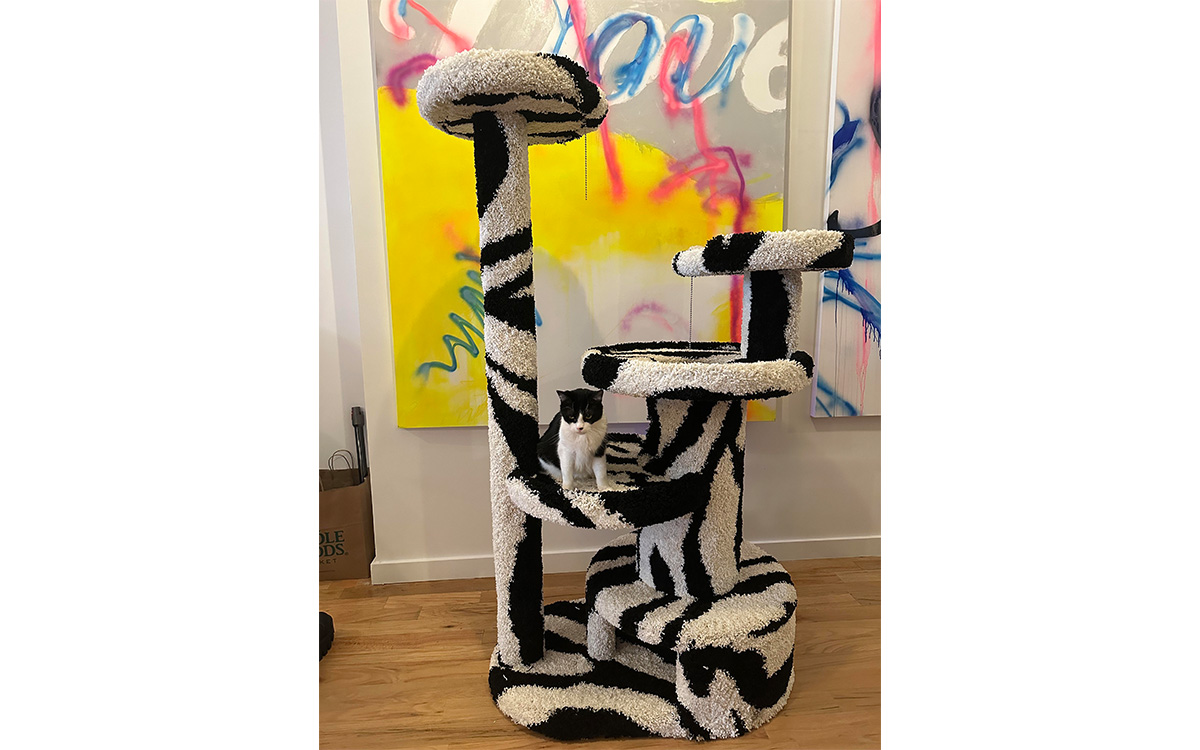
Photo courtesy of Purrniture Cat Furniture
Purrniture Cat Furniture is a line of high-end cat trees, cradles, pedestals, steps, and more made from surplus materials diverted from landfills and covered in carpeting scraps. The company took off at a '90s-era Minnesota State Fair when it unveiled an ergonomic feline jungle gym made from scavenged wood and old wooden electrical spools. Founder Darryl Michaelson’s guiding philosophy? “Utilize existing products and think like a cat.” Purrniture’s St. Paul, Minnesota, store hosts regular cat adoption events and employs special-needs adults who live with disabilities.
Inspired by the environmental potential found in insect protein, the humans behind Montreal-based Wilder Harrier began upcycling bugs into pet food with the 2016 launch of biscuits made from cricket protein. As it turns out, dogs also love the taste of black soldier flies, which veterinarians say carry solid potential for allergy relief. So Wilder Harrier provides complete insect-protein dog food. Your pooch is more of a seafood aficionado? Wilder Harrier found a way to fish invasive silver carp out of US waters to help stop their spread into the Great Lakes, where they wipe out native fishing stocks. The company then upcycles them into the brand’s omega- and probiotic-rich Sustainable Fish Formula, intended to promote gut health in sensitive stomachs. Wilder Harris also crafts canine vittles from brewery byproducts, surplus produce, and even leftover pulp from fellow Canadian food-waste-fighting company Loop Mission’s juices. Canadian customers are eligible to partake in Wilder Harrier’s free mail-in recycling program, created to divert empty pet food bags from landfills.
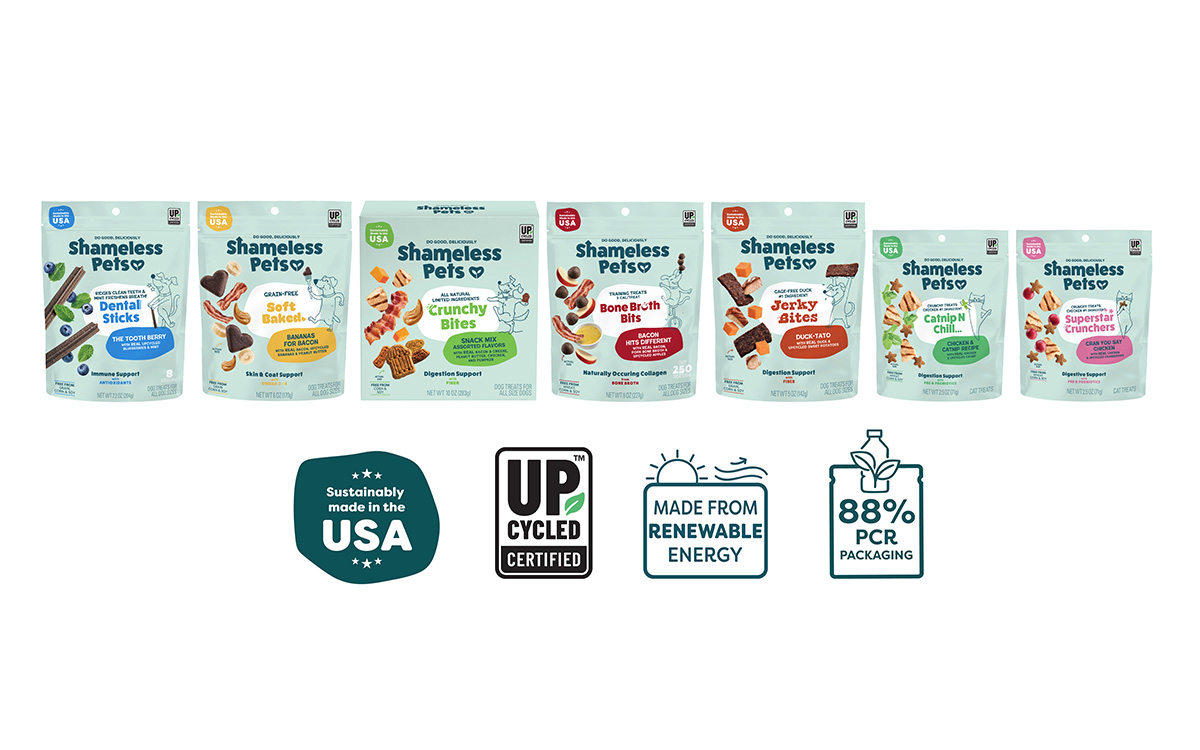
Photo courtesy of Shameless Pets
Launched in 2017 to take a bite out of food waste, Shameless Pets proffers nutritious dog and cat treats made from human food supply discards. Think apple pulp from cideries, lobster shells (which can provide a boon for dogs’ achy hips) from cannery operations, and all manner of produce that simply didn’t meet grocery stores’ high cosmetic standards. The Chicago-based brand’s website makes all intel about ingredients and partnering farms transparent and educational.
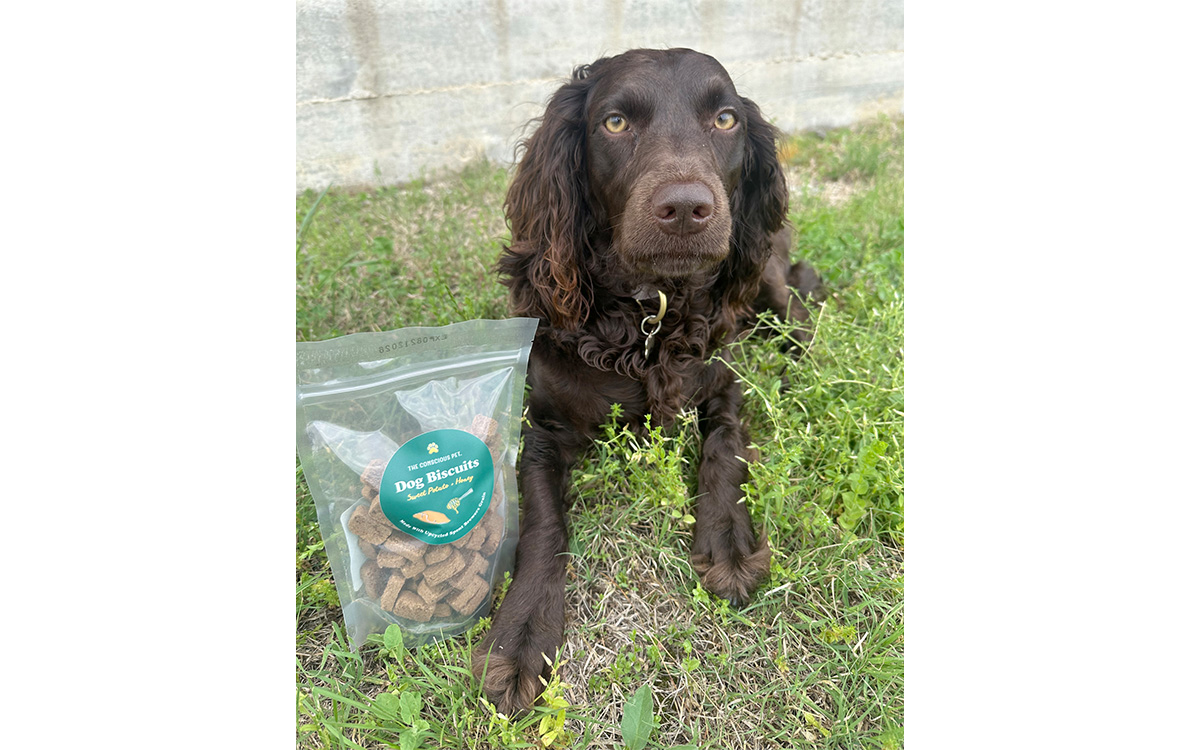
Photo courtesy of the Conscious Pet
The Conscious Pet, based in Austin, Texas, partners with local restaurants and other food businesses to recover surplus unused food and kitchen scraps. The scraps are then dehydrated via a proprietary, renewable-energy-powered process and transformed into pet treats. In addition to the treats' production being zero waste and intensely local, they're packaged in a fully compostable bag.
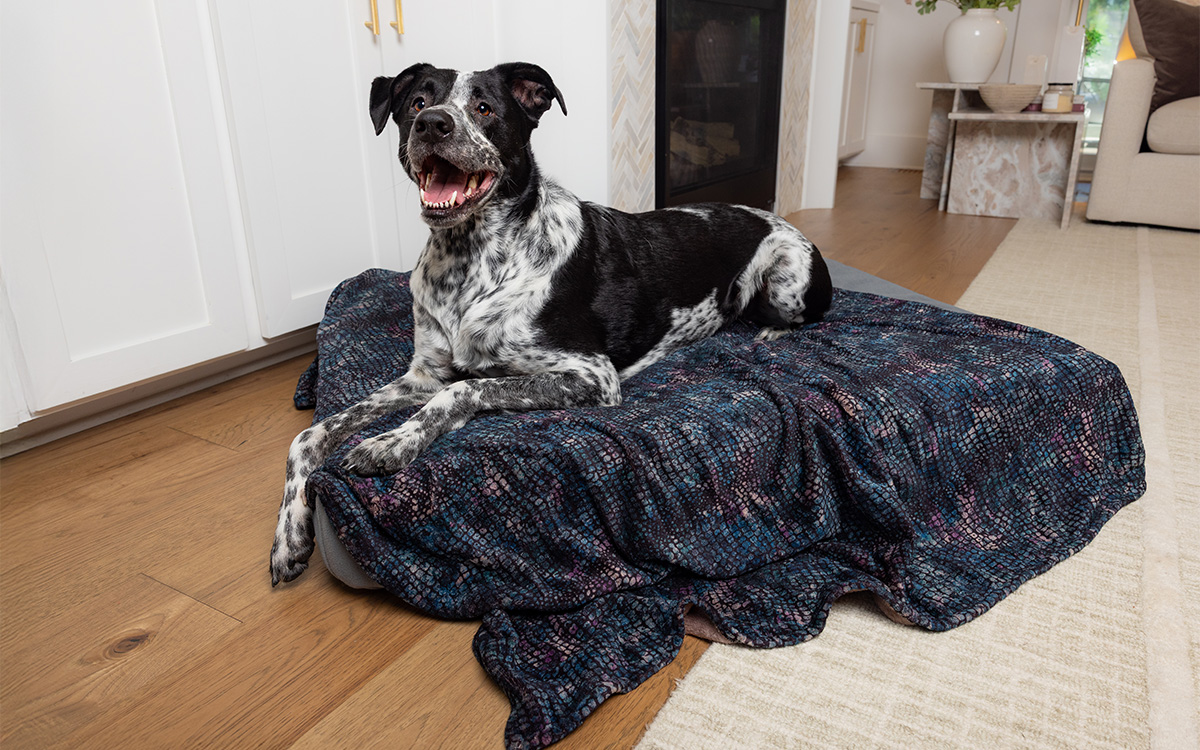
Photo courtesy of Blue Toby Sustainable Pet Products
Animal behavior scientist Linda Brent launched Blue Toby Sustainable Pet Products with a dog bed made from circular materials including organic cotton and other recycled textiles, foam cast-offs from local North Carolinian furniture manufacturing, outer covers made from soda-bottle-powered polyester, and a second cover designed to be easily removed for washing. The idea, Brent says, is to catalyze a paradigm shift in which people start viewing their pet beds as part of their home’s permanent furniture-scape, rather than disposable objects. All Blue Toby Products are designed and manufactured—sans chemicals, and with all foam and latex scraps shredded and used in other products—within the same 100-mile radius and shipped in recycled materials. For every dog bed sold, the brand donates a blanket to shelter pets and plants a tree.
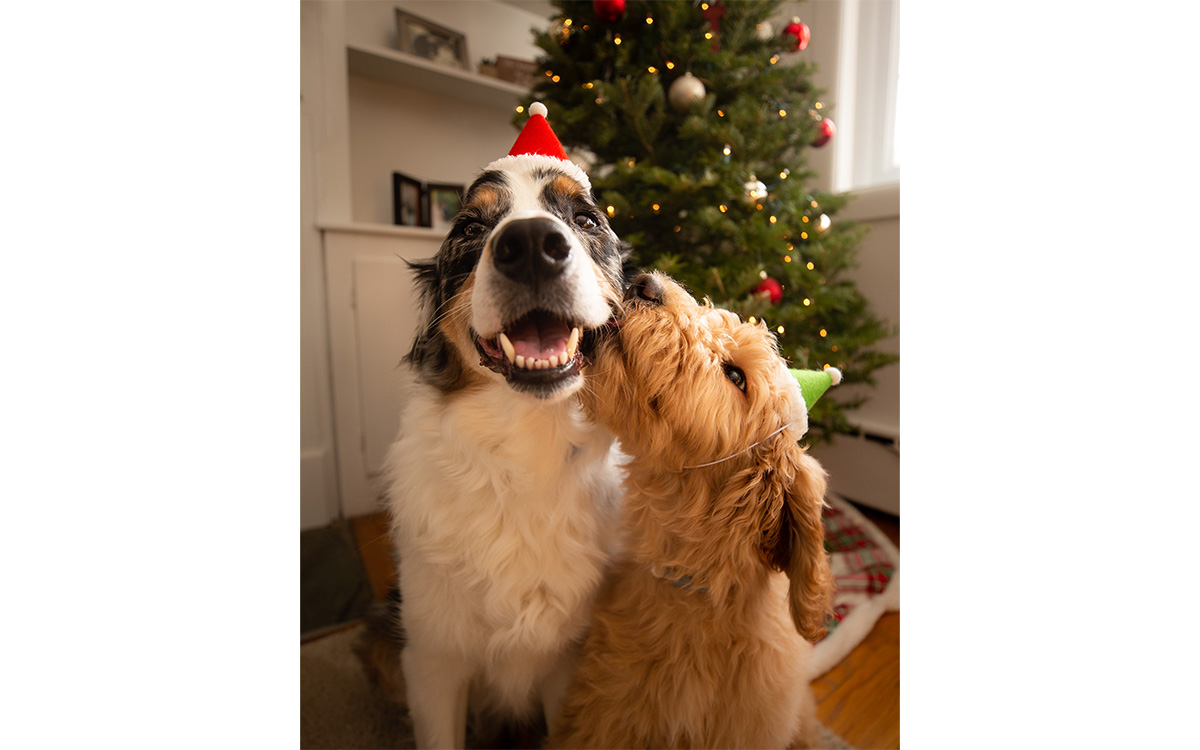
Photo courtesy of ModernBeast
Founded by animal rescue advocates, ModernBeast exists to eliminate excess and bolster animal welfare organizations—which receive 100 percent of profits. Every aspect of ModernBeast production is driven by its commitment to the circular economy: Felt cat toys are dye-cut from (naturally regenerating) wool and the discards repurposed to craft the brand’s signature felt hats. Dog beds are stuffed with a high-loft fiber made from entirely recycled materials—each pound diverts seven 7 Up bottles from landfills. Bandanas are cut from large yards, the offcuts of which are transformed into mod mice toys for felines. Modeled more like a nonprofit (think Newman’s Own for dogs and cats) than a traditional company, ModernBeast started as a wholesale fundraising business, morphed into a pop-up retail store at a Los Angeles mall that got so popular it overstayed its month-long lease by two years, and finally, became an online site with global distribution.
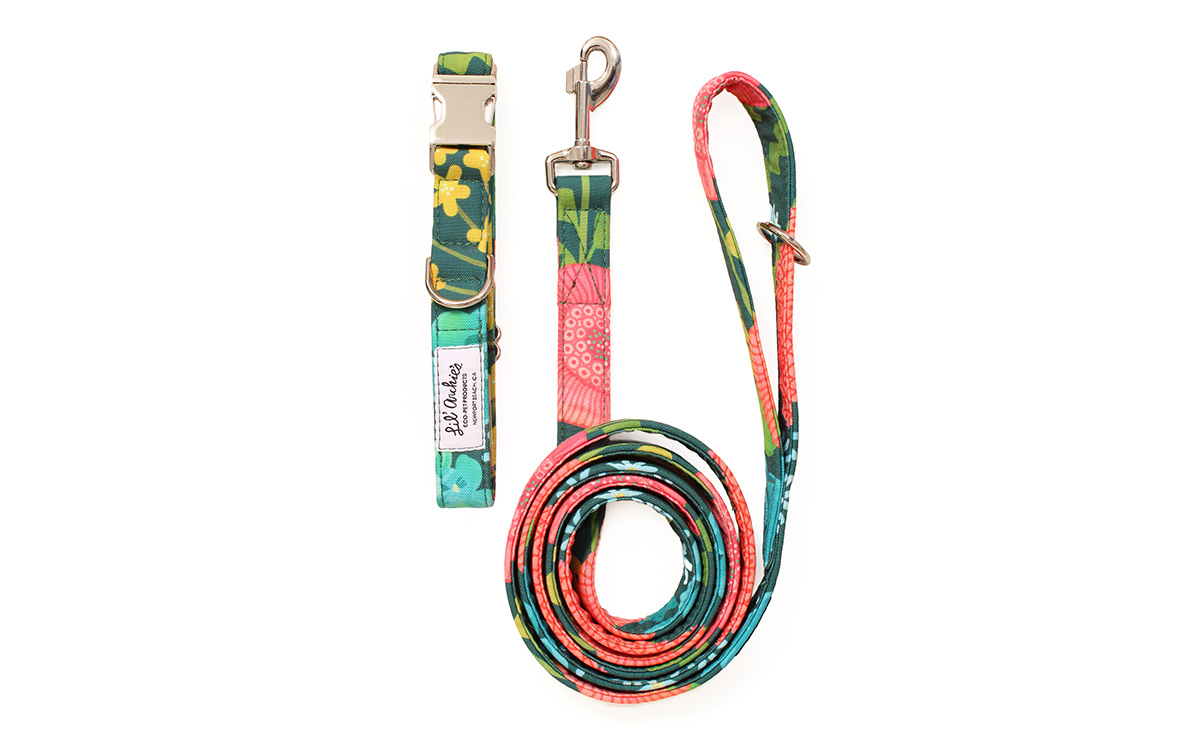
Photo courtesy of Lil' Archies
A small operation that began with compostable poop bags, Lil’ Archies has since unveiled popular leashes and collars boasting recycled fiber and webbing made from recycled polyester that started life in the form of plastic bottles. Lil’ Archies’ dog waste bag dispensers are made from partially recycled canvas, and founder Melanie Lipsie crafts canine accessories from organic cotton. Whenever possible, she upcycles excess material from the manufacturing process into limited-run dog gear offerings and hosts frequent sample sales.