 Who are the Arizona Water Sentinels?
Water Sentinels are volunteers who do hands-on conservation work to protect Arizona’s rivers and streams. We’re a program of Sierra Club’s Grand Canyon (Arizona) Chapter and collaborate with the national Sierra Club Water Sentinels program whose mission is to protect, improve, and restore the nation’s waters.
Water Sentinels do this by fostering partnerships to promote volunteer water quality monitoring, public education, and citizen action to protect local water bodies and their watersheds. Every year, volunteers spend over 1600 hours monitoring water quality and flow and removing trash and invasive plant species from our rivers, planting native vegetation and maintaining trails, and conducting outreach at nature-themed festivals and events.
What do the Arizona Water Sentinels do?
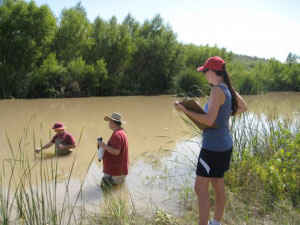
The Arizona Water Sentinels go to the Verde River (since 2006) and the San Pedro River (since 2011) once a month, May through October, to conduct water quality monitoring. Water Sentinels measure water quality parameters such as pH, dissolved oxygen, conductivity, and total dissolved solids concentrations in the rivers in order to assess the general health of the river. We collect water samples to determine concentrations of E. coli bacteria, and in some cases copper, arsenic, total nitrogen, total phosphorus, and suspended sediment in the water. We share Water Sentinels data with the Arizona Department of Environmental Quality so it can be used for §305(b) water quality assessments required by the Clean Water Act. These data help to inform decisions about better protecting these rivers.
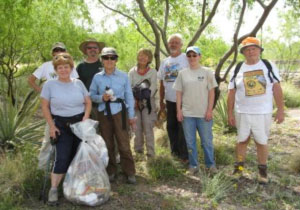
Water Sentinels organize stream clean-ups and we work to restore riparian areas. For example, Water Sentinels are working in the Rio Salado Habitat Restoration Area near downtown Phoenix to remove buffelgrass, an invasive grass that poses a wildfire danger and crowds out native plants in the Salt River riparian corridor, as well as other invasive plant species. Every month (except August), Water Sentinels gather at the restoration area to remove trash and invasive species and plant native plant species in the riparian area.
Where do Water Sentinels work in Arizona?
The Water Sentinels work primarily on the Verde, San Pedro, and Salt Rivers, though our advocacy has impacts state-wide. The Verde River is one of the largest perennial rivers in the Southwest and has one of Arizona’s most important riparian corridors, providing key habitat for many species, including threatened and endangered species. The Verde River offers a multitude of recreational opportunities and is an important source of drinking water for the Phoenix metropolitan area. This river faces significant threats from excessive groundwater pumping to feed growth and development, plus there are water quality concerns with certain stretches of the river. They include bacteria, excessive sediment, and elevated arsenic concentrations. Water Sentinels visit five sampling sites on the Verde River. We have nominated a portion of the upper Verde to be designated as an Outstanding Arizona Water by the Arizona Department of Environmental Quality (ADEQ).
The San Pedro River is a truly remarkable natural resource, holding immense ecological and cultural value. However, it faces significant threats that require ongoing conservation efforts to ensure its continued health and survival.The San Pedro River is a vital, yet threatened, river in Southeastern Arizona, known for its biodiversity and unique ecological significance. It's the last major undammed river in the desert Southwest and supports one of the richest riparian ecosystems in North America. Water Sentinels monitor water quality at six sites within the San Pedro National Riparian Conservation Area near Sierra Vista. The river serves as a crucial migratory corridor for birds, with nearly 45% of bird species in North America using it at some point in their lives. The San Pedro River supports a remarkable array of plant and animal life, including many rare and endangered species like the jaguar, ocelot, and southwestern willow flycatcher. The river is a vital resting and breeding ground for millions of migratory birds, making it one of the most important birding areas in North America. The San Pedro River's lush riparian corridors provide crucial habitat for a wide range of wildlife, including mammals, reptiles, amphibians, and fish. The most significant threat to the San Pedro River is the unsustainable pumping of groundwater that supports the river's base flow. Drought and changing rainfall patterns are also impacting the river's water supply and overall health. The construction of a border wall along the river raises concerns about the impact on wildlife and the river's natural flow.
Why do Water Sentinels volunteer?
Water is life in the desert. Arizona’s remaining perennial rivers and streams are precious water resources that deserve protection. Water Sentinels are citizen advocates who volunteer because they care deeply about a local stream; or they’ve seen too many Arizona rivers reduced to bone-dry washes through impoundments, diversions, and groundwater pumping; or they have witnessed their degradation by pollution and they want to do something about it. Water Sentinels volunteer their time to protect our remaining rivers and streams and to take effective action to restore streams and riparian areas that have already been damaged.
How can I get involved?
If you are interested in clean water or hands-on conservation work to protect streams and watersheds, then the Water Sentinels program is for you! For more information about the Water Sentinels program, contact Jennifer Martin-McLeod, our Water Sentinels Program Manager, at (602) 254-8362 or jennifer.martin@sierraclub.org
Reports and Data
State of the Verde 2024 Update
Going with the Flow Update (Nov 2024): Analysis of Water Sentinels flow data for the Upper Verde River
- see Press Release (Nov 12, 2024) = "Water Sentinels Sound Alarm on Verde River's Declining Flows"
Update on Going with the Flow (2018) - An Update of the 2013 report that includes 2012-2017
Going With the Flow report (2013) - A summary of five years of Water Sentinels flow data collection on the Upper Verde River
The State of the Verde River report (2012) - A summary of five years of Water Sentinels water quality data on the Verde River
Links
Arizona Water Sentinels factsheet
De Agua de Arizona Centinelas de la hoja
A video overview of the Water Sentinels Program
AZ Sentinels SPR Presn 20160721 final revisedAD...
Murray Springs - Curry Draw Wells (1).pptx
National Sierra Club's "Water Sentinels" page
Project Thrive (website): "Water Sentinels Program", April 19, 2012