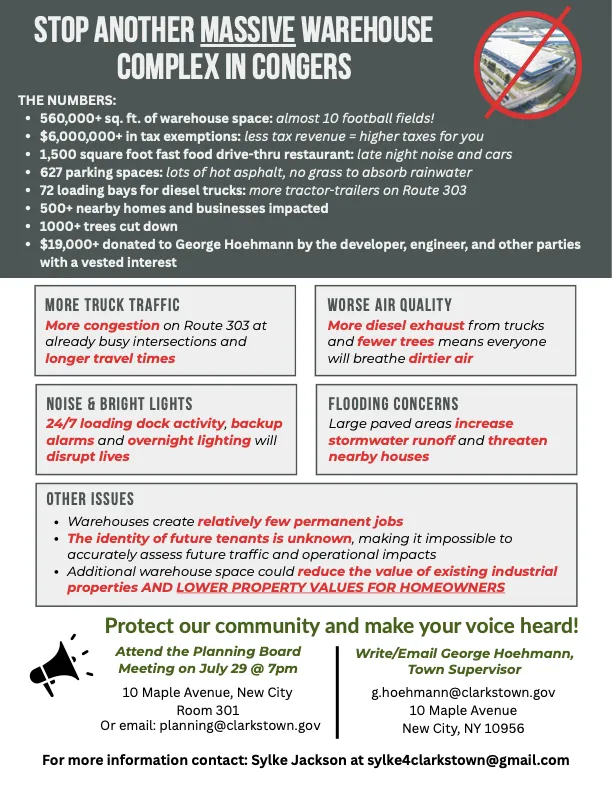
YOUR VOICE IS NEEDED TO PROTEST MASSIVE NEW WAREHOUSE PROPOSAL IN CLARKSTOWN, ROCKLAND COUNTY
July 22, 2026
Do you really want to sit in even more traffic in Clarkstown? If not, speak up now!
Come out on July 29th at 7 pm to the Planning Board meeting.
And send your thoughts ahead of time to:
Clarkstown Town Supervisor George Hoehmann at g.hoehmann@clarkstown.gov or call (845) 639-2050.
Contact your Clarkstown Town Council member by clicking HERE.
Send also to the Planning Board at: planning@clarkstown.org.
See talking points below.
Talking points:
The Planning Board must reject the application for a set of additional massive “warehouses”.
This application should be rejected due to the following factors:
Cumulative impacts of this new set of massive distribution centers must be considered in addition to the newly constructed warehouse off Route 303 in Valley Cottage once fully occupied.
Traffic: Increased risk of accidents. The impact of adding constant tractor trailer and medium sized truck traffic traffic to the already very dangerous intersection of 303 and Lake Road cannot be minimized. Even if a traffic circle is added, cars will have to navigate a roundabout together with very large trucks that block visibility.
Traffic: Increased congestion. The intersection of Route 303 at Lake Road is a point at which traffic already builds up, so that at times, it can easily take more than one light to pass through the intersection.
Air pollution: Again, the cumulative impacts of this new very large set of distribution centers must be considered together with the impacts of the Valley Cottage warehouse once fully occupied.
Noise pollution: The impact on surrounding residential areas must be considered, with back up beepers going all night long. The impact on wildlife must be considered as well.
Light pollution: The impacts on the surrounding residential areas must be considered from floodlights on all night. The impact on wildlife must be considered, as well.
Conservation easement: The developers propose construction on a conservation easement, with no public benefit to any trade of property.
Trees: Hundreds of mature trees would be cleared, with climate impacts, as well as impacts on wildlife, flooding, and erosion.
Wetlands: The impact on 5.5 acres or more of wetlands must be considered.
Loss of habitat and impact on wildlife, due to all of the above.
Climate impacts: Climate impacts from the removal of a large number of mature trees and the greatly increased truck traffic
Flooding: The Cedar Corners sites are uphill from a residential community immediately to the west.
Impact on quality of life for residents: Over and over, residents have expressed their desire for a quiet and less stressful way of life, free of heavy traffic and pollution.
Economic viability: This area already has a glut of warehouses, with an empty warehouse just down the road in Valley Cottage.
We also ask the Town Board to review and amend the Comprehensive Plan and zoning for:
Warehouses: It is clear that the warehouses that are proposed are very different from warehouses in the past. The Comprehensive Plan and zoning should be revised to incorporate the impacts of this new phenomenon and be ready proactively for these proposals. We believe that these centers should be zoned only for roads that are immediately adjacent to and alongside the highway in order to minimize impacts.
Data centers: The new proposals for data centers are completely different from earlier data centers. The impacts include: high energy use, leading to increased energy utility bills for residents - and impacts on our water supply and constant noise and air pollution. The job increases are minimal.
Free PFAS Testing Available for Eligible Residents & Business Owners
In May 2026, Westchester County Executive Ken Jenkins announced that Westchester County residents and business owners who rely on private wells for drinking water can now apply for free PFAS testing through a New York State pilot program aimed at protecting public health and improving overall water quality.
The Private Well PFAS Testing and Mitigation Rebate Pilot Program provides eligible homeowners, renters, and businesses with free testing for per- and polyfluoroalkyl substances (PFAS), commonly known as “forever chemicals,” as well as financial assistance to install water treatment systems or connect to a public water supply if contamination is found. Westchester is one of six counties selected to participate in the statewide pilot. The program will also help inform future efforts to protect New Yorkers who rely on private wells.
Eligible participants will receive PFAS testing at no cost. If testing finds PFOA or PFOS at or above New York State’s drinking water standard of 10 parts per trillion, participants may qualify for rebates of up to $5,000 to install a whole-house treatment system or up to $10,000 to connect to a public water supply where available. The program is open to eligible homeowners, renters with property owner approval, and certain businesses that operate private wells.
Major kudos to our state legislators, Senator Pete Harckham and Assemblymember Dana Levenberg, for the state funding to run this critical program.
Note that the program applies to Dutchess, Orange, Putnam, Suffolk, Ulster, and Westchester counties.
(This article was adapted from the email newsletter of Westchester County Legislator Emiljana Elaj.)
ACTIVISTS MARK TEN YEAR ANNIVERSARY OF STOPPING DESALINATION PROPOSAL FOR ROCKLAND’s DRINKING WATER
By Peggy Kurtz
Landmark Victory
Ten years ago, a citizen led movement in Rockland County prevailed against overwhelming odds in a true David and Goliath battle for the environment.
After eight years of struggle, Rockland County residents defeated a desalination proposal by Suez Water, the world’s second largest water company. On December 17th, 2015, the New York State Public Service Commission (PSC) ordered Suez to abandon plans to desalinate water from the Hudson River for Rockland’s drinking water. That victory was largely the result of the grassroots efforts of a core group of informed citizens, supported by larger regional organizations and elected officials. Sierra Club activists played a key role in this battle against all odds.
The landmark decision followed eight years of organizing by the Rockland Water Coalition, comprised of 34 local grassroots civic and environmental groups and larger organizations, such as Sierra Club, Riverkeeper, Scenic Hudson, Food & Water Watch, Citizens Campaign for the Environment, and Clearwater, supported by key elected officials.
During his first term, Trump set his sights on dismantling the Endangered Species Act. Now his administration is at it again, publishing draft regulations that – if enacted – would decrease critical protections for threatened and endangered species. Not only does this put wildlife in danger, it also would make the current extinction crisis worse.
The Endangered Species Act is the last line of defense for species facing extinction like the gray wolf, grizzly bear, and orca. Submit a comment to the US Fish and Wildlife Service today asking them to maintain strong protections for endangered species!
Tell Congress: Keep Polluters' Hands Off Public Lands!
National parks, national monuments, and other public lands and waters are some of our country’s most popular areas for exploring nature while conserving landscapes, clean water, and wildlife for the future. They are part of what makes this country great, but the Trump Administration, some members of Congress, and certain state leaders want to give away these cherished places to billionaire corporate polluters to increase drilling, mining, and logging. It’s more important than ever to demand that your members of Congress do all they can to defend the national monuments and other public lands and waters we all love. Send your message today!
Clean Energy is the Key to Lower Bills -- Take Action Now
Families across the U.S. are paying more than ever for necessities -- and skyrocketing energy bills are making it worse. But while the Trump administration sides with fossil fuel companies and drives up costs, clean energy is proving it can power the world affordably and reliably.
👉 Take action now: Tell the Trump administration to stop blocking clean energy and start putting families first.
Join us in calling for policies that lower costs and protect families by accelerating the clean energy transition.
Lower Hudson Group Comments to NYS Drinking Water Quality Council
Comment on proposed revisions to the PFAS National Primary Drinking Water Regulation
Peggy Kurtz
Lower Hudson Group of Sierra Club, New York
December 10, 2025
I submit these comments on behalf of Lower Hudson Group of Sierra Club in New York State, with over 4,000 members and supporters.
We ask the Council to recommend that EPA implement without further delay all of the April 2024 EPA PFAS standards.
Within our Sierra Club group, nearly 3 out of 4 of our counties include some areas with drinking water contaminated with PFAS chemicals.
In Rockland County, NY, where I live, nearly every one of our drinking water sources are contaminated with PFAS, many of them with multiple PFAS.
Many of our wells and reservoirs are contaminated with PFOA and PFOS at levels slightly below New York State standards, which means that they remain unfiltered, despite EPA findings of harmful health effects at even the lowest detectable levels.
But for us this is not just about the two legacy PFAS chemicals. At least six of the PFAS found in Rockland’s drinking water are not regulated at all in NYS. Implementing the PFAS regulations can make a very substantive difference to hundreds of thousands of people in Rockland County between continuing to drink water that is contaminated with PFAS – or not.
Given that the risks of certain PFAS chemicals have been well researched and widely known to regulators at least since the early 2000s, it is unacceptable to continue to expose nearly one third of the population of the U.S. to chemicals with known toxicity.
The argument is raised that the cost of filtration is too high. But according to the EPA, with these standards, the avoided costs of health impacts are about the same as the costs of compliance. But the calculated avoided health costs left out an impressive list of full impacts: developmental, cardiovascular, liver, immune, endocrine, metabolic, reproductive, musculoskeletal, and carcinogenic effects.
According to the EPA, with the proposed standards, “Fewer people will get cancer or liver disease, pregnant women will have reduced risks, and more and children and infants will be stronger and grow healthier.” Indeed, how do you calculate the benefit of a healthy child?
We have had the science for years. Let’s not make the mistake that was made with lead, to wait for decades, thus exposing an entire generation – and in this case, because of the durability of these chemicals - future generations – to higher risks.
As a society, we are already paying a heavy price for acting too slowly to regulate these toxic chemicals. Excessive caution exposes all of us to more expense and more risk.
Most important, strong EPA regulations now will also send a strong signal to the chemical industry to pivot to invest in safe alternatives. These regulations send the message that pivoting to the short chain PFAS is also not the answer.
Given the extraordinary persistence of PFAS, the toxicity and durability of these chemicals, and their ubiquitous presence, it would be a betrayal of the trust of the American people to rescind and delay these regulations. The time has come for a proactive and precautionary approach to protect the drinking water of millions of Americans.
It is unconscionable that EPA has chosen to rescind some of the PFAS regulations, which were based on settled science. But at such a time, New York can no longer wait for federal regulations. New York must lead the way for other states by taking that proactive approach to protect New Yorkers.
Letter From Executive Director Loren Blackford on Recent NYT Coverage
I know many of you are reeling right now, inundated with questions from friends and supporters who read the New York Times article. Some find the article to be a vindication, a wake-up call, or a learning opportunity. I strongly believe in the importance of learning from what has worked and what hasn’t and constantly evolving to meet the moment. Our ability to do so has made Sierra Club the vibrant, powerful organization it has been for over 130 years and we are not stopping now! We must learn, heal and adapt to move past some difficult years, face some of the greatest challenges we’ve known, and together build a future worth being part of.
That said, a hit piece is not the teacher we needed. The Times proved remarkably resistant to the facts, data, and perspectives of anyone who disagreed with their narrative.
If you have not seen them already, below are the official Sierra Club posts. Please feel free to share.
If you, or someone you know, wishes to join us in our important work to explore, enjoy, and protect the planet today, please click here!
Now, the facts:
This article was wrong about the Sierra Club.
Here are some of the key items that were inaccurately reported. I encourage you to share this information with those in your networks who inquire.
Donations
Contrary to the narrative of decline, in 2024, we raised $20 million more than we did in 2017. This fact was obscured by misleading reporting and a revenue and expense chart that ignored our audited financials and disregarded GAAP accounting rules that mandate multi-year gifts be fully reflected in the year they are received, even though expenses are charged against them over multiple years. Sierra Club received its highest donations ever in 2019 due to a successful capital campaign. Much of our 2019 revenue was from multi-year campaign gifts that covered expenses incurred over the following years.
Membership
Like many other organizations, the Sierra Club has changed its terminology and methodology for counting membership, making comparisons difficult. Until 2022, in the nonprofit sector, the number of members and activists was the primary measure of an organization’s effectiveness and power. Now, with better analytics, the rise of behavioral science, and the increasing urgency for more effective climate and conservation solutions in our movement, Sierra Club has moved away from list size as a measure of effectiveness towards a value-based model, where we track our priority outcomes such as lifetime value, member retention, event participation, and petition signatures. Our lists now focus on the people who are currently active with us. Right now, we have 3.38 million members and supporters, including our active email lists.
Political Power
Sierra Club’s greatest political impact has always been our grassroots power – all our staff and volunteers who actively engage in elections up and down the ballot. We saw this influence last week, when Sierra Club helped elevate voters’ concerns about spiking energy prices and AI data centers to help power wins at the gubernatorial, mayoral and public utility commission levels. Not only did the article entirely fail to acknowledge our main form of political power, it reported that Sierra Club had no political donations in 2024, rather than the $1.5 million that we spent in the 2024 cycle.
Equity and Justice
The article focused extensively on how Sierra Club incorporates equity and justice into its work. While it surfaced concerns that some people have raised within and about the Sierra Club, it hewed rigidly to an either/or framework where a tight environmental focus is incompatible with work on equity or justice. There was no room for nuance or the possibility that these are not just values, but also a critical component of how we pursue our mission and achieve our campaign goals.
The article distorts our equity work in many ways. Most notably, we never had 108 staff members just working on equity. Instead, we encouraged everyone to consider how they engage with and serve all Americans in their work to protect clean air, water, and public lands. If only a narrow group cares about climate change and environmental protection, our wins will be limited. Only a broad, powerful movement can drive transformative change. While our priorities, strategies and language will always evolve, the Sierra Club’s core mission has never changed, and we are focused and united in meeting this critical moment.
The article is also wrong about our movement.
While the story is about the Sierra Club, it reads like a broader referendum that a theory of change rooted in mutuality and solidarity across connected issues should be cast aside for hardened lanes and singular-issue campaigns. I do not agree. I’ll be the first to admit we don’t always get it right, but I am proud to be in the productive struggle of navigating the choices for when we lead, when we support, and when we act in solidarity. Right now, parents are keeping children indoors, away from public parks where ICE agents may be present. As energy prices rise, we are engaging thousands of people to talk not just about any one power plant, but all the ways the system is rigged to favor corporations over customers.
We are unequivocally focused on our environmental mission and goals. Our level of success in achieving these goals will have enormous impacts on health, affordability and other issues people care about. Similarly, our successes will depend on protecting freedom of speech, the rule of law and a functioning democracy… and on being part of a broad, powerful movement. We cannot do this work alone.
As the first woman to ever have the honor of leading the Sierra Club, it wasn’t lost on me that the same weekend the New York Times published its story about the Sierra Club, it put out a piece titled “Did Women Ruin the Workplace?”. It’s hard not to see these stories as related efforts to put us all in our places, in our boxes, back in the confines of roles and movements that fit someone else’s narrative.
Where Are We Now and What Comes Next?
The article is a retrospective that dredges up old stories and says nothing about what has happened since, much less where we are heading. Well before it came out, we were addressing issues it raises, most notably:
Accountability
Over the past several years, we have worked to simplify and improve our accountability processes, including making sure people are aware of allegations against them. In a major step, we recently rolled out a new Equal Opportunity Policy that provides equal protections and accountability for staff and volunteers and focuses investigations on claims of harassment or discrimination. Under the new policy, we will train supervisors and volunteer leaders to immediately address cases of disrespectful behavior. Having thus streamlined our system, Sierra Club will be able to respond to harassment and discrimination cases more quickly and effectively with investigations and, where appropriate, disciplinary actions. We are committed to making the Sierra Club a place where everyone is treated with dignity and respect. The former Commissioner of the Equal Employment Opportunity Commission who worked with us on this, and has seen many of these policies, said she believes our policy will become the gold standard for any organization, especially one with volunteers.
The Path Forward
While I have only been the Executive Director a short time, during my 20 years in Sierra Club board and senior leadership roles I have built a deep knowledge of, commitment to, and belief in this organization. I am also excited to bring my community development background to bear on the challenges of getting clean energy built at the scale needed to address climate change while supporting local initiatives, and protecting natural places and everyone’s access to and enjoyment of them. I know there is work to be done. I look forward to sharpening and deepening our efforts to engage with more people around a collective vision of healthy, thriving communities and ecosystems.
In August, I had the privilege of speaking with over 400 Sierra Club staff and volunteers alongside Board President Patrick Murphy. In these Community Conversations, we heard about the concerns and hopes in our community and felt the incredibly potent energy within our movement and teams. I have felt similar energy and courage in coalition spaces such as the Blue Green Alliance, the Climate Action Campaign, the Equitable and Just National Climate Platform, and Americans for Alaska and, of course, in the recent massive No Kings mobilization. The article’s characterization of our movement as “exhausted” couldn’t be further from the truth - we are fired up and ready to powerfully meet this moment.
The Sierra Club has an important leadership role to play in the environmental movement going forward. To ensure we rise to this challenge, Sierra Club leaders and our elected Board of Directors are engaged in developing a new strategic plan, rooted in our 2030 Strategic Framework. Through this process, we will work with our community to adapt specific strategies as needed, without wavering from our goals of accelerating the transition to clean energy; protecting clean air, water, lands, and safe and healthy communities; and promoting access to the outdoors for all. This work is not only strategic, it is joyful and meaningful, and we will keep working to build a more powerful movement.
This is our story to write.
Lower Hudson Group activists rally to protest federal actions
NO KINGS! rallies on June 14:
Four corners in Nanuet
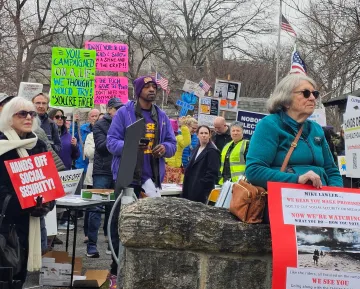
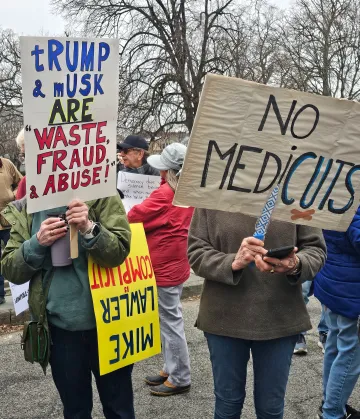
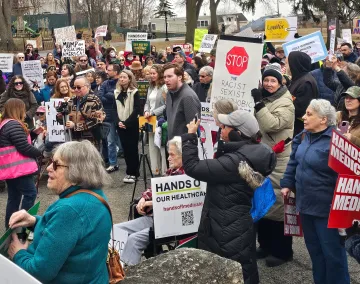
Activists from Lower Hudson Group have been joining other local organizations, including the NAACP, Food & Water Action and Grassroots Education, to protest the actions of the Trump administration to unilaterally shut down federal agencies and impose a funding freeze on Congressionally mandated appropriations. Jan. 29, 2025, saw a rally to encourage Congressman Mike Lawler to vote against de-funding federal programs to remove lead pipes from our drinking water systems. County Legislators Nancy Montgomery (Putnam) and Beth Davidson (Rockland) joined other speakers to warn of the dangers of children's exposure to lead.
Lower Hudson Group also joined local organizations at Senator Schumer's Peekskill office on Feb. 4
and at Congressman Lawler's Mahopac office on Feb. 11.
Here are a few scenes at Patriot's Park, Tarrytown, on March 15:
Coalition to Prevent Westchester Airport Expansion
The Coalition’s purpose is to ensure that the County’s primary objective in making airport policy should be to operate the airport to “do no harm” to its surroundings. The coalition includes:
Federated Conservationists of Westchester County (FCWC)
Purchase Environmental Protective Association (PEPA)
Protecting pollinators begins in your own backyard!
Did you know that 35% of our food grows as a result of the work done by our pollinators? That's one in every three bites! Unfortunately, the birds, bees and butterflies that carry out this essential service are in serious trouble right now due to habitat fragmentation and widespread pesticide use.
One of the most effective ways to help pollinators is to transform part of your yard into a pollinator garden full of their favorite native plants. Public spaces such as parks and community buildings can also make excellent sites for these gardens, which provide food and form critical habitat corridors for pollinators. Over 200 communities in NY and nearby states have joined in this exciting, restorative work. The Pollinator Pathway project offers all the information you need to get started.
For more information about pollinators and what people can do to protect them, visit the Pollinator Network at Cornell’s College of Agriculture and Life Sciences:
Long Duration Energy Storage Technologies: A Survey, by Laura Burkhardt: Read here.
Municipal Solid Waste
The Municipal Solid Waste Conundrum, by Laura Burkhardt Read here.
Concerns about Holtec's Plan for Decommissioning Indian Point
Read about Holtec's Plan for Decommissioning Indian Point and the problems with the plan here.
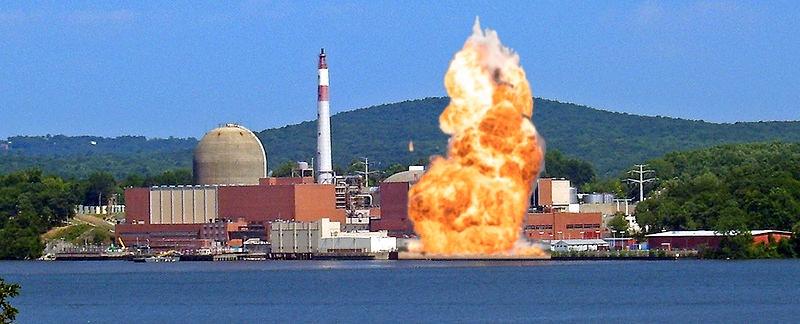
Risk Assessment Shows Dangers of AIM gas pipelines near Indian Point
On June 22, 2018, several NYS agencies jointly released a letter to FERC outlining actions that need to be taken to keep our area safer from the threat of catastrophe due to the location of the AIM gas pipelines close to Indian Point nuclear facilty. Accompanying the letter was the Exectuve Summary of the risk assessment on which the recommendations were based. The extreme danger we are in has been confirmed.
The agencies made the following recommendations:
"FERC should not allow any additional natural gas capacity on the Algonquin pipelines...
"FERC should require regular testing of Enbridge’s ability to remotely close valves on the 42-inch, 30-inch, and 26-inch pipelines in the vicinity of Indian Point within three minutes of an event...
"FERC must work with NRC to coordinate a review of Indian Point-owner Entergy Corp.’s decommissioning plan when filed to determine potential impacts to the original Algonquin pipelines and the AIM pipeline... pipelines.
"The Agencies also called on FERC to re-evaluate whether the NRC and Entergy analyses relied on by FERC during the review of the AIM project were sufficient. The NRC and Entergy analyses concluded that the Indian Point reactors could safely shut down if there were a pipeline incident, but they may not have fully considered all necessary and appropriate factors, including for example the different design characteristics of the buildings housing the spent nuclear fuel cooling pools."
Read the Executive Summary of the risk assessment:here.
Is Community Solar For You?
A Community Solar project is a group of solar panels installed in a sunny location by a solar developer. Consumers in the area can access the clean energy produced by the panels. This makes solar available to many more people than can access it up to now: not only homeowners, but renters, condo dwellers, small and large businesses, non-profits, churches and other institutions.
And there’s a 10% discount. Energy is delivered to the consumer by the utility the same way it always has been. No fees, no termination penalty.
Community Solar is supported by Sierra Club because it’s clean renewable energy, and it eliminates the main obstacles consumers confront when they want solar: financing, inappropriate orientation, or shading.
Here’s a link to NYSERDA, the NY state government department that is hooking up consumers with Community Solar projects (Please click on ‘Find Community Solar Near You’):
To see what NYS legislation is currently supported by Sierra Club's Atlantic Chapter, visit the chapter's website at https://www.sierraclub.org/atlantic/legislation.




 A Community Solar project is a group of solar panels installed in a sunny location by a solar developer. Consumers in the area can access the clean energy produced by the panels. This makes solar available to many more people than can access it up to now: not only homeowners, but renters, condo dwellers, small and large businesses, non-profits, churches and other institutions.