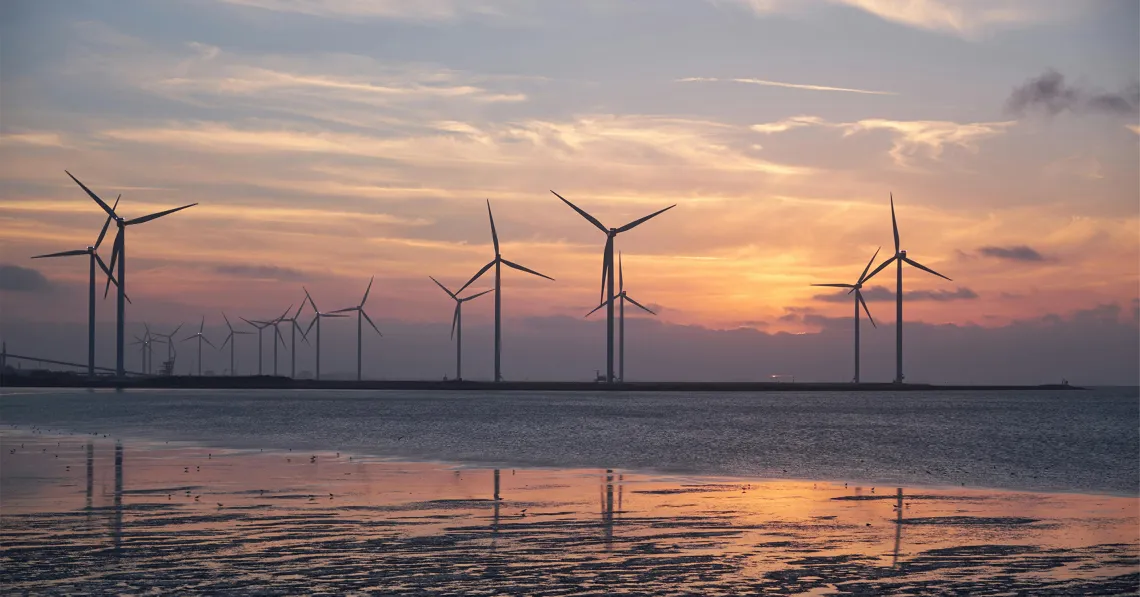
Pixabay: Wind Turbine Landscape Photography
The Sierra Club Niagara Group supports the NYS Climate Leadership and Community Protection Act (CLCPA) which was passed into law in 2019. One of the key goals of the CLCPA is that New York State be 100% powered by zero emission energy sources by 2040. In addition to solar and hydropower, wind energy is an important part of this renewable energy mix.
Western NY Health & Wind Energy Forum
To tackle myths about wind energy head-on, ACE NY, NY League of Conservation Voters, New Yorkers for Clean Power, and the Union of Concerned Scientists co-hosted a successful Forum at the University of Buffalo on November 21, 2019. Expert panelists talked about wind energy and health, with fact-based information on the issues being debated and latest studies that have taken place on this topic.
Check out the FULL RECORDING OF THE FORUM!
OR...here are highlights YOUTUBE CLIP OF THE WESTERN NY WIND & HEALTH FORUM
Wind Works – Building a Wind Powered Economy in New York
Can wind farms lower property values?
Nine major and statistically reliable studies covering roughly 270,000 property transactions by different respected and independent organizations in three different countries and spread over 15 years, have found no correlation between operating wind turbines and negative property values. In fact, three studies found slight but statistically insignificant improvements.
A study released in 2014 titled Relationships Between Wind Turbines and Residential Property Values in Massachusetts, studied 122,000 home sales from 1998 to 2012 located near existing and future ‘utility-scale’ wind turbines. The study of densely populated Massachusetts found no evidence that wind turbines affect property values. Evidence suggested that in some cases the announcement of a wind facility had a slight adverse impact on home prices, but that those affects were no longer apparent after turbine construction and eventual operation commenced.
A recent study published in the Canadian Journal of Agricultural Economics in December 2014 by the Canadian University of Guelph, studied some 7,000 homes and farm sales near one of Ontario’s first and largest wind farms completed in 2008, some 60 miles northwest of Toronto. Analyzing sales data over an 8 year period, the study found that the 133 turbine wind farm had “no statistically significant affect” on property values.
The country of Denmark, a densely populated country that is approximately one-third the size of New York State, has 1,500 operating onshore wind farms. Germany has over 4,000 onshore wind farms of varying sizes.
Find the Union of Concerned Scientists Massachusetts study here: The Effect of Wind Turbines on Property Values: A New Study in Massachusetts Provides Some Answers
Find the University of Guelph study here: Wind farms to do not affect property values, study finds
Are wind turbines harmful to birds?
Scientific studies agree that loss of habitat is the main human-generated cause of excess bird deaths. Also, millions of birds are killed annually in the US by collisions with buildings, according to a 2013 study in Wilson Journal of Ornithology. Electrocution from birds flying into power lines, pesticide poisoning, oil spills, cars, and communication tower collisions are other major sources. Cats, both feral cats and outdoor pets, are a major cause of songbird deaths. Human-influenced climate change disrupts birds’ food sources, with predicted extinction of many species if climate change due to fossil fuel burning continues. Compared to all these sources, wind towers are very far down the list of human-based causes of bird deaths, with combined estimates from scientific studies averaging less than 0.01%, (one hundredth of one percent) of bird deaths related to human activity.
Adjusting the location/sites of wind turbines can diminish the small number of bird collisions, for example, avoiding narrow migratory “funnels” where birds follow a specific path between mountains. (An often-cited study of raptor collisions was in one of those areas, in California.) A study of the Lake Ontario shoreline by the New York Great Lakes Protection fund shows that the lake shores of Niagara and Orleans counties do not have high concentrations of migratory birds, compared to areas closer to Rochester, and the migration paths are spread out along the shore, so careful siting of wind turbines will reduce the risk.
As wind turbine technology advances, new turbines can slow down or turn off their blades when flocks of birds are approaching.
The US Fish and Wildlife Service does NOT have a policy against wind farms near Great Lakes shores. More information at www.fws.gov and here Migratory Bird Mortality, Us Fish & Wildlife Service
Wind Power and Health: The Scientific Evidence
Scientists Knopper and Olson published a review in 2011 in one of the most highly regarded journals in this field, Environmental Health. They reviewed EVERY published study on this topic that followed the basic rules of scientific research, regardless of their conclusions. Of the hundreds of published articles, only 15 met these scientific criteria. You can read their complete review here: http://www.ehjournal.net/content/10/1/78. After analyzing all the published information from many countries including USA, Canada, Denmark, Sweden and the Netherlands, Knopper and Olson concluded that there is no evidence of physical effects of wind turbines on health.
Offshore Wind Power in the Great Lakes
Resources Created by Citizens Campaign for the Environment
Shared here with permission from the Associate Executive Director, Citizens Campaign for the Environment
As offshore wind power in the Great Lakes is considered as an important part of New York’s renewable energy future, Citizens Campaign for the Environment has put together some excellent resources. New York’s historic 2019 law to address the climate crisis—the Climate Leadership and Community Protection Act (CLCPA)—requires 70% renewable energy by 2030, 9,000MW of offshore wind by 2035, and carbon-free electricity by 2040.
As New York State moves forward with a process to consider Great Lakes offshore wind, we believe that it is imperative that the public and other Great Lakes stakeholders are provided with the facts on offshore wind based on science and three decades of global experience with offshore wind; that offshore wind is considered in the context of all large scale energy production and climate change, and that we proactively address the misinformation about wind that spreads in our communities.
Three fact sheets created by Citizens Campaign for the Environment:
The Great Lakes, Climate Change, and the Potential for Offshore Wind
Great Lakes Offshore Wind and New York’s Clean Energy Economy
Great Lakes Offshore Wind: Frequently Asked Questions
Info on their website: https://www.citizenscampaign.org/great-lakes-offshore-wind