FOR IMMEDIATE RELEASE
May 4, 2026
MEDIA CONTACT:
Ali Hameed
ali.hameed@sunstonestrategies.org
201.285.9649
After utility bills skyrocketed this winter and pollution in the Potomac River hit a record high, lawmakers, advocates, and community members rally to protect programs that lower costs, safeguard public health, and keep DC’s waterways clean.
WASHINGTON, DC — Councilmembers Charles Allen and Wendell Felder, alongside a coalition of more than 20 climate, environmental, health, and interfaith organizations, rallied today urging the DC Council to reject Bowser’s proposed budget cuts which, if enacted, would result in a 50% reduction of funding to the Department of Energy and Environment’s (DOEE) budget over two years.
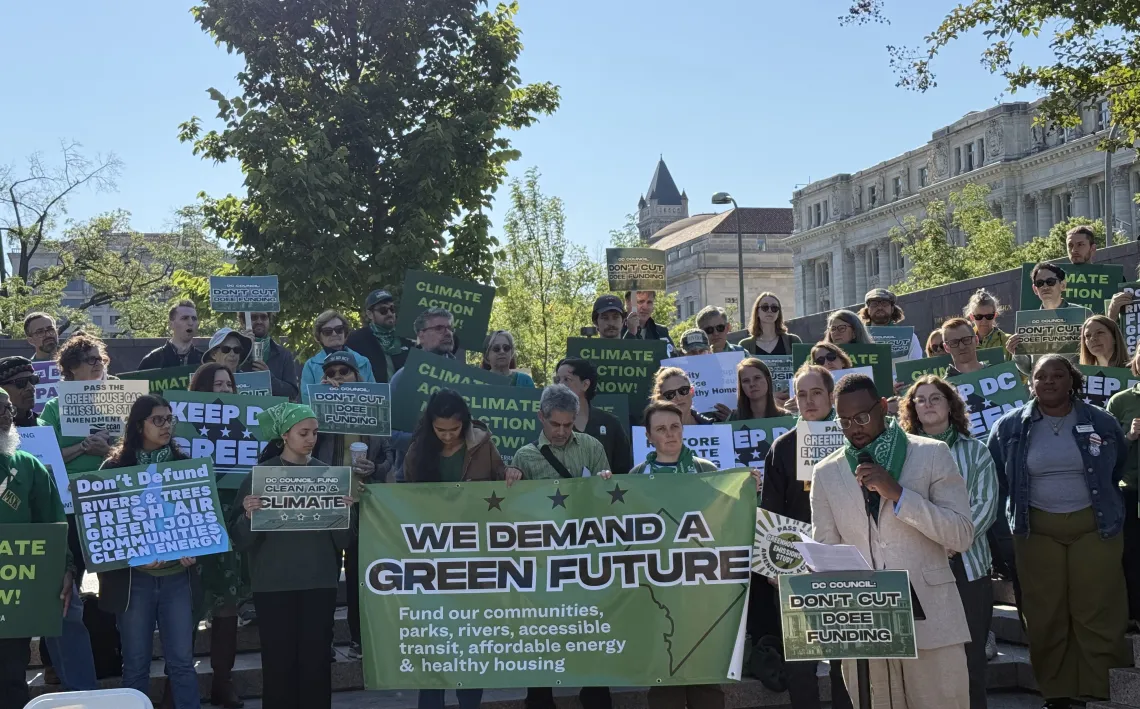
Councilmember Wendell Felder addressing the crowd of seventy-five DC residents and advocates at Green Budget Day.
A recording of the rally is available here.
“Under this budget in front of us, utility bills will be higher, seniors would have to go without free energy and electrification upgrades, our waterways will be dirtier, the air we breathe will be less clean, and we would lock in decisions with generational consequences for the climate and environment of our city,” said Councilmember Allen.
“DC residents are being pushed out by rising costs, gentrification, and utility bills they can no longer afford, often because their homes are aging and in need of repairs and new appliances,” said Sidra Siddiqui, Senior Organizer at Washington Interfaith Network. “Funding the Sustainable Energy Trust Fund and Healthy Homes is a proven way Council can fight back against this affordability crisis and keep families in DC.”
Amid a growing energy affordability crisis, Mayor Muriel Bowser has proposed raiding tens of millions of dollars from the Sustainable Energy Trust Fund (SETF), which provides funding for the Healthy Homes Act. The legislation helps low- and moderate-income households upgrade their homes with energy efficiency improvements and electric appliances such as heat pumps. Mayor Bowser’s proposed FY2027 cuts would further strain families already facing high utility costs and is Bowser’s second attempt to strip funding from programs that make homes and buildings healthier and more affordable after raiding $70 million from the SETF in FY2026.
“Slashing the DOEE budget means taking away vital educational opportunities for children in DC's underserved schools,” said Jeff Chandler, GreenKids Director at Nature Forward. Cutting funds for these programs—which include outdoor learning experiences, teacher professional development and student environmental action—is in direct opposition to the Office of the State Superintendent for Education's Environmental Literacy Plan. It abandons proven learning outcomes and the long-term skills and behaviors we hope to cultivate in young people. Investing in these programs is not optional if DC is serious about building a sustainable future for its residents. Without this funding, our students—particularly those in Title I schools—will lose access to impactful, hands-on education that connects them to their local environment, builds scientific literacy, and prepares them to be the next generation of stewards for the environment and their communities.”

Solar advocate Muhsin Boeluther Umar addressing the crowd at Green Budget Day.
“To advance environmental justice, we must invest in people and not scale back,” said Muhsin Boeluther Umar & Wallace Kirby, Founders of My Senior’s Keeper Foundation. “Cutting funding organizations and programs that fund renewable energy training undermines our ability to build a skilled, inclusive workforce ready to lead the clean energy transition. Grassroots, community-based organizations such as MSK are essential to this effort, providing accessible pathways for individuals to gain hands-on experience in solar and other renewable technologies. Restoring and expanding this funding ensures that underserved communities are not left behind, but instead are empowered to participate in and benefit from a sustainable energy future.”
Bowser’s proposed budget also eliminates critical investments in water quality, conservation, and environmental education. Funding for water testing, green infrastructure maintenance, and park stewardship grants is zeroed out, despite recent sewage spills and worsening pollution in the Potomac and Anacostia rivers. Cuts to environmental education grants like the Meaningful Watershed Educational Experiences (MWEEs) would limit opportunities for DC students and communities to engage in stewardship and climate learning. Combined with cuts to sustainable transportation programs, the proposed budget will jeopardize progress on clean air and long-term environmental resilience.
“The District could still reclaim its former role as a national leader in environmental cleanup and restoration of the Anacostia River but instead, the proposed budget attacks and undermines the Department of Energy and Environment for the third year in a row,” said Trey Sherard, Anacostia Riverkeeper. “As a result, the District can no longer certify that it will meet its obligations under the stormwater permit and avoid heavy penalties from the federal government and lawsuits under the Clean Water Act next year.”
"Funding for transportation is essential for working people in the District to move,” said Oscar Villalobos, Green New Deal Organizer at DC Jobs with Justice. “It is critical that the DC Council fights to fund our public transit in a measure that helps address economic and environmental justice."
“Environmental justice in DC means every resident regardless of neighborhood or income must have access to clean and safe drinking water, lives free from the threat of lead poisoning while also having fresh air that supports a healthy life,” said Tene Lewis, Campaign to Reduce Lead Exposure and Asthma. “Equity isn’t optional; it’s the foundation of a just and sustainable city.”
"This is not the time to be cutting funding for the District's only organization dedicated exclusively to the protection of its wildlife, a critical and irreplaceable part of the city's environmental legacy," said Jim Monsma, Administrative Director for City Wildlife.
"...We need public budgets that prioritize equitable food systems, climate resilience, and community-led solutions,” said Sherita Brace from Dreaming Out Loud. “We need funding that recognizes food access as essential infrastructure…just like roads, schools, and hospitals."
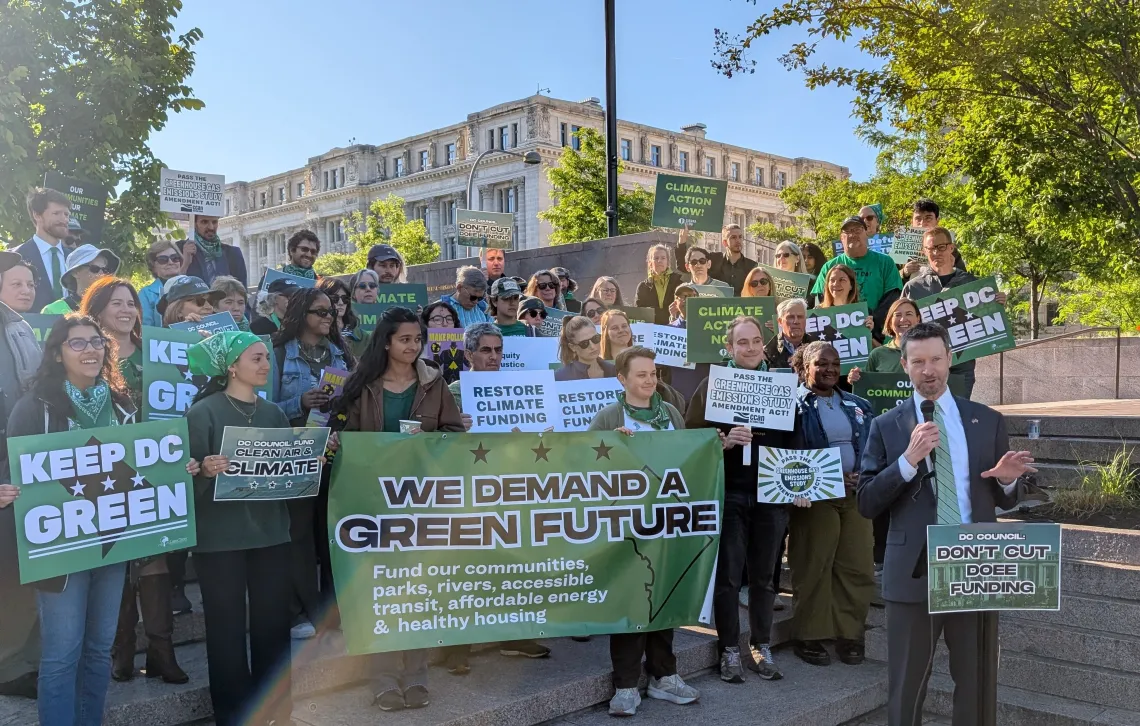
Councilmember Charles Allen addressing the crowd at Green Budget Day.
More than 20 environmental and interfaith groups participated in today’s Green Budget Day of Action, including Nature Forward, Dreaming Out Loud, Anacostia Riverkeeper, Potomac Riverkeepers, Campaign to Reduce Lead Exposure and Asthma, CCAN Action Fund, Sierra Club DC, Sunrise DC, Washington Interfaith Network, Empower DC, DC Environmental Network, Fair Budget Coalition, Casey Trees, ATU 689, Interfaith Power and Light DMV, Green New Deal 4 DC, Climate Reality Project, DC Jobs with Justice, Third Act DC, We Power DC, Young Gifted and Green, DC Voters for Animals, Mi Casa, My Senior’s Keeper Foundation, and Ward 8 Woods.
###