RFK Site: A Vision for Environmental and Community Health

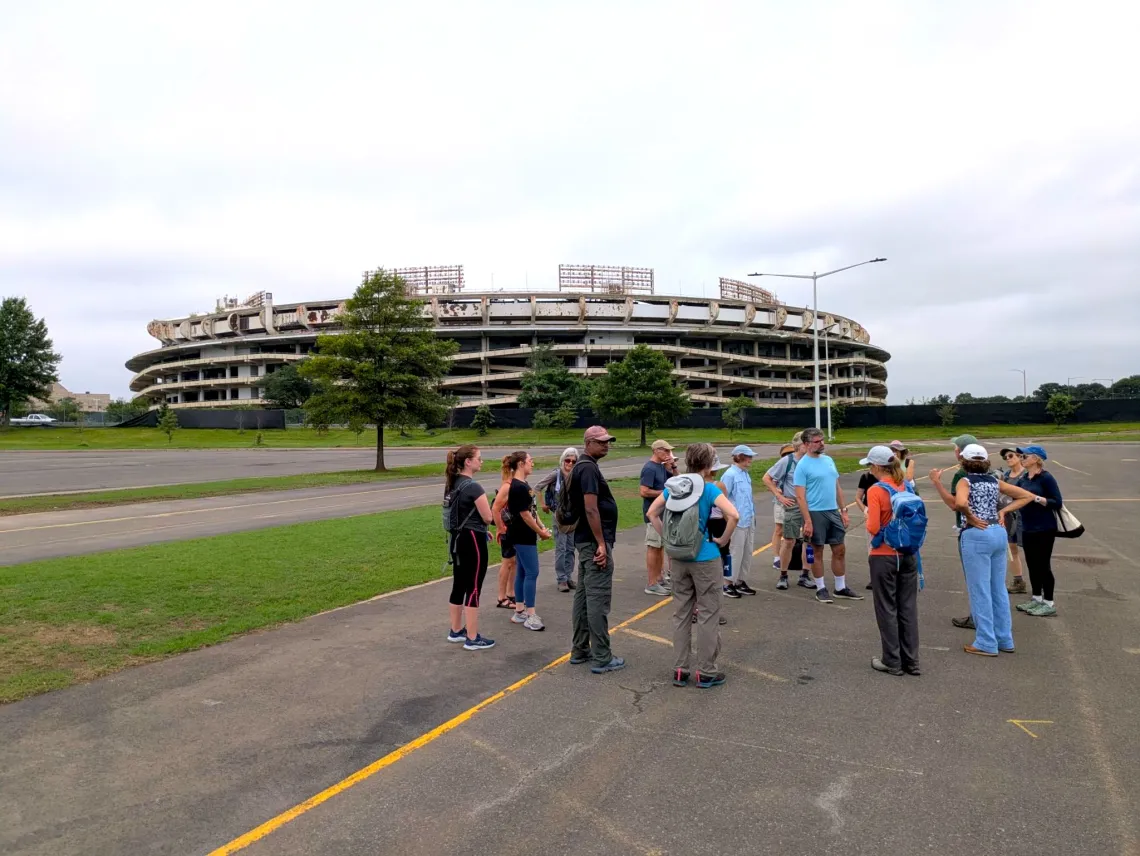
Sierra Club DC volunteers at a RFK site hike.

180 acres along the Anacostia is currently home to asphalt and an abandoned stadium, but also to a thriving community recreation space, vital riparian ecosystems, and beautiful trails and communities. The redevelopment of this site is a generational opportunity in DC. Currently it is at the center of the debate to build a new stadium for the Washington Commanders with over a billion dollars of public subsidies. Ultimately, there are clear climate and environmental challenges and opportunities for whatever the future holds at RFK.


Read our RFK Vote Press Release 9/17/25

Read our RFK Testimony 7/29/25

Sierra Club DC's Vision for Environmental and Community Health at the RFK Site

December 16, 2025

The Sierra Club DC Chapter calls for legally binding sustainability standards to be included in the redevelopment of RFK Stadium site to ensure protection of the environment, climate, public health, and the Anacostia River. New development at RFK should showcase best practices for healthy, sustainable development in the District that will benefit Ward 7 residents and serve all DC residents.
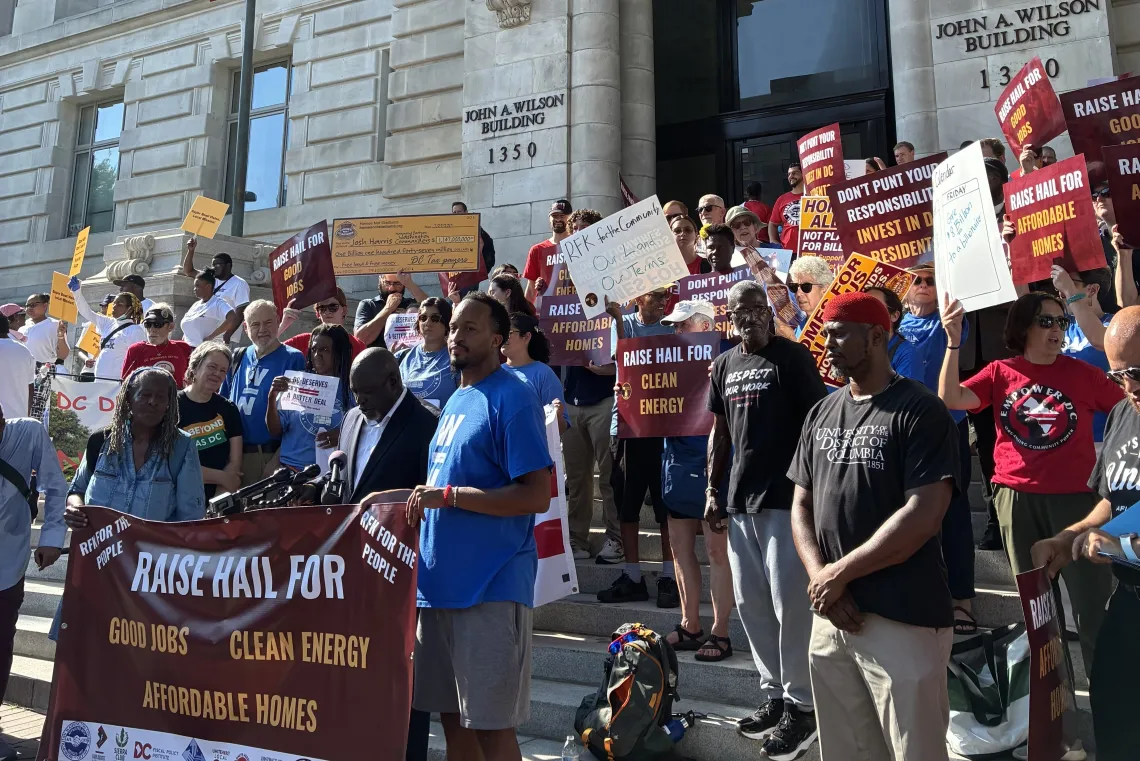
RFK press conference on 7/29/2025.

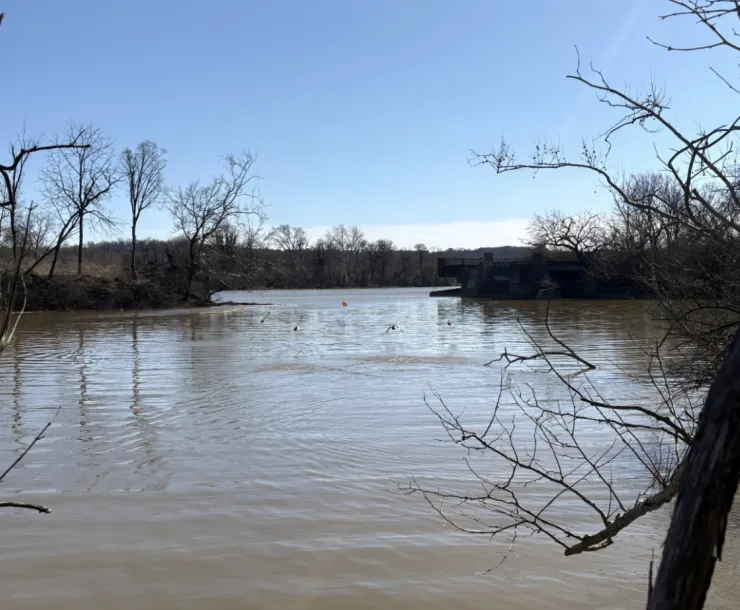
Water Quality: Protect the Anacostia river from stormwater runoff and pollution from building materials.

  • All stormwater runoff must be managed on site, implementing best practices for low-impact development.
  • Anacostia River water quality should be protected from runoff contamination through construction of natural buffers along the river banks of no less than 60 feet measured from the water’s edge at high tide.
  • Permeable pavement should be used whenever pavement is necessary, and impervious surfaces in the flood plain should be removed.
  • Building materials on the site must be non-toxic, and any use of toxic materials at the site (e.g. pesticides, petroleum based chemicals) should not be allowed to contaminate the soil on the site or to otherwise be introduced into the natural environment.
  • Water fixtures and faucets should be high efficiency and designed for conservation. 
     

Wildlife & Habitat: Wildlife habitat on the site should be protected and restored.

  • The buffer edge along the river must be planted and maintained with indigenous plants suitable for local wildlife habitat.
  • The natural areas along the river’s edge (riparian zone) must be maintained by the managers of the site, in conjunction with DC’s Department of Energy and Environment  (DOEE), as habitat for wildlife consistent with the District’s Wildlife Action Plan.
  • New buildings on the site should use bird-friendly glass to prevent collisions deadly to birds.
  • The Kingman Island natural area must be integrated into the Anacostia riparian zone such that habitat on the islands and along the river’s edge is continuous. 
     

Energy: The RFK site should be a state-of-the-art, forward-looking model of green infrastructure that is fully aligned with DC’s clean energy commitments.

  • The DC Council should ensure that any legislation for the redevelopment of the RFK site requires that all buildings on the site are energy efficient, maximize renewable energy generation, and burn no fossil fuels for heat, power, or any other purpose.
  • Buildings on the RFK site should deploy geothermal, waste heat, and sewage heat pumps to the maximum extent feasible. All other heating needs should be met with air-source heat pumps. Fossil fuel and combustion heat and power systems should be prohibited by law. Inefficient electric resistance heating should be allowed only in rare cases where heat pumps are not feasible.  
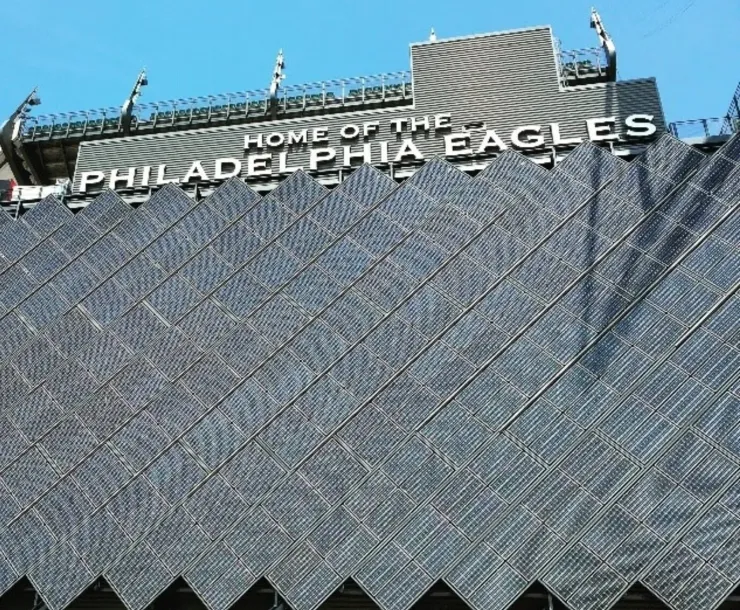
  • The site should power its own electricity needs by solar energy to the maximum extent feasible, and rely on electricity from the local grid, which is moving toward 100% renewable sources, for electric needs not met by on-site solar generation.


Download a one-pager of Sierra Club DC's demands:

rfk-vision-one-pager-2026.pdf

Transportation: Limit parking and prioritize safe, equitable transit, cycling, and pedestrian access.

  • On-site parking should be minimal. Instead, investments must ensure that Metrorail can fully serve the site and is equipped to move the majority of attendees traveling to and from events—potentially by adding a new Metro station.
  • Frequent and electrified transit service to the site must be planned to replace the DC Streetcar, which is slated for elimination.
  • Best practices for “Complete Streets” design should be applied to prioritize expanding and improving bicycle infrastructure and ensuring pedestrian-friendly circulation throughout the site.
  • The site should include ample bike racks and Capital Bikeshare stations to support and encourage cycling.
  • All parking provided on the site must, at a minimum, comply with the requirements for EV-installed and EV-ready spaces as outlined in the recently enacted electric vehicle charging law.
  • Tax and fee revenue from paid parking on the site should be collected and directed toward funding improvements to transit, cycling, and pedestrian infrastructure within and around the site.
     

Waste: The development of the RFK site should be a state-of-the-art model of zero waste practices.

  • Development on the site should be aligned with DC’s Zero Waste, Sustainable DC, and Carbon Free DC plans.
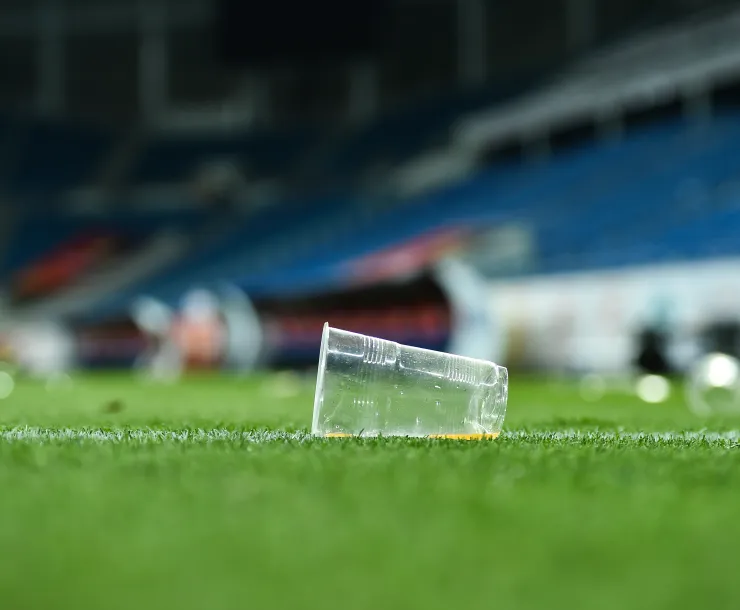
  • Cut toxic plastic pollution by requiring drinks be sold in reusable cups, allowing refillable water bottles onsite and providing water bottle refill stations.
  • Minimize food waste through a food recovery and composting program.
  • Prioritize recycled and recyclable building materials for new construction on the RFK site.
     

Flood Control: Protect residents, businesses and downstream areas from flooding by prohibiting residential and commercial structures from the 100-year floodplain.

  • There should be no development of new residential or commercial structures within the 100-year floodplain.
  • Any structures built within the 100-year floodplain, as of 2025, should not impede the movement of floodwaters in the floodplain.
  • The 100-year floodplain should be preserved to manage extreme storm events on the river and help prevent flooding downstream.


Community Services and Engagement: Ensure the site serves residents of the surrounding neighborhoods and their input is accorded great weight.

  • Hill East and Kingman Park are long-standing communities whose needs and opinions on development should be given great weight.
  • Amenities should be conveniently located on the RFK site that serve residents of the adjoining communities such as shopping, entertainment, and attractive and accessible open space.
  • The design of any and all development on the RFK site should be undertaken with utmost concern for community environmental health.

Research Memos & OpEds

Press Hits

  • WUSA9 - RFK redevelopment fans and critics react as the project advances with 9-3 vote
  • WTOP News - ‘There’s a long way to go’: Sierra Club blasts DC council in approving Commanders stadium deal
  • The Washington Post - Transformative $3.7 billion Commanders stadium deal passes D.C. Council
  • Washington Business Journal - $3.8B Commanders stadium deal approved, paving way for RFK campus redevelopment
  • CSE TV - Raising Hail: The New Commanders Stadium

Press contact: David Whitehead, dc.chapter@sierraclub.org