Article by Deborah Regen, BSG Member
Data centers operate in countries worldwide to serve cellular and Internet providers. They are causing a certain amount of public distress because digital technology’s rapid advance is outpacing our awareness of all its implications, both positive and negative. With the midterm election season underway, Broward Sierra members deserve to hear from elected officials and subject matter experts on whether we can expect the development of so-called “hyperscale” AI data centers in Broward County in the near future.
What is a Data Center?
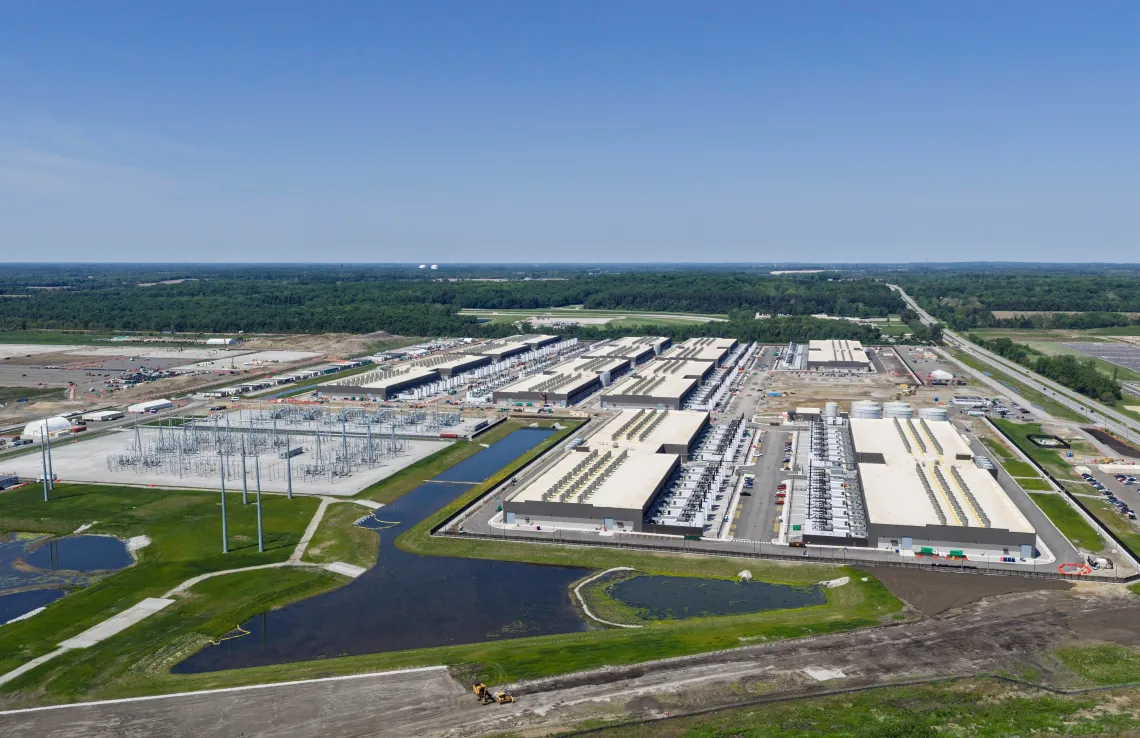
A data center is a physical facility that houses servers, storage systems, and networking equipment, designed to store, process, and distribute large amounts of data. As demand for digital services grows, data centers will play an important role in enabling data availability across the digital ecosystem. On a global scale, power usage by data centers is expected to double by 2030 in large part thanks to generative AI.
What are the Primary Concerns?
Pallab Mozumder, PhD, an administrator for Florida International University’s Institute of Environment and an Associate Professor at FIU’s College of Arts, Science and Education and its Steven J. Green School of International and Public Affairs, cautions the debate regarding future hyperscale AI data centers shouldn't be reduced to “AI versus the environment.” Hyperscale data centers range in size from 200,000 to over 1 million square feet and present high resource demands. One of the issues is enormous electricity consumption (at the gigawatt level) often relying on existing fossil fuel power plants - contributing further to greenhouse gas emissions and climate change.
Another contentious issue is water use - which is needed to cool the equipment. Server racks generate extreme heat and require a minimum of 100,000 gallons every day (and up to 5 million gallons of water in some cases) to keep those servers from overheating – though it should be noted, according to Dr. Mozumber, that water use varies enormously depending on the unique cooling technology and design for each facility, and reclaimed water can be used where feasible. Sea level rise is reducing our beach shoreline and encroaching our underground fresh water supply. The Florida Aquifer is a highly vulnerable natural resource unique to our state and cannot take additional pressure. Leaching runoff can exacerbate toxic bacterial blooms in a water system which has already been stressed by drought, fertilizer runoff and rising temperatures, not to mention a growing population.
There are concerns regarding land use and habitat destruction. In Broward County, we have no available land without taking down existing structures. As Henry Mead, Vice-Mayor of Weston, told me, “Specifically in Weston, there is no room for an AI data center as the city is built out and cannot accommodate a building of the size and scope necessary.” I personally think the same can be said for every other city within our county.
What happens to local power grids during natural disasters such as hurricanes – the additional stress could lead to increased rolling blackouts - especially in lower-income and rural communities.
There are also economic concerns. In other states, residential and small business customers have been used to subsidize the grid upgrades for extra power generation. In the past, Florida state utility commissioners have allowed Florida Power & Light (FPL) to pass a portion of these multibillion-dollar capital investments onto the public, but a new regulation enacted in 2026 forbids this practice.
While Florida has more than 100 data centers operating currently, none are of the hyperscale variety required for modern AI. There is growing pressure to build such facilities.
Who Profits from Data Centers?
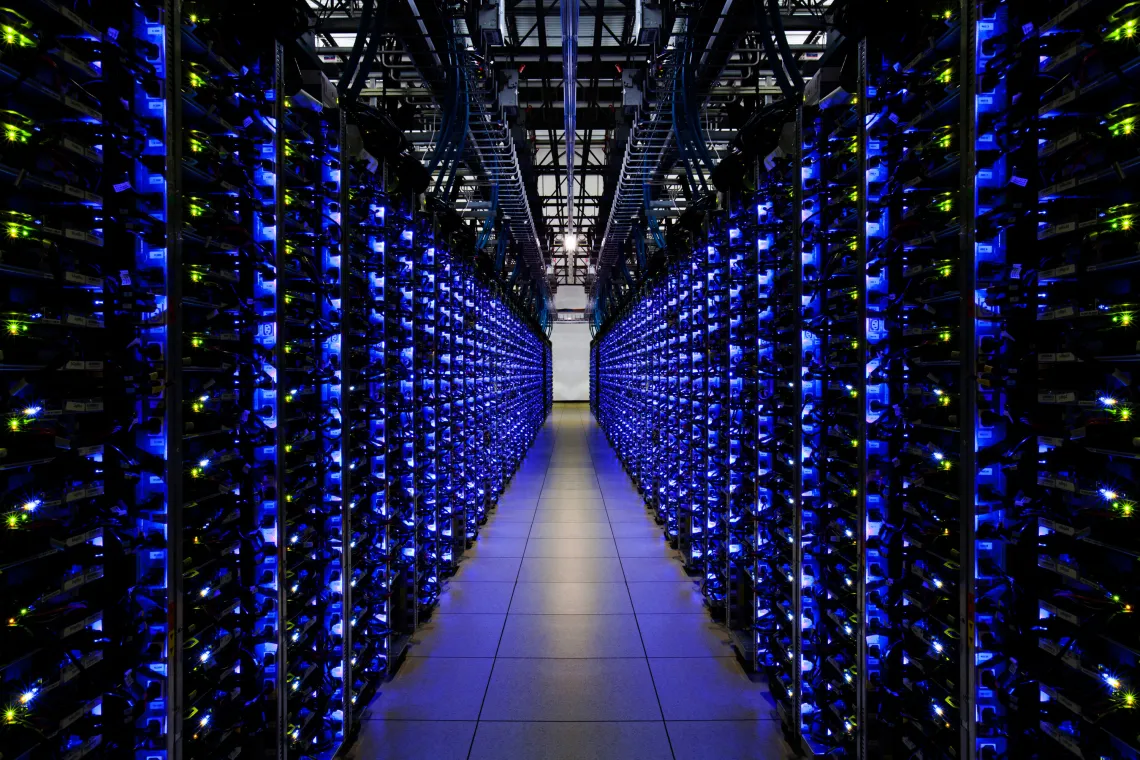
Chip and hardware makers like NVIDIA Corporation - supplying specialized GPUs that power AI workloads - are examples of private companies that profits from data centers. There are companies who supply the switches and connection infrastructure that keep data flowing between servers, like Broadcom and Arista.
What is the Lifespan of a Data Center?
A data center typically lasts 15 to 30 years. However, the internal machinery and software programs operating the machinery require replacement at much earlier intervals.
What are the Advantages of AI Data Centers?
Dr. Mozumder says there can be many advantages for future AI data centers. “Data centers provide real economic and social services. AI and computing facilities can contribute to climate modeling, hurricane forecasting, medicine, scientific research, and environmental management. There may also be investment, tax, and employment benefits.” He says a more relevant question should be “are the developers of these AI data centers bearing the full costs of resources used to build the physical structure and the infrastructure as well as the environmental risks, or are some of these costs being transferred to local ratepayers and ecosystems?” He added: new 2026 [state] legislation requires special tariffs for large-load customers and is explicitly intended to protect ordinary ratepayers from subsidizing those costs.”
Are There Alternatives to Building on Land?
The future could see ocean-based data centers with physical structures placed on floating platforms. Japan opened a test facility near Yokohama in 2025 in shipping containers on a floating platform with power generated by solar panels with batteries providing energy storage. The test will continue until March 2027.
This year the infrastructure company Keppel in Singapore started construction on a four-story floating data center, it is scheduled to open in 2028.
Here in SE Florida, we are adjacent to the Atlantic Ocean. Joy Cooper, Mayor of Hallandale Beach, an ocean-facing city, says, “There is an opportunity for actual data centers to be off-grid. There are technologies they can use to generate their own energy, and if they implement desalination plants, there would be less impact on [fresh] water resources. It would need to be a closed loop for water reuse.”
However, according to Dr. Mozumber, moving future data centers from land to ocean does not “eliminate concerns about thermal discharge, benthic habitat disturbance, installation and cable impacts, corrosion/leakage risks, hurricane exposure, retrieval/decommissioning, and cumulative ecological effects.” He advocates for running pilot projects to test such ocean-floating data centers against such hazards before implementing plans.
Two possible future land-based options include cloud computing services and decentralized computer networks.
New Florida State Legislation in 2026
State Bill 484 passed and took effect on July 1st which:
- Requires large data centers to pay their own electric infrastructure and generation costs, rather than shifting costs onto regular utility customers
- The law says cities and counties can reject or restrict large data center projects and will still have authority over zoning, land use, development approvals, and comprehensive planning
- Allows state agencies to sign NDA’s with these companies - meaning the businesses can keep their plans to locate or expand in Florida for one year a secret from the public
Call to Action
Dr. Mozumber says, “In my opinion, South Florida [residents] should not ask simply whether we want data centers. We should ask where they should be located, at what scale, using which technologies, under what environmental safeguards, and most importantly who bears their full costs.”
The issues surrounding development of hyperscale data centers are complex and can be confusing. What is clear is that Broward County cities are not prepared for the arrival of these very large and powerful data centers. Political leaders should consider temporary moratoriums to gather public input and conduct further research. Statewide, there are 13 counties, including Palm Beach, that have passed such temporary moratoriums. This is a non-partisan subject that affects all Floridians, and we should contact our state and local political leaders with our questions and concerns.
Florida House of Representatives member Robin Bartleman (D) who represents District 103 (Weston, Pembroke Pines, Miramar, etc.) and is running for reelection told me, “I believe in local control and home rule. Local governments are closest to the people and should be empowered to make decisions on behalf of their constituents. My constituents are concerned about the negative impacts AI data centers can have on our environment, water supply, the Everglades, their electric bills, and their quality of life.” She further stated, “The Florida Public Service Commission recently approved one the largest rate hikes in a time where Floridians are having a hard time paying for basic necessities like food, gas, rent, and other bills.”
Governor Ron DeSantis approved that rate hike in November 2025 - it went into effect in January 2026.
If you are concerned about future AI data center development in your area, please take the next step - contact your district’s representative in both the Florida House and the Florida Senate as well as your city’s leaders [Commissioners, Councilmembers, Mayors and Vice-Mayors] and voice your opinion. Here’s the contact information for several of these politicians:
Robin Bartleman (D) Florida House of Representatives for District 103, hd103@flhouse.gov or robin.bartleman@flhouse.gov District Office Tel: 954.872.1770
Christine Hunschofsky (D) Florida House of Representatives for District 95, hd095@flhouse.gov District Office Tel: 954.953.2760
Mitch Rosenwald (D) Florida House of Representatives for District 98, hd098@flhouse.gov or mitch@mitchrosenwald.com District Office Tel: 954.253.5641
Tina Polsky (D) Florida Senate for District 30, polsky.tina.web@flsenate.gov District Office Tel: 561.443.8170
Barbara Sharief (D) Florida Senate for District 35, sharief.barbara.web@flsenate.gov District Office Tel: 954.424.6674
Jason Pizzo (D) Florida Senate for District 37, pizzo.jason.web@flsenate.gov District Office Tel: 954.893.5045