| July 2026 |

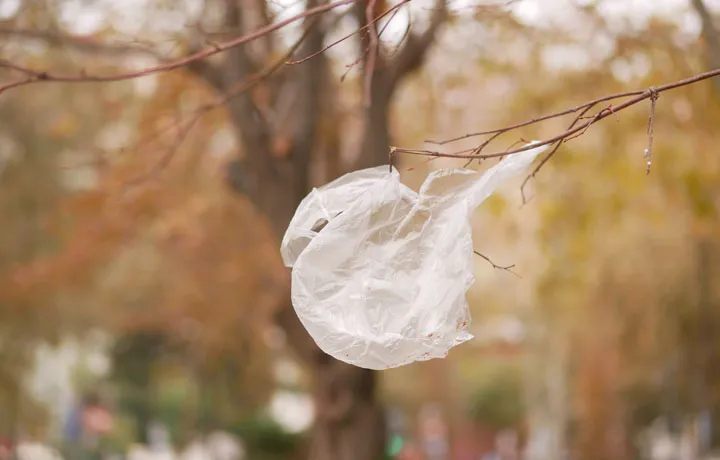
They are ubiquitous throughout North America and beyond. Just by the way they are made, it is obvious that petroleum-based plastic sacks and films aren’t meant to be used repeatedly. Most are paper-thin and tear easily. American consumer industries—as well as the many imported products we buy--rely so heavily on them, that nearly every consumer product involves at least one plastic bag. Sometimes when I look down at my trash can, I’m often frustrated to see most of the space is taken by crumpled, torn, or other single-use plastic bags/packaging. For many of those, I just can’t imagine how I would use them again. So, what can we do to address this massive problem?
Here are a few low-hanging fruits you can pick to lessen the demand for so many plastic bags being produced. At retail stores that you travel to, always have your re-usable bags ready (be sure to choose cotton or other natural fiber ones), and get in the habit of always remembering to bring them in the store. Once you develop a habit, it will be easier to remember. By just doing this, a household of three could prevent the need for between 300 and 500 plastic new sacks during a one-year span!
Second, choose open-arranged foods, such as fruits and vegetables--NOT already displayed in plastic bags--when possible. Place them in your own fabric bags, or—only if necessary--in your previously-used, but otherwise clean, plastic bags (ie, green, leafy vegetables). Re-using plastic bags multiple times has some value. But, of course, that practice still means we are relying on them to be produced in the first place. Otherwise, some on-line companies offer flexible, beeswax-coated organic cotton fabric bags, which are great for veggie storage. Once you arrive home, transfer the food items to non-plastic containers, such as a glass/metal container or fabric or paper sack in your fridge’s crisper drawer. Some fruits and vegetables can be refrigerated in paper sacks or under a cotton cloth to help them retain their moisture content. Additionally, some households cleverly make good use of a clean, gallon-size pickle jar to store bulkier veggies such as carrots (just keep it in the fridge, but clean it regularly). Each of the above practices lowers the demand for plastic bag production.
A caution about re-using plastic film is worth noting. Remember that the more times we manipulate plastic film, the more soon it will begin to release micro-plastics. Avoiding plastic bags altogether is the safest, least polluting pattern.
Next, some grocery stores and chain big box stores offer plastic bag recycling. While potentially helpful, this is problematic because we just don’t know what the purported “recycling” firms actually use them for. Are they part of a supply-chain for liquifying and molding or rolling them as “new” plastic products? The many consumer products that have a small “recycle” logo and “store drop-off” printed on the label (ie, packing pillows, bread and breakfast cereal bags, for example), imply that an industry exists to somehow make good use of these bags. However, since we know that only about 8% of plastics ever get “recycled”, we wonder about the level for post-consumer plastic bags. It is likely lower than 8%.
At best, the most effective programs should have a strict list of which plastic films are accepted; and we hope everyone abides. One store the author shops, lists the following acceptable items at the receptacle: “grocery and other retail bags, clean produce and bread bags, toilet paper and paper towel wrap, shrink wrap from water bottle packs, clean zip-top food storage bags, deflated air packing pillows, and dry cleaning bags”. Our household participates in this, hoping the plastics get a second life. This could slightly reduce the demand for new petroleum resources.
Many years ago paper bags were relied on much more heavily than today; thus, the gradual transition to plastic bags clearly has been an unsustainable change in consumer packaging. Paper bags decompose in about a year, whereas plastic ones may require decades, possibly even 100 years or more. That means it would still be polluting the earth when our great-great grandkids are born! As single-use plastic products, these bags thoroughly pollute the earth. We must create strategies to stop using so many of them in the first place, to improve our vast pollution problems. One is clearly to return to using sustainable bags and packaging, such as fabric and paper ones.
Finally, a choice to re-purpose a single-use plastic bag as a “trash bag” or pet waste sack, will prevent the need to obtain some additional plastic bags, which also results in lower reliance on the plastic supply chain.
There are bigger challenges you can take on! For example, attempt to simply decline to buy items than involve plastic packaging. Some products have minimal plastic wrapping, so buy them when you are able (think corrugated box, paperboard box, metal or glass). We all need to make a point of actively seeking these out and purchasing them! In most large food stores, there are possibly thousands of products packaged in paperboard, glass jars, or metal cans or tins. Also, large glass jars with screw-lids make wonderful food storage containers, later on, as a bonus.
Ultimately, though, taking this stand will mean you can’t buy everything you want or need. However, every time each one of us purchases a sustainable package, we send a message to consumer goods producers: support for the alternative materials DOES EXIST. Just think of the power in millions of consumers purchasing products in sustainable packaging! As each of us does our part to change, we will directly lower reliance on plastic bags and film. Spread the word and be a positive anti-plastic example!
This article is from the Illinois Sierra Club Plastics Reduction Team.