The Sierra Club is shocked and heartbroken by the horrific assassination of Minnesota House Speaker Emerita Melissa Hortman and her husband Mark, and the shooting of Sen. John Hoffman and his wife Yvette. Please read our statement here
Under the onslaught of federal rollbacks and attacks, what happens at the state level is even more important.
In 2023, Sierra Club and millions of other Minnesotans celebrated the creation of some of the best laws in the country to get us on track to meet our climate goals. In 2025, despite intense pressure from polluting interests and the legislators in their pockets, we defended most, but not all, of this progress in the state legislative session. And we also laid the groundwork for future victories.
Some legislators are climate heroes, while we have seen that others are willing to put polluting interests above people. Minnesotans care deeply about our natural resources. Legislators must do the same.
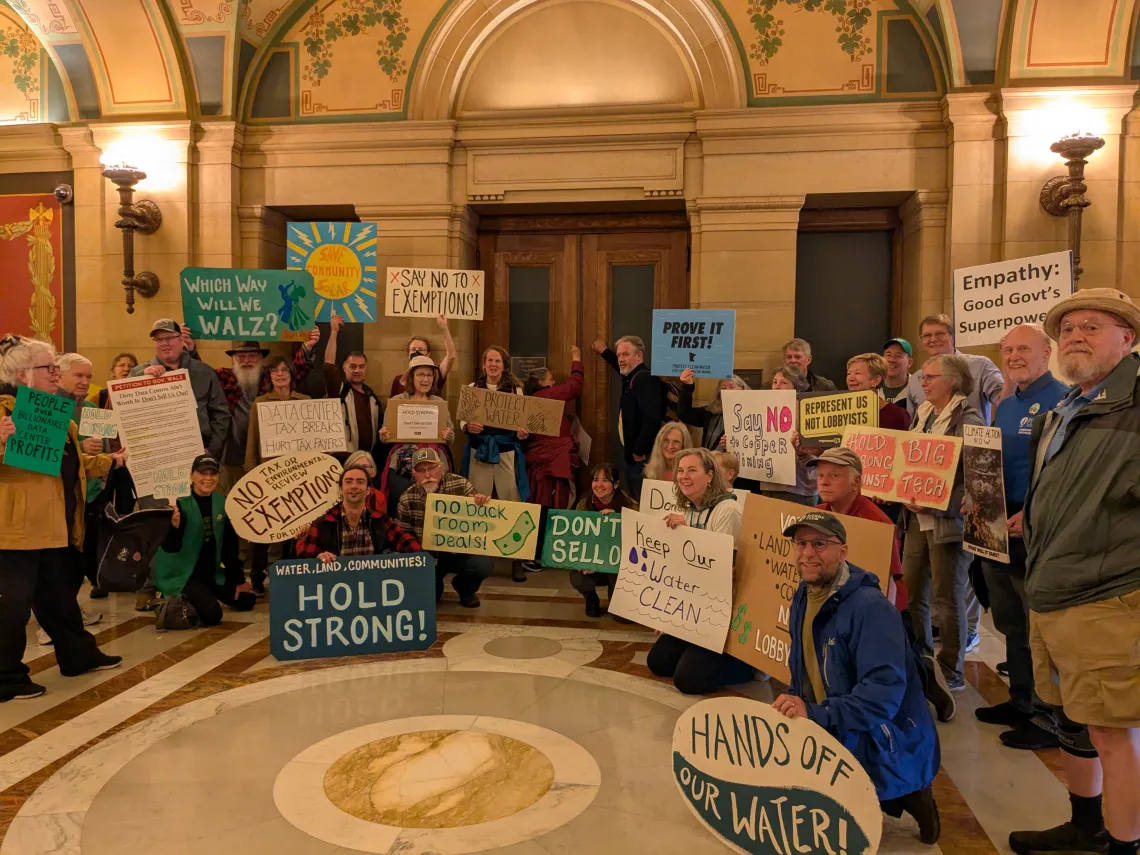

“In 2025, pro-polluter legislators of both parties sought to roll back our previous wins. These rollbacks were particularly aggressive in two bills: the Senate Omnibus Energy Bill and the House Omnibus Transportation Bill. But we worked with our environmental allies to prevent most of those rollbacks from becoming law... Sierra Club members should be proud of our leadership and effective organizing. We showed our power in 2025.” Peter Wagenius, Political and Legislative Director, Sierra Club North Star Chapter.
Proactive agenda
Our proactive priorities for the 2025 Minnesota state legislative session focused on meeting Minnesotans’ needs from clean water to electronics recycling to forest protections, as well as addressing the housing and climate crises. Sadly, due to industry influence in the Republican party and with some Democrats, most of these policies did not advance to floor votes. Still, many of the bills we support received committee hearings, and legislators are learning about these issues. We are ready to continue advocating for them in 2026 and beyond.
Protecting Climate Progress
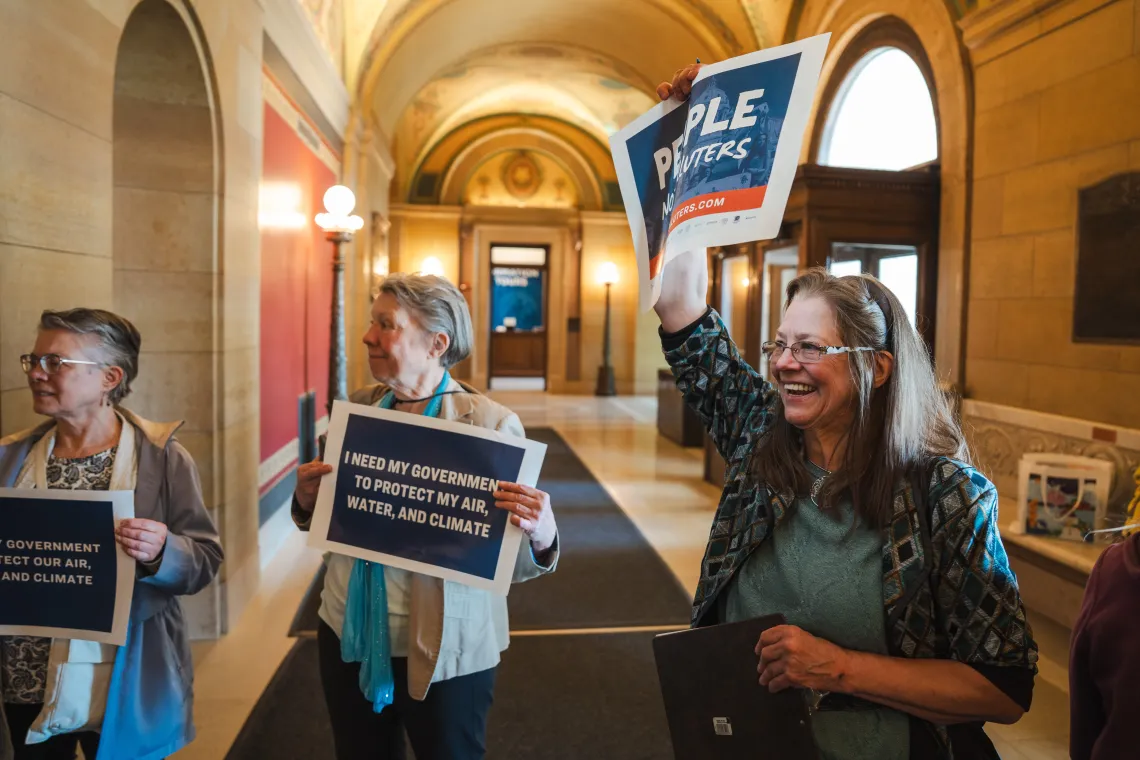
Through grassroots action and legislative lobbying we made it clear to legislators that Minnesotans care about climate action and don’t want us to go backwards.
- Together we sent thousands of emails, called legislators, and personally delivered petitions to legislative leaders.
- Staff and volunteer leaders gave testimony at committee hearings on a range of topics, including the power of solar panels, the need for transit, and the benefits of protecting pollinators.
- We shared our priorities through letters to the editor, opinion columns, organizational sign-on letters, and other advocacy communications.
- The Sierra Club co-sponsored and participated in lobby days and rallies throughout the session including Rise and Repair, Zero Waste, Bike Summit, and more.
Thank you to everyone who showed up and made their voices heard.
Energy Defense
The Sierra Club fought against attempts to:
- Weaken the 100% Carbon Free Bill - The wood- and trash-burning industries tried to weaken the definition of 100% Carbon Free Electricity to allow waste-to-energy facilities that burn and emit carbon pollution to still count as carbon-free (that’s a head-scratcher); and by allowing hydroelectric megadams to count as clean energy. We blocked this at the legislature and will keep fighting to defend the integrity of 100% Carbon Free Electricity at the Public Utilities Commission.
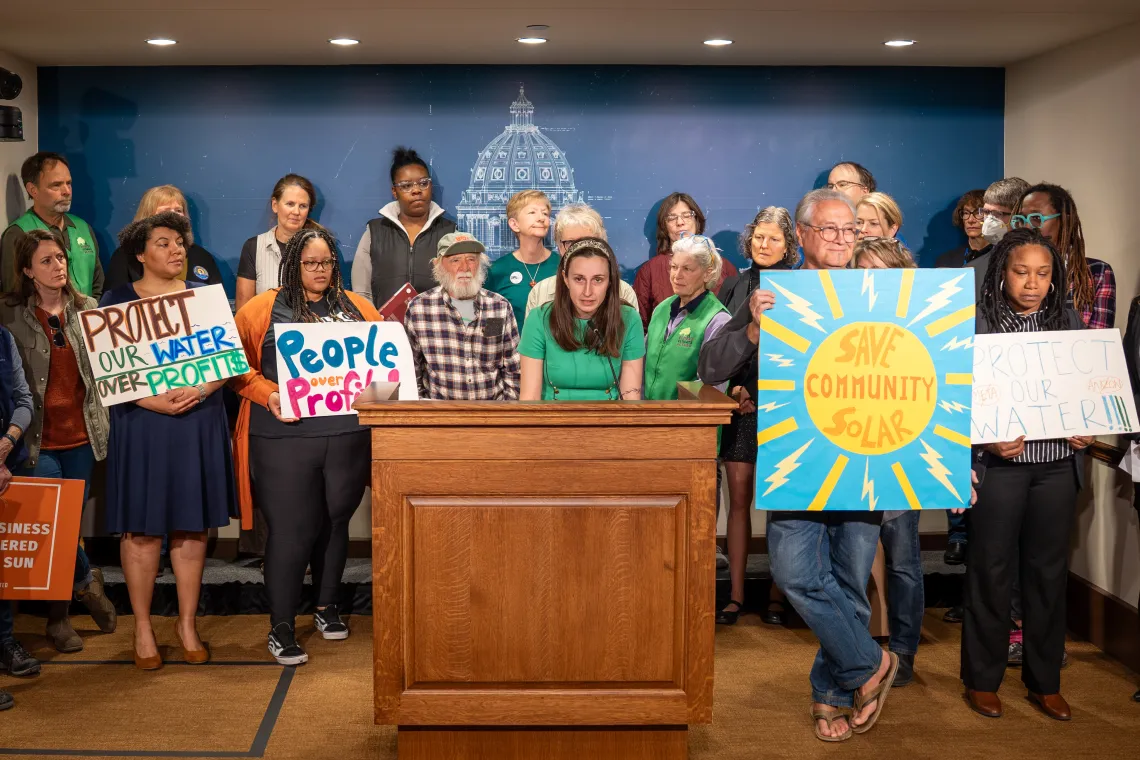
- Repeal Community Solar - Some legislators and utilities also tried to repeal Minnesota’s Community Solar Garden program, the state’s most successful and equitable clean energy tool. Community solar offers Minnesotans the opportunity to benefit from solar energy without installing a system at their home, as you can pay to be part of a solar garden. The “garden” is really a photovoltaic (PV) system that generates electricity, which is then credited to subscribers' utility bills. This makes solar more accessible to renters, folks with shaded roofs, or anyone who prefers not to manage their own solar.
- Gut Net Metering - Rural electric coops proposed to gut “net metering,” which enables residential solar panel owners to get fair compensation for the electricity they generate for the power grid.
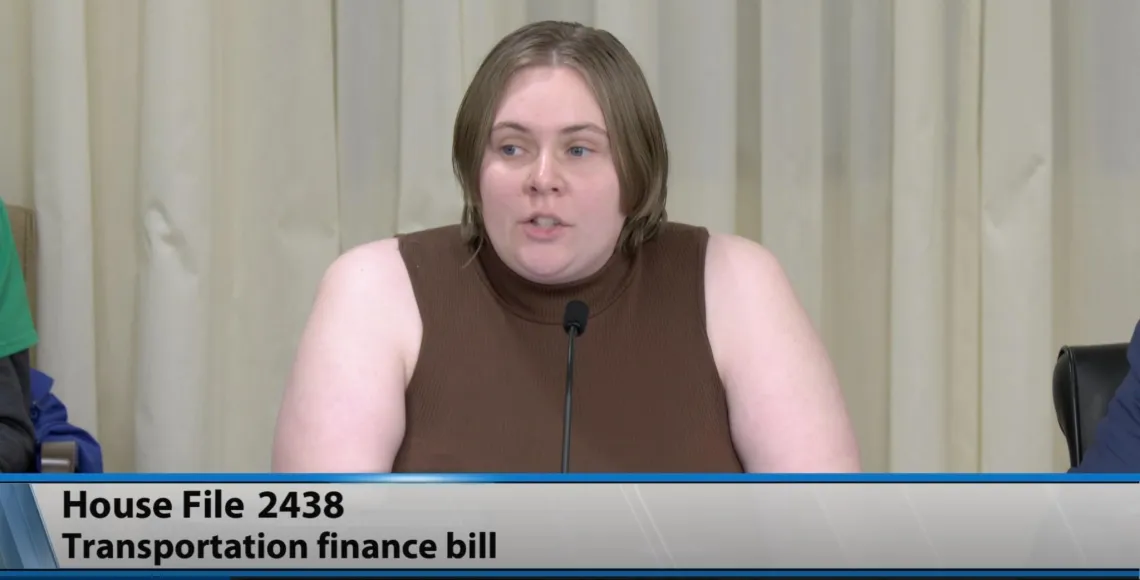
“For my generation and all generations after us, climate change is an existential threat. Delay of these goals will bring shame to our great state!” - Maya Merritt, Sierra Club and ISAIAH volunteer testifying in opposition to climate policy rollbacks in the transportation bill.
Transportation Defense
The biggest victories of 2023 were targeted for rollbacks in 2025 by both House Republicans and Governor Walz. To block these rollbacks, the Sierra Club organized a broad coalition to get a large majority of Democrats to oppose the House Transportation Bill.
In the end, we protected the “Climate Impacts of Highway Law” but lost some funding for transit, bicycling and walking. Ultimately, the budget was in part balanced on the backs of transit riders and future routes.
The Sierra Club fought against attempts to:
- Cut Funds for Transit, Walking and Biking - In January, Governor Walz proposed and successfully eliminated all funding from the state general fund ($32 million a year) for Metro Transit. While the new 2023 metro sales tax to fund transit remains in place, this cut seriously undermines our ability to expand Bus Rapid Transit (BRT) throughout the metro area as envisioned by legislators in 2023. It also reduces funding for walking and biking infrastructure. Legislative climate allies sought to replace the lost revenue by redirecting sales tax funds which had been going to counties’ roadway projects, including very expensive interchanges, but did not prevail..
- Delay the Climate Impact of Highways Bill - Also passed in 2023, this law requires the Minnesota Department of Transportation to adhere to both greenhouse gas emissions (GHG) and vehicle miles traveled (VMT) reduction targets. This nation-leading law, which we call the “Climate Impact of Highways Law,” went into effect in February. House Republicans, pro-highway lobbyists, Counties and County Engineers sought to delay the law by 3 ½ years. In final negotiations, this unnecessary delay was removed and this important new law remains in effect today.
- Double EV Taxes - Bills to increase the annual fee for electric vehicles from the current $75 passed both the House and Senate. With Trump also targeting EVs at the federal level, this would further disincentivize EV purchases, particularly more affordable used vehicles. As of June 2, the Transportation Bill still includes tax increases to a minimum of $150, but will be partially based on vehicle value and the minimum will revert to $100 in 2027. This is not great, but better than what was originally proposed.

Defense of our Environmental Laws, Data Center Expansion
Already, more than 10 “hyper-scale” data centers are proposed for Minnesota. Data centers refer to the building(s) that store servers running computer programs, including those used by artificial intelligence. The ones proposed in Minnesota are giant and may take up hundreds of acres. The Sierra Club is getting involved because these centers are subsidy hogs impacting our state budget; energy hogs impacting our grid; and they are also water hogs causing both water pollution and water depletion.
Minnesota taxpayers should not be asked to subsidize some of the wealthiest corporations in the world—Amazon, Google, Microsoft, etc—while shouldering the financial and environmental burden that comes with weakening environmental review. With partners, we fought to stop the weakening of environmental safeguards and the expansion of taxpayer subsidies for billionaire owners of data centers.
We were partially successful. We succeeded in taking away the proposed exemption which would have allowed data center owners, the richest people on earth, to avoid taxes on their electricity use. However, data centers will still enjoy other tax breaks which were extended decades into the future, and Minnesota’s treasured water and natural resources remain highly vulnerable to exploitation by these billionaire companies.
Needed Guardrails for Data Centers not Enacted
- Together with partners we pushed for Data Centers to be required to do Environmental Impact Statements (EIS). EIS’s are comprehensive environmental studies that help the state and the public understand the benefits, drawbacks, and environmental impacts of a proposal. Problematically, the bill that was passed does not require an EIS. This is a major flaw, denying Minnesotans a key check point to ensure projects will be safe.
- Data Centers are not required to conserve water by building “closed loop” water cooling systems like other Minnesota businesses are required to build
- While data centers should be subject to the 100% clean energy law, the bill creates a "clean energy or capacity tariff" which would allow data centers to build their own gas plants that may potentially fall outside of the requirements of the 100% clean energy law.
- No protections were provided for host communities in terms of siting, noise, or light pollution.
- It does not address the transparency problems caused by the use of nondisclosure agreements by local governments.
Sierra Club also helped to prevent rolling back protections from PFAS toxic chemicals, known as “Amara’s Law.”
What Lies Ahead:
Minnesotans are fired up and ready to oppose threats to our democracy and planet. We are recognizing and feeling the impacts of our changing climate. As the dust settles from this session, we stand ready to hold accountable legislators who are still swayed by polluting industries. Together we have the power to make them hear us.
Minnesotans want and deserve a great state that lives up to its promises to protect people and our planet.