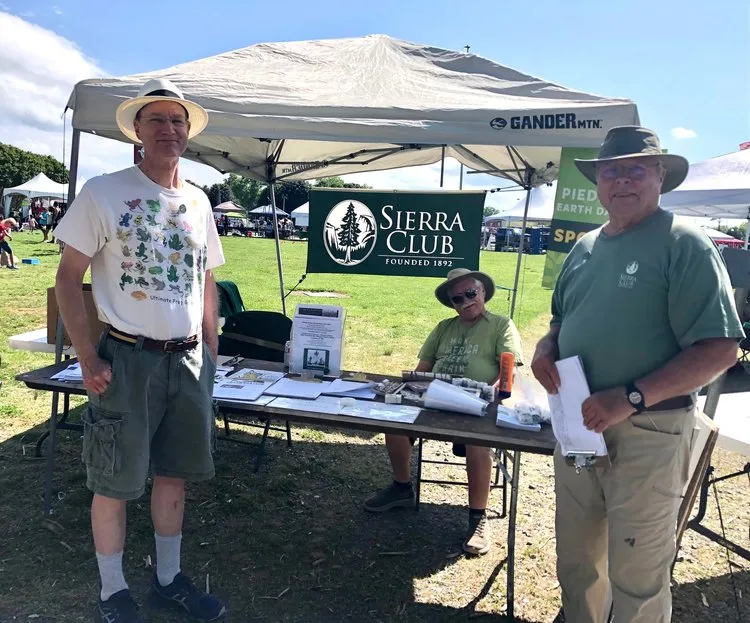
You see that we are busy doing lots of things for a good cause. Do we have any priorities for our special attention this year?
Yes, we do!
________________________________________
Conservation Issues for Priority Action 2026
Duke Energy
From unnecessary 15% Rate Hikes to threats of a new uber-polluting 1360 Megawatt gas plant, Duke Energy is ever looking to reward investors and spread air and water pollution far and wide - find out more about who's affected and what you can do here.
Water Quality Concerns
During the last twelve years or so, both Federal and State legislatures have weakened water quality standards. In Washington, legislators diluted the standards within The Clean Water Act and reduced the budget for the Environmental Protection Agency, limiting the ability to monitor and enforce anti-pollution regulations. In Raleigh, legislators reduced the budget for the Department of Environmental Quality, limiting that agency’s ability to monitor and enforce water quality standards in our state.!
Every environmental organization in North Carolina involved with water quality agrees that, as a general statement, pollution levels have increased. Drinking water is generally safe. However, cancer-causing chemicals (PFAs) are in the Yadkin River, and traces of these are in the Winston-Salem city water. Various creeks and streams in this area are dangerously polluted.
The Foothills Group is partnering with a regional coalition to form a working group to begin a project to protect our water. This link has more information and you can sign up here for Henry's Conservation Update for opportunities to join the group or keep up with the latest news
The Transco Southeast Supply Enhancement Pipeline
The Transco Southeast Supply Enhancement Pipeline is an unnecessary 47 inch, 54 miles long proposed methane gas pipeline in North Carolina and Virginia that will negatively impact landowners and community members, soil and water quality, all while Transco profits from it. If installed, it will be parallel to three existing pipelines. Forsyth County is right in the path of the planned route. Foothills has been an integral part of the fight against this pipeline. FERC has approved all permits, and construction is beginning. Details of our journey is here, and for any weekly progress updates and information on how you can join our fight, sign up here for Henry's Conservation Update.
Recent NC Legislation
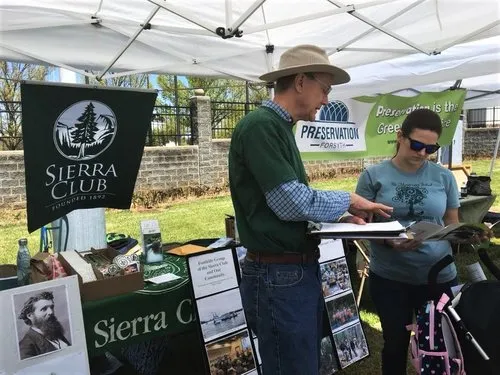
NC Sierra Club Chapter News and Action Requests
Speak up: Protect roadless areas in NC, nationwide
The fight for our forests is on.
In a move that surprised exactly no one, Trump's Department of Agriculture (USDA) announced in June that it intends to revoke the Roadless Rule.
This 25-year-old regulation preserves large, remote, and pristine swaths of our national forests – including the four in North Carolina – by banning the construction of new roads within their boundaries.
The proposal would remove protections for 58.5 million acres of public lands nationwide, enabling industrial-scale logging, road building, and other extractive activities in fragile ecosystems. North Carolina alone boasts 176,000 acres of roadless area, forestland that is crucial for habitat, recreation, and flood protection.
The Rule, adopted in 2001, is popular with the public and has always enjoyed political support on both sides of the aisle. When the U.S. Forest Service (USFS) was developing the Rule in 1999, it conducted the most extensive public participation in federal rulemaking history, holding over 600 public meetings across the country and collecting more than 1.6 million public comments – 95% of them supporting strong roadless area protection. The rule prevented new road construction in large, ecologically intact areas of national forest designated valuable for their unfractured habitat, biodiversity, and recreational popularity.
Three pillars supported the development of the Rule: Conservation, Economics, and Recreation.
Conservation
As the impacts of climate change reshape the world around us, the preservation of large areas of forest is critical for habitat conservation and carbon capture. Forests in roadless areas provide habitat for more than 1,600 threatened or endangered plants and animals, many of which require unfractured habitat to thrive. Roadless areas protect habitat for fish, especially threatened and endangered species, keeping water quality high, and water quantity in check through their natural filtration systems, processes highly valuable to humans as well. National forests contain the drinking water sources for over 60 million Americans, and roadless areas are critical to the water quality protection and preservation of those sources.
Economics
For decades, USFS has struggled to maintain 370,000 miles of existing roads in national forests; and no wonder – that’s twice the miles managed by the Federal Highway Administration! In 2001, with a backlog of roughly $8.4 billion in deferred maintenance and reconstruction costs, USFS was not interested in building new roads in expensive places. This rule was designed to offer some relief from their growing budgetary woes.
As of 2022 – even with the Roadless Rule in place – USFS reported a maintenance backlog of $4.85 billion for transportation projects alone. One might reasonably question the economic responsibility of repealing the rule and saddling a beleaguered federal agency with expensive and unnecessary road construction and maintenance projects – especially one that's facing a reported budget cut of 65% in 2026 and 30% staff reduction thanks to the "Big Ugly Bill."
Recreation
One of the most amazing things about this country is our access to beautiful, wild natural places. Our National Parks might have been "America’s Best Idea," but our national forests are pretty incredible, too. Since 2001, protected roadless areas have offered abundant outdoor recreation opportunities such as hunting, fishing, camping or other activities, helping to support a multibillion-dollar outdoor recreation industry.
If you’ve been out in the western part of North Carolina to do some hiking, biking, paddling, or climbing, chances are you were enjoying parts of our roadless areas. Without roadless protections, we risk not only the destruction of these places, but the opportunity for future generations of nature lovers and outdoor thrill seekers to experience what it truly means to be in the wild.
The Bottom Line
The Trump administration can’t revoke Roadless Rule protections without going through an administrative process that requires public input. That’s where you come in.
Right now, you can urge your U.S. representatives and senators to support the Roadless Area Conservation Act, which would enshrine the administrative Roadless Rule into federal law. Use our form to send a message supporting this law!
There's more: In the coming weeks, we expect the USDA to release a Notice of Intent (NOI) to revoke the Roadless Rule, which will open up a public comment period. We want you, and all your friends and family, to be ready for that announcement. We want to flood the agency with comments supporting Roadless Rule protections. Right now, you can use our talking points and this fact sheet to get familiar with the topic and share with your networks, and we'll let you know via email and our social media when the announcement drops.
OVERBURDENED & OVERLOOKED: Communities Harmed by Transco's Southeast Supply Enhancement Project
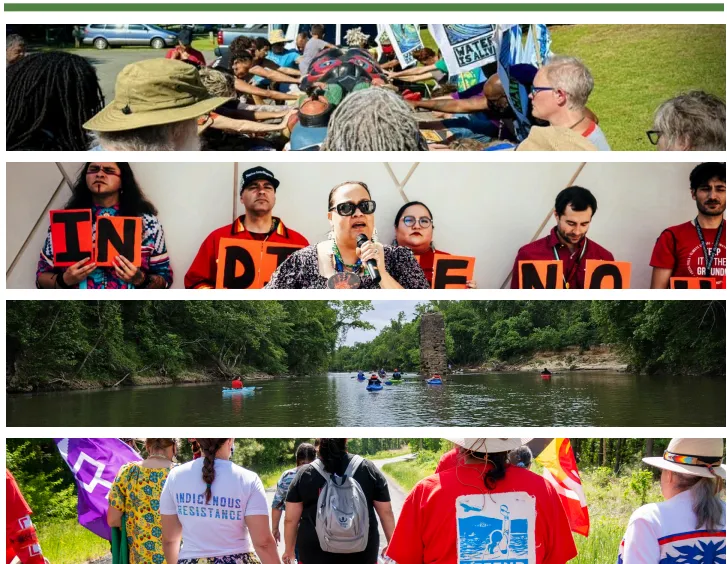
The Sierra Club released a report today (March 31) on the impacts of Transco’s proposed Southeast Supply Enhancement Project (SSEP) on communities in North Carolina, including low-income and communities of color.
Overburdened and Overlooked: Communities Harmed by Transco's Southeast Supply Enhancement Project identifies communities along the proposed route of the SSEP pipeline project that are already overburdened by poor air quality and low income.
This report serves to educate elected officials, regulators, and the public on some of the impacts of the proposed project that have been left out or minimized by Transco. The report provides recommendations for the Federal Energy Regulatory Commission (FERC), the North Carolina Department of Environmental Quality (NCDEQ), and other decisionmakers to apply closer scrutiny to the major potential impacts of the proposed project.
The Sierra Club co-wrote the report with 7 Directions of Service, an Indigenous-led environmental justice community organization operating on the ancestral homelands of the Occaneechi-Saponi in rural North Carolina.
Caroline Hansley, Campaign Organizing Strategist with Sierra Club, issued the following statement:
“Transco has made every effort to downplay the impacts on the communities most affected by the proposed SSEP project– communities that already have some of the worst air quality in North Carolina. This report serves as a sharp reminder that FERC and state decisionmakers should not simply take Transco at its word and must do all they can to protect the everyday people who would bear the burden of increased pollution caused by SSEP.”
Dr. Crystal Cavalier, Director & Co-Founder of 7 Directions of Service, issued the following statement:
"The data is clear. Pollution is already high in several communities where Transco proposes to build its Southeast Supply Enhancement Project. Rightfully, there is growing public concern over SSEP, and the dangers this project poses into the future. We urge state-level regulators and representatives to do the right thing: Carry out a robust evaluation, protect the most vulnerable North Carolinians and ensure impacted folks are heard at every stage."
Read the full news release and information about an upcoming virtual press briefing.
Become a Champion for the Planet
Ready to take your commitment to the next level? Join the Sierra Club today and become a champion for the environment. Your membership supports our critical work to protect North Carolina’s air, water, and wild spaces. Together, we can create a cleaner, greener future for all.
Join Foothills Today and be part of the movement that’s changing North Carolina and the world!