
After approving a resolution last year in opposition of a proposed gas pipeline expansion, Forsyth County commissioners on Monday will be asked to clear the way for the project to pass through Triad Park.
The Southeast Supply Enhancement Project (SSEP) is a controversial, multi-billion-dollar natural gas pipeline proposed by the Williams Companies' Transco (Transcontinental Gas Pipe Line Company). Stretching from Virginia to Alabama, the project would install approximately 54 miles of new, 42-inch diameter pipeline through six North Carolina counties, including densely populated areas of Guilford and Forsyth. The primary purpose of this expanded capacity is to feed Duke Energy's planned massive gas buildout in the Carolinas, locking the region into fossil fuel dependency for the next 30 to 50 years. This project is currently navigating the Federal Energy Regulatory Commission (FERC) permitting process, with a target construction start in 2026.
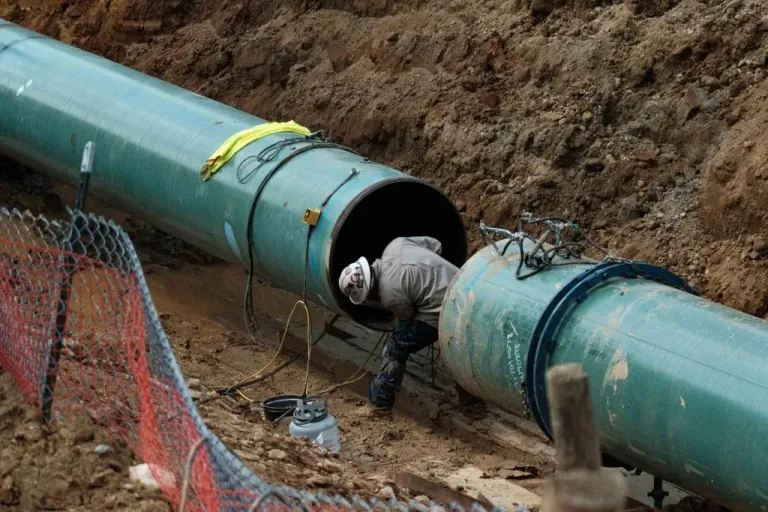
The SSEP poses unacceptable risks to public safety, public health, and the environment. Transco's own safety record is alarming, with data showing it performs worse than other gas operators in fatalities, costs, and preventable incidents. The proposed route threatens critical water sources, including the headwaters of the Haw and Dan Rivers and the Roanoke, Cape Fear, and Yadkin-Pee Dee watersheds, jeopardizing drinking water and private wells. Furthermore, the project would dramatically amplify risks in populated areas, as a pipeline rupture would require a 3,700-foot evacuation zone on either side. From an air quality perspective, the plan to build new gas-fired compressor turbines in communities already choking on dangerous levels of PM2.5 pollution is a direct threat to public health, contributing to severe cardiovascular and respiratory harm. Given these unjustified risks and the availability of cleaner, more affordable alternatives like solar and battery storage, the Sierra Club stands firmly opposed to this dangerous project.
|
|
|
|
|
|
Click here for Transco Southeast Supply Enhancement Pipeline Details
Current Status 3.3.2026
Construction Begins Immediately
From the Winston Salem Journal
Forsyth commissioners asked to clear way for gas pipeline through Triad Park
If areas in the park already marked by wooden stakes are any indication, it appears the decision may be a foregone conclusion.
The deal would involve selling park land for the project, allowing for road access to the site and granting an easement for the pipeline to be installed near an existing utility right-of-way, which passes a few feet from the parking lot for the Carolina Filed of Honor tribute to military veterans.
Forsyth and Guilford counties co-own the park, so both would be required to approve the deal and would share proceeds from the $110,000 sale, according to the resolution.
The planned new line is part of the Transcontinental Pipe Line Company’s $1.2 billion Southeast Supply Enhancement Project. When completed, the additional section would move up to 1.5 billion cubic feet of natural gas through the Triad daily. That’s enough to serve nearly 10 million homes.
On Saturday, stakes marked off areas near the existing pipeline right-of-way. All roads through the park also were lined with stakes marked TGPL-AR, presumably designating them as access roads for the project.

The Transco Gas Pipeline right of way is marked as it passes through Triad Park on Feb. 28.
'Unpopular, dangerous and redundant'
In its resolution, the county appears to suggest it can do little to stop the project because a certificate of public convenience and necessity issued Jan. 29 by the Federal Energy Regulatory Commission (FERC) gives the company the right to take land for its project through eminent domain.
Environmental groups have opposed the expansion, which includes 28 miles of new pipeline through Rockingham, Guilford, Forsyth and Davidson counties, and they continued their criticism Friday.
That included the Piedmont Environmental Alliance, whose president, Jamie Maier, reiterated concerns that the expansion poses health, safety and environmental risks.
“This proposed project is equal parts unpopular, dangerous and redundant,” she added. “In light of extreme community opposition and the Mountain Valley Pipeline being constructed nearby, FERC officials and elected leaders in North Carolina must not let the SSEP move forward."
The separate Mountain Valley Pipeline Southgate expansion also would run through Rockingham County.
The Southeast Supply Enhancement Project, meanwhile, would add pipeline in existing Transco corridors in Virginia, North Carolina, South Carolina, Georgia and Alabama.
Forsyth commissioners unanimously passed a resolution last August opposing the expansion, one of several local governments to do so.
“Public safety risks include the SSEP’s proposed co-location with existing older gas pipelines along much of its route, with an unanalyzed risk of synergistic effects on the SSEP pipeline in the event of a major leak, fire or explosion involving any of the co-located pipelines," they said in their resolution.
John Deem covers the Triad for the Winston-Salem Journal and Greensboro News & Record. Contact him at john.deem@lee.net
Sierra Club Press Release
U.S. Army Corps of Engineers approves permit for SSEP pipeline
February 20, 2026
Contact
Andy Li, andy.li@sierraclub.org
Dan Radmacher, Media Specialist, (276) 289-1018, dan@appvoices.org
Yesterday, the U.S. Army Corps of Engineers issued a permit for the Southeast Supply Enhancement Project, an interstate pipeline proposed by Transcontinental Gas Pipe Line Company, LLC. The Corps’ permit, issued under Section 404 of the Clean Water Act, authorizes Transco to cut crossings through more than 150 streams and wetlands.
The massive SSEP pipeline expansion is proposed between Pittsylvania County, Virginia, and Coosa County, Alabama. It includes 26.4 miles of new pipe in Pittsylvania County and 28.4 miles of new pipe in Rockingham, Guilford, Forsyth and Davidson counties, North Carolina. Additionally, the proposal calls for expanding emissions-producing gas-fired compressor units in Iredell and Davidson counties, North Carolina, and compressor station updates in Anderson County, South Carolina, Walton and Henry counties in Georgia and Coosa County, Alabama.
Most of the SSEP’s new pipe would be laid near or next to existing Transco pipelines, and parts of the project cover a route similar to the proposed Mountain Valley Pipeline Southgate extension. The co-location of multiple high-pressure, large-diameter pipelines is of significant concern for local residents in the impacted counties. Six North Carolina municipal governments have passed resolutions of opposition or concern on this project, including the cities of Greensboro, Lexington and Midway, and Forsyth, Davidson and Guilford counties.
“The U.S. Army Corps of Engineers decided to issue a Clean Water Act permit for the Southeast Supply Enhancement Project, but the public has not yet had the opportunity to see the Corps’ full explanation for why they issued it,” said Juhi Modi, North Carolina Program Coordinator for Appalachian Voices. “Unsurprisingly, Transco is rushing ahead and has asked FERC to allow it to start trenching through the region’s fields, forests, and streams. We are disappointed that the Corps appears once more to have fallen short of its duty to protect sensitive waterways and ecosystems from this sort of disruption by issuing the permit.”
“We’ve relied on the protections promised in the historic Clean Water Act of 1972 for more than 50 years, but those protections are under unprecedented attack by the current federal administration,” said David Sligh, Wild Virginia’s Water Quality Program Director. “The Army Corps of Engineers’ action, in rubbler-stamping Transco’s plan to cut and blast through our streams and wetlands, is in line with that approach. The proposed assault on our communities and resources, and the Corps’ approval of it, is deplorable.”
“By approving SSEP, the U.S. Army Corps has placed corporate pipeline profits over the health of our streams and the well-being of impacted communities,” said Caroline Hansley, Campaign Organizing Strategist for the Sierra Club. “Residents, businesses, and elected officials along the route of SSEP have spoken out against this dangerous pipeline. Transco should not be allowed to move forward with construction, damaging our waterways and communities for an unnecessary pipeline.”
“This is another deadly blow to the fish and other aquatic life that call the Dan River home,” said Buck Purgason, North Carolina fisherman. “This unwanted and unnecessary pipeline means more sediment flowing into a river that has been devastated by a coal ash spill just 11 years ago, where only ten percent of the ash was recovered. The continued disregard of public sentiment and science-based facts that say the continued use of fossil fuels will only increase natural disasters makes no sense.”
“SSEP construction will include impacts to wetlands and stream channels,” said Dr. Crystal Cavalier-Keck, Executive Director of 7 Directions of Service. “Given the scale and permanence of authorized wetland conversion, questions remain regarding practicable alternatives analysis, avoidance and minimization measures, mitigation adequacy, and cumulative watershed impacts associated with the authorized activities. Pollution is already high in the communities where Transco proposes to build, and the residents of these areas have voiced opposition to this project again and again. The U.S. Army Corps is accountable to the people and the environment that sustains the people. Enough is enough.”
“There seems to be absolutely no acknowledgement by the U.S. Army Corps of Engineers, in pipeline docket after pipeline docket, that the rains we are seeing routinely will — without question — cause failure of erosion control devices that will result in harm to streams, related aquatic species, and water supplies,” said Shelley Robbins, Senior Decarbonization Manager for the Southern Alliance for Clean Energy. “It cannot be mitigated. It also does not seem to matter that many of the impacted streams and rivers are near the tops of watersheds. North Carolinians across the state will feel the impacts of an unnecessary pipeline expansion for a foolish gas buildout that extends all the way to Alabama.”
“From the fracking fields of Appalachia to the LNG processing clusters of the Gulf South and everywhere in between, our communities are made less safe by these reckless permit decisions,” said Russell Chisholm, Managing Director of Protect Our Water, Heritage, Rights. “For the Corps to endorse unchecked expansion of methane pipelines while the wounds from repeat flooding due to climate chaos are still raw across our region is unconscionable and immoral.”
About the Sierra Club
The Sierra Club is America’s largest and most influential grassroots environmental organization, with millions of members and supporters. In addition to protecting every person's right to get outdoors and access the healing power of nature, the Sierra Club works to promote clean energy, safeguard the health of our communities, protect wildlife, and preserve our remaining wild places through grassroots activism, public education, lobbying, and legal action. For more information, visit www.sierraclub.org.
More From This Press Contact
Related Press Releases
The Battles
The Foothills and Piedmont Sierra Club groups worked with our NC Chapter, Piedmont Environmental Alliance, Seven Directions of Service, Haw River Assembly, Yadkin Riverkeeper, Clean Water for NC, Appalachian Voices and hundreds of residents to oppose the project.
- In late 2024, a coalition of groups began mobilizing landowners and residents along the proposed route, holding community meetings to educate them on the project's risks and their rights during the FERC process.
- We successfully lobbied the Guilford County Board of Commissioners to pass a resolution opposing the pipeline, citing threats to water quality and public safety.
- The Midway Town Council passed a resolution against the pipeline, demonstrating the spread of municipal-level opposition.
- The coalition urged the Kernersville Board of Aldermen to pass a similar resolution, amplifying local government opposition.
- Following sustained public pressure, the Forsyth County Board of Commissioners passed a resolution formally opposing the Transco SSEP.
- Upon FERC's release of the Draft Environmental Impact Statement (DEIS), groups including the Sierra Club and Appalachian Voices immediately condemned the assessment as inadequate, citing its failure to properly account for the project's full climate, environmental justice, and safety impacts.
- Groups including the Sierra Club, NC Climate Solutions Coalition, and Haw River Assembly organized and testified at a public hearing hosted by the NC Department of Environmental Quality (NCDEQ), urging the state to deny a crucial 401 Water Quality Certification permit for the project. This included presenting a petition with hundreds of local signatures. Similar testimonies were presented to the Air Quality Certification permit hearing on the Air Quality Permits
- In Davidson County, residents, with support from the coalition, pressured county commissioners to create a pipeline safety board and draft a safety resolution, keeping the issue at the forefront of local government agendas.
- In late Jan. 2026, the Lexington City Council passed a resolution urging Williams Transco to meaningfully address all safety and environmental concerns of the SSEP. (The City of Lexington is a wholesale customer of Williams Transco.)
Press
Sierra Club - Guilford County
WXII - Davidson County
Citizen Portal - Davidson County
Carolina Political Review - Forsyth County *A Favorite!!
Appalachian Voices - FERC
EPA - Settlement