The North Dakota Chapter of the Sierra Club is proud of recent successes related to public policies and issues in North Dakota and nationally.
Missouri River Day Park - State Government
(2013-2019) Sierra Club North Dakota Chapter let the charge in proposing a new day park south of Bismarck, along the Missouri River. The park would be made from part of the acreage of the Missouri River Correction Center (MRCC) and would be adjacent to Bismarck’s General Sibley Park. It would provide day access to the Missouri River, its sandbars and gallery forests. It would also protect this area from development, which has happened in the surrounding woodlands at an alarming rate, despite the ever present danger of flooding. There is currently a MOU with the Department of Corrections, stating that if the MRCC should be closed, the 200+ wooded acres and river access would be made available for a day use park.
Methane Rule - U.S. Congress
Sierra Club-North Dakota Chapter opposed efforts in the U.S. Congress to eliminate the Bureau of Land Management's rule to reduce methane that is leaked, vented and flared during oil production. Sen. Heidi Heitkamp was a "swing" vote on the issue. North Dakota Chapter members stepped up to the plate and convinced Sen. Heitkamp to vote to stop this wasteful practice and to protect North Dakotans’ health.
Section Line Lawsuit
When the state of North Dakota and western oil-producing counties sued the U.S. Forest Service to open every section line for roads in the Badlands facilitate oil and gas development, Sierra Club-North Dakota Chapter was there. We were active in this lawsuit for more than eight years, and in 2017 a judge finally issued a ruling in the case that protects the integrity of the Badlands and sets precedence throughout the United States that although a section line is open to the public, an undeveloped section line is not considered a developed road.
Management of Dakota Prairie Grasslands
(Ongoing) The North Dakota Chapter has always kept an “ear to the rail” about management of the Dakota Prairie Grasslands, and has provided comments on management proposals as needed. This has included suitable for wilderness areas, non motorized areas, river crossings, and juniper management among others. Recently, the chapter submitted comments to add preservation of Old Growth timbers into the Dakota Prairie Grasslands Management Plan. This would include the Ponderosa Pine and Limber Pine regions, as well as some riverine cottonwood forests and mature bur oak in the Little Missouri National Grasslands, plus old and mature growth bur oak (oak savannah) in the Sheyenne National Grasslands.
Endangered Species
(Ongoing) We have huge numbers of wildlife in North Dakota, although much of our wildlife habitat is under threats from development. The North Dakota Chapter was instrumental in the Pallid Sturgeon being listed on the Endangered Species list. We’ve also worked with paddlefish, piping plover, trumpeter swan, and prairie fringed orchid, and have been involved in court cases to protect migrating bald and golden eagles, and the free-flowing reaches of the Missouri River.
Davis Refinery
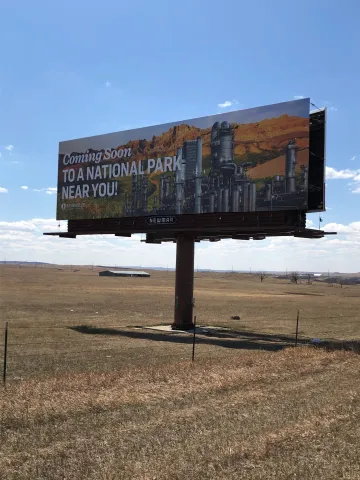
(2015-2018) Fifteen North Dakota Chapter members attended the North Dakota Department of Health hearing on Air Quality for the proposed Davis Refinery. The refinery is proposed to be just 3 miles from Theodore Roosevelt National Park, our only National Park. Members testified and supplied written information ranging from the prevailing winds at the location to how the pollution may affect plants, animals and people in the Park, and questioned why the location chosen. The North Dakota Chapter offered an alternative location that would not be in the view shed or the odor shed of the Park. The North Dakota Health Department has tried to ignore National Park Air Quality Standards – Sierra Club continues “hold their feet to the fire” on those standards through lawsuits. The proposed refinery is currently barely alive. A small empty building is all that sits on the site, and the area has been returned to cropland. We will continue to monitor the proposal and take action as needed.
Photo: North Dakota Chapter funded a billboard on I-94 just west of Mandan to make people think twice about an oil refinery next to Theodore Roosevelt National Park.
Natural Gas Flaring
(2008-2015) Working with sympathetic State Representatives and State Representatives, North Dakota Chapter had two bills introduced that would reduce the amount flaring in western North Dakota.
⦁ One bill required oil well developers to pay royalties and state taxes on flared gas
beginning 14 days after a well begins production.
⦁ A second bill reduced the allowed time an oil well could flare from one year down to 90 days.
Despite heroic efforts from our staff and volunteers, both bills were defeated. So once again no other state comes close to North Dakota’s embarrassing record of wasteful flaring.
The embarrassing record: In 2012 the flaring of natural gas in North Dakota resulted in the loss of one billion dollars of fuel. The greenhouse gas emissions were the equivalent of adding one million cars to North Dakota’s roads. That wasteful flaring could have heated one million homes.
South Heart Mine
(2012-2014) North Dakota staff helped organize opposition to the proposed South Heart Mine near South Heart, North Dakota. This large coal mine went through several iterations, from a coal gasification plant, to a power plant, to charcoal briquetting facility for shipment to China. The coal beds near South Heart are some of the most contaminated in the state, full of radioactive materials (coal is a filter, after all). The PSC refused to hold a hearing, so the North Dakota Chapter held its own hearing, and video of the testimony which was submitted to the PSC. The mine was never built.
Badlands on the Brink
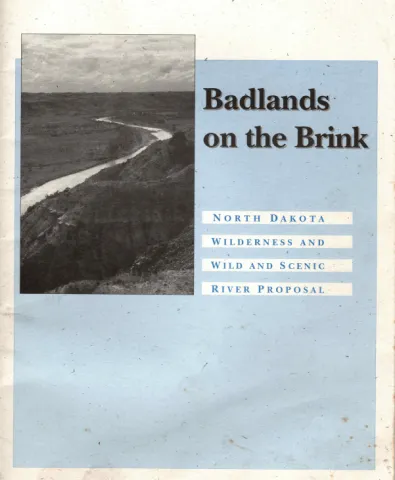
(1988-1993) this publication was made in the early 1990’s to promote the designation of wilderness and wild river systems in North Dakota. It was produced by a consortium of environmental groups and tribes in North Dakota. Badlands on the Brink included many of the “non-motorized” and “suitable for wilderness” areas of the Little Missouri National Grasslands as well as the Sheyenne National Grasslands. It also included proposals for Wild and Scenic River status for parts of the Pembina River and the Little Missouri River. It was the basis of the Maah Daah Hey National Monument proposal of 2023.
Photo: Badlands on the Brink was published to promote the protection of many areas in North Dakota.
Dakota Catalyst
(1997) North Dakota Chapter volunteers helped bring in the big guns which shut down the Dakota Catalyst plant in Williston, ND. Dakota Catalyst was supposed to be a metal recycling plant, a partnership between the City of Williston and the State of North Dakota. After about 5 years, financial woes seem to force the company to secretly take in hazardous waste instead, and the residents of Williston realized something was seriously wrong. Plumes of black smoke and leaking railroad cars were the most obvious. North Dakota Chapter volunteers held a door-to-door campaign to alert residents, before the Federal Government swooped in and closed the doors of Dakota Catalyst. For more details see https://www.hcn.org/issues/issue-138/dreams-of-new-industry-go-up-in-smoke/ .
Pembilier Dam
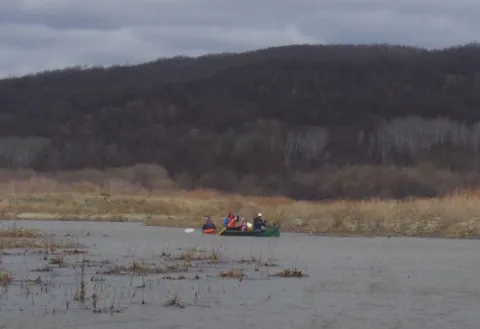
(1980’s) In the early years of the North Dakota Chapter (when we were combined with the South Dakota Chapter) members worked to defeat the proposed “Pembilier Dam” on the free-flowing area of the Pembina River just south of the Canadian border. The dam was proposed for near Frostfire Ski Resort, and would have flooded the scenic Pembina Gorge. The dam proposal was defeated, partly due to unstable and unfavorable geologic conditions …the sides would have just slumped into the reservoir... Today, the area is part of the Pembina Gorge State Recreation Area, and the river still flows freely. Trails, kayaking and canoeing are available to the public.
Photo: Canoeing the Pembina River
Photo Credit Sue Leake