Vegetation Management for Fire Safety in the East Bay Hills

Show All Slides

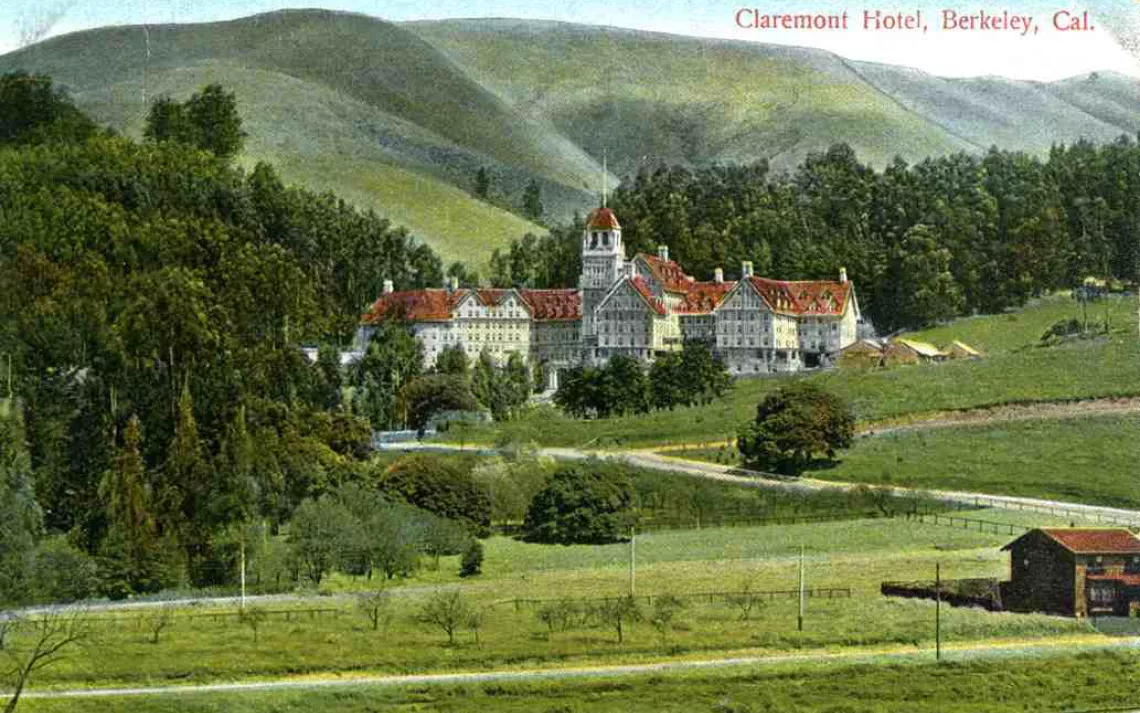
This antique postcard shows that the East Bay hills were primarily grasslands with areas of riparian vegetation along streams before the spread of eucalyptus. Non-native eucalyptus trees were introduced to the East Bay hills in the late 1800s by two Oakland businessmen who forested the hills with eucalyptus plantations for hardwood lumber production.

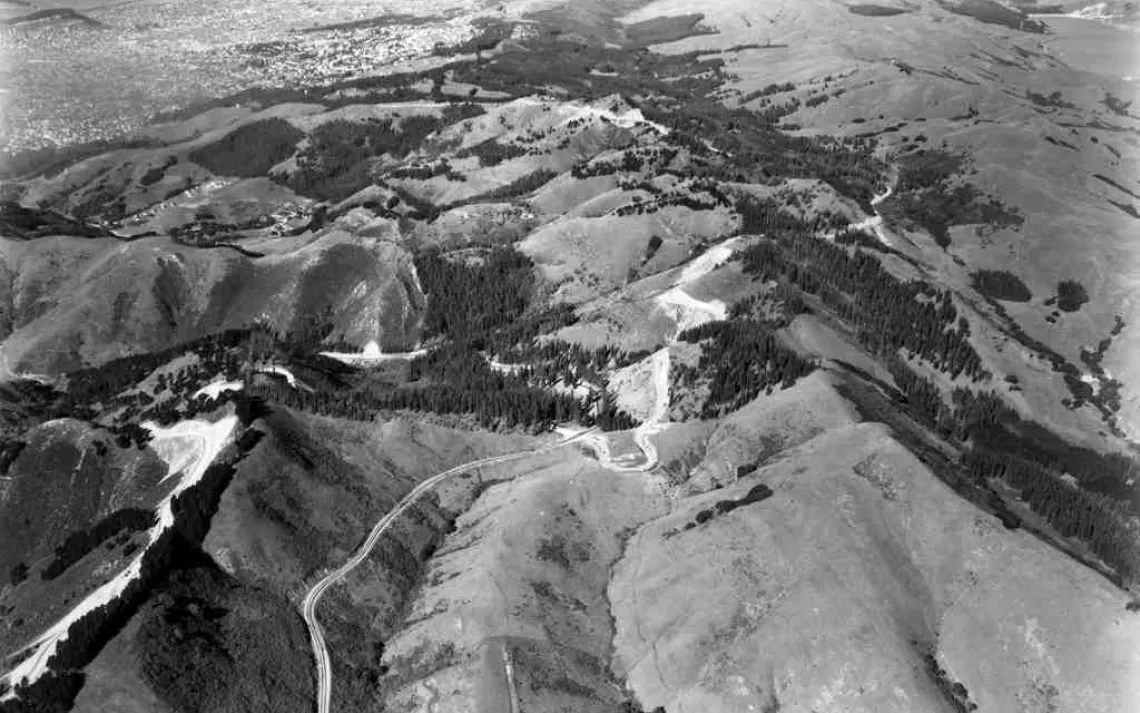
Another view of the Berkeley hills before widespread development and spread of eucalyptus.

This photo shows the remains of the 1991 Oakland Hills fire, which is the most destructive wildfire in California history. It destroyed over 3,450 homes, killed 25 people, and injured 150 others. Photo courtesy of the California Governor’s Office of Emergency Services Flickr account.
Eucalyptus trees drop much more fuel than native trees, and debris build-up can be come draped in a near-optimal mixture of oxygen and fuel.

An episode of "Angry Planet" on Pivot TV shows a fast-moving eucalyptus fire in Australia. The film says: "Firefighters call them gasoline trees, because fire moves incredibly fast up the trunk, along the string of bark to the canopy of the tree. Up there, broad leaves that are filled with combustible eucalyptus oil don't just burn — they explode, shooting flaming bark and leaves in all directions. Add a good wind and fire can be thrown as far as 20 miles away."

Restored native landscape after eucalyptus removal in Claremont Canyon. Photo courtesy Ken Cheetham.

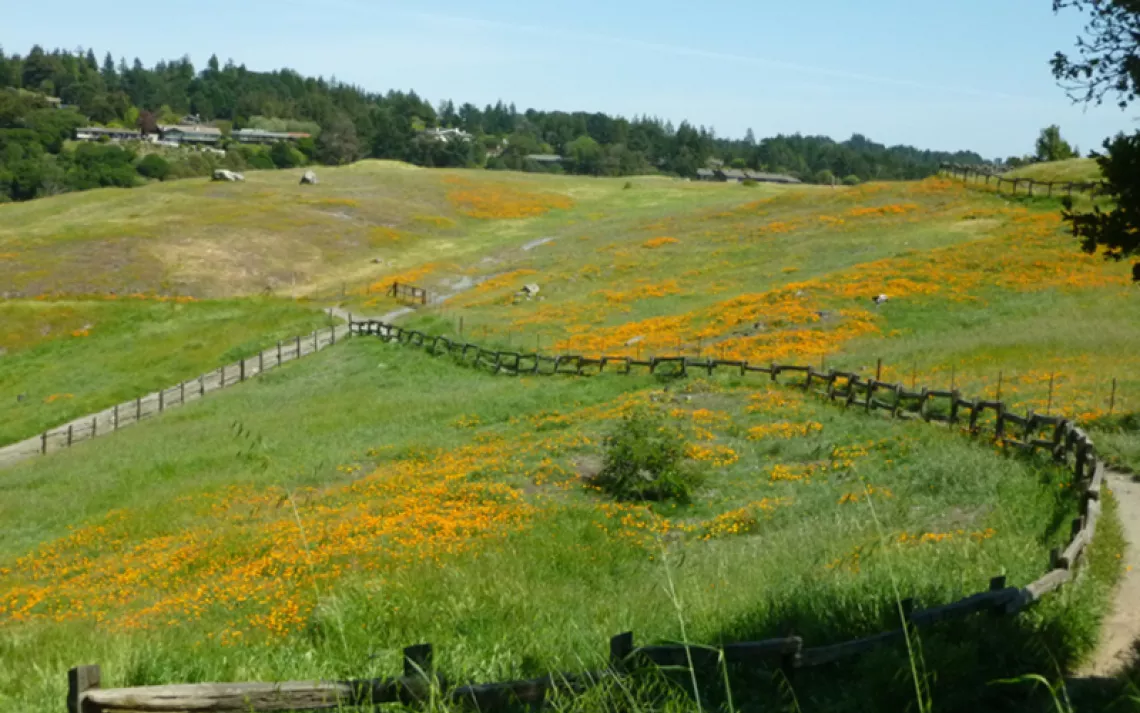
Restored native grassland prairie and fuel break in Redwood Park.

The vegetation management plan known as "Remove, Restore, and Re-establish" will create new habitat for the endangered Alameda whipsnake, which cannot live in areas dominated by eucalyptus and Monterey pine.

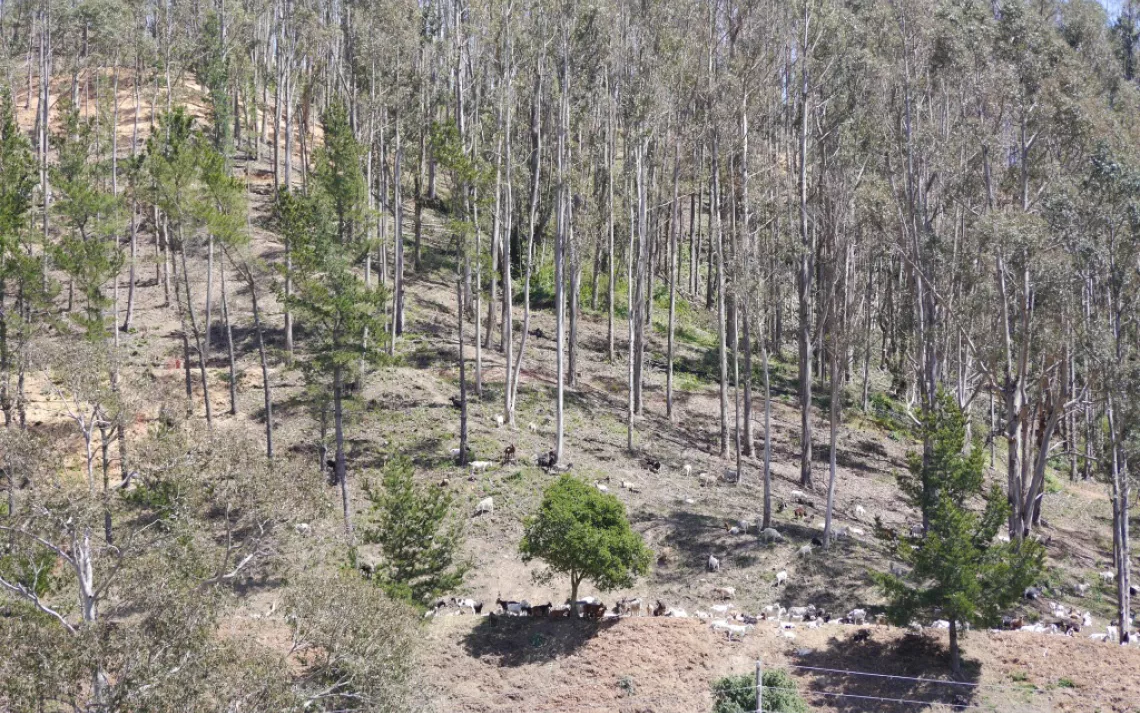
A program of thinning flammable eucalyptus trees is much more expensive than native landscape restoration, as it has to be done on an ongoing basis for the life of the trees. It also denudes hillsides to an even greater extent because it requires regular, wholesale clearing of the understory and hanging debris, including native vegetation.