By Vicki Hoover

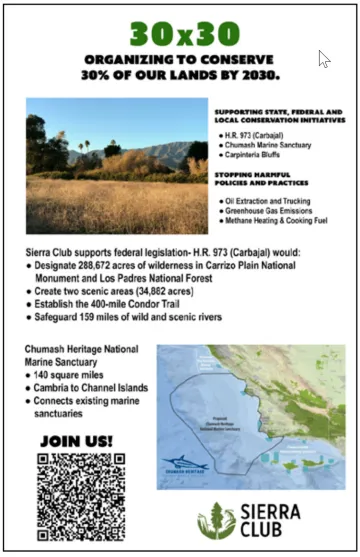
California’s 30x30 program, launched in 2020 by Governor Newsom’s executive order, aims to conserve 30 percent of California’s lands and coastal waters by 2030.
This focus on protecting Nature and keeping more lands natural and undeveloped is to combat climate change effects and the biodiversity crisis. Natural lands can sequester vast amounts of carbon and provide the best wildlife habitat, to avoid species extinctions.
But these lands offer the best habitat only when connected to other protected lands. If a park and a wilderness area, for example, are separate and isolated from each other—having a protected wildlife corridor connecting them greatly boosts their habitat value.
Therefore, the 30x30 program put a strong emphasis on wildlife corridors.
It’s good to know both Santa Barbara and Ventura counties have active wildlife corridor programs, with Ventura County leading in formalized regulations and legal protections.
Sierra Club supports a bill in the current state legislature, SB 1250 by Senator Dave Cortese of Santa Clara County) that would support efforts to put in infrastructure for highway wildlife crossings. As Senator Cortese puts it:
“Every year across California, thousands of drivers experience dangerous wildlife-vehicle collisions on highways and local roadways. More than 7,000 wildlife-vehicle collisions are reported annually in California alone involving deer and other large animals— creating serious safety risks and costly damage for motorists.”
SB 1250 has been approved by the Senate and is now referred to the Assembly.
Tell your Assemblymember to vote YES on SB 1250. Go to https://tinyurl.com/FindLocalRep
Highway crossings that let creatures from deer, foxes, wolves down to tiny salamanders cross roads safely are the most visible aspect of wildlife corridors. But the broad natural corridors which wildlife prefer to move indicate vital natural processes beyond highway over or under-crossings.
California is not the only state to care about wildlife corridors.
On Earth Day this year, elected reps introduced a bipartisan bill, HR 8438, the Wildlife Corridors and Habitat Connectivity Act. This legislation would support planning for and identification of natural species migration patterns to improve safe, free movement between habitats by establishing a National Wildlife Corridor System.
In the current Congress, this bill has no chance of passage. However, it is important to let our members of Congress know we strongly support this bill and its vital connectivity concept.
Santa Barbara and Ventura County Wildlife Crossings
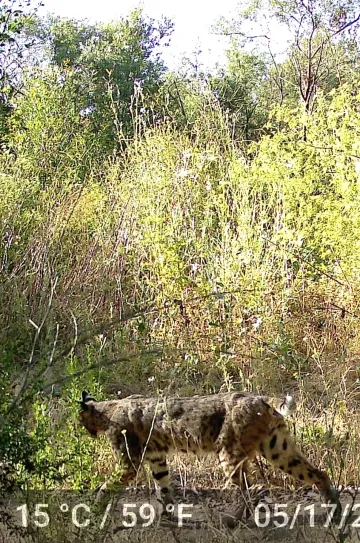
Good news to report from the Santa Barbara-Ventura Chapter about protecting wildlife corridors.
~ As part of a protected wildlife corridor in south Ventura, the 3+ year-long construction of the Liberty Canyon Wildlife Bridge over the 101 freeway is slated for its grand opening on Dec. 2. This overpass will connect the inland National Park Service-owned Cheeseboro Canyon with the state parks-owned lands south of the freeway.
~ Our Ventura County Open Space Lands Collaborative started work to connect another wildlife corridor over the 101 freeway in the Conejo Grade area east of Camarillo. It will also allow safe passage from open space lands on the north and south sides of the freeway.
~ Gaviota Coast region of Santa Barbara County: Caltrans has agreed to begin construction of two wildlife underpasses below the 101 freeway, allowing safe wildlife movement to north and south sides, including coastal habitat.
~ Ojai Valley Land Conservancy has just completed the purchase of the 6000-acre Rancho Canada Larga, which will protect a major inland wildlife corridor stretching from the Ventura River to Upper Ojai open space lands and onto the Los Padres National Forest.
~ Sierra Club Santa Barbara-Ventura Chapter is working with our partners on the above projects. It’s good to know both Santa Barbara and Ventura counties have active wildlife corridor programs, with Ventura County leading in formalized regulations and legal protections.