US Oil Majors Profit As Canada Ramps Up Fossil Fuels
Canadian officials cite questionable technologies like carbon capture while rolling out polluting pipeline projects
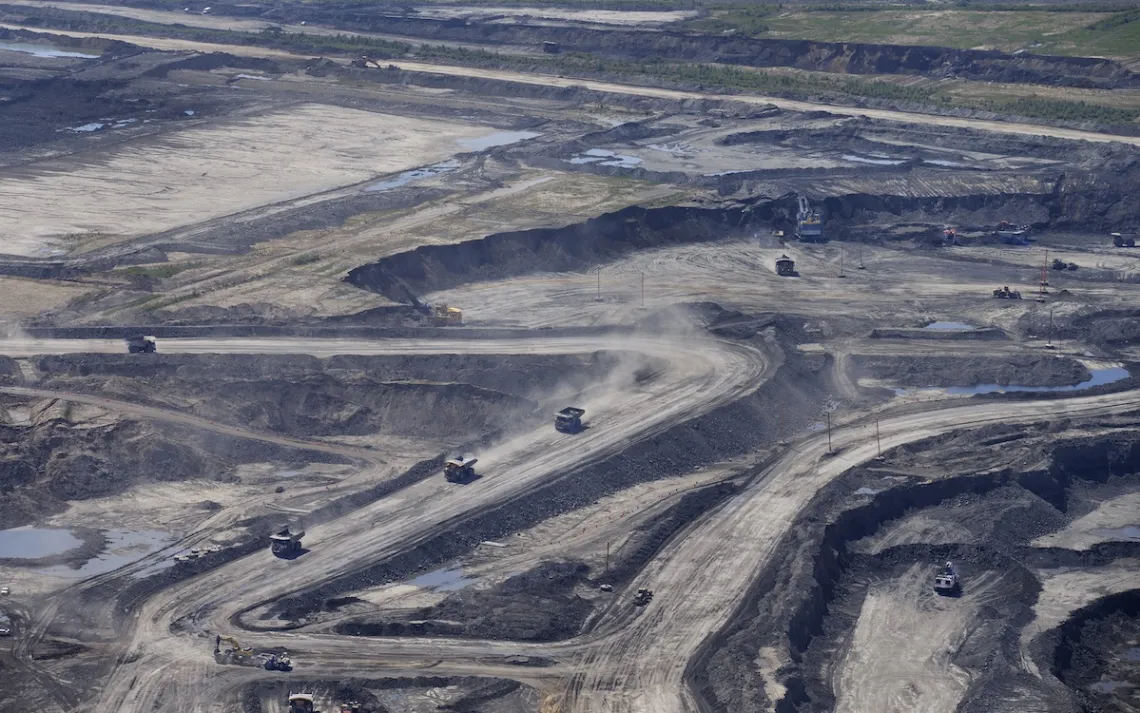
Mining operations at the Suncor Energy Oil Sands project near Fort McMurray, Alberta. | Photo by Larry MacDougal via AP
For the last 10 years, the Liberal Party has led Canada’s central government with a relatively progressive platform around domestic policy. Former Prime Minister Justin Trudeau positioned himself as a climate leader; he formally signed Canada to the Paris Agreement in 2016.
Now, just as all signs are pointing to an acceleration of global warming and its climate impacts, the Canadian government is ramping up new fossil fuel projects faster than anyone could have imagined. It’s doing so while continuing to embrace clean energy and emissions reductions, sometimes in the same breath.
On May 15, the federal Canadian government—under newly elected Prime Minister Mark Carney—and the province of Alberta signed a major implementation agreement to reduce emissions of planet-warming gases such as carbon dioxide and develop clean energy. At the same time, the agreement advances a proposed West Coast Pipeline carrying up to one million barrels of Alberta bitumen oil per day to Asian markets.
“Today’s agreement reinforces that Alberta and Canada are lands where the opportunities are plentiful, the rules are clear, and one project means one review. We are building a Canada that works with a more prosperous, sustainable, and resilient economy for all,” said Carney.
The West Coast Pipeline will keep oil sands crude flowing for decades. The extraction process for tar oil sands is one of the dirtiest and most polluting in the world.
Many Albertan oil producers are controlled or co-owned by large multinational companies, including major US-based firms or their subsidiaries, such as ExxonMobil (through Imperial Oil in Canada). Currently, the vast majority of Alberta oil sands product is sold at a discounted Western Canadian Select rate per barrel as it has been landlocked, unable to access global markets where prices more closely track with the Brent oil price. The more pipelines that touch tide water, the higher the price per barrel, the greater the profits for those multinational firms—including US energy companies and institutional investors.
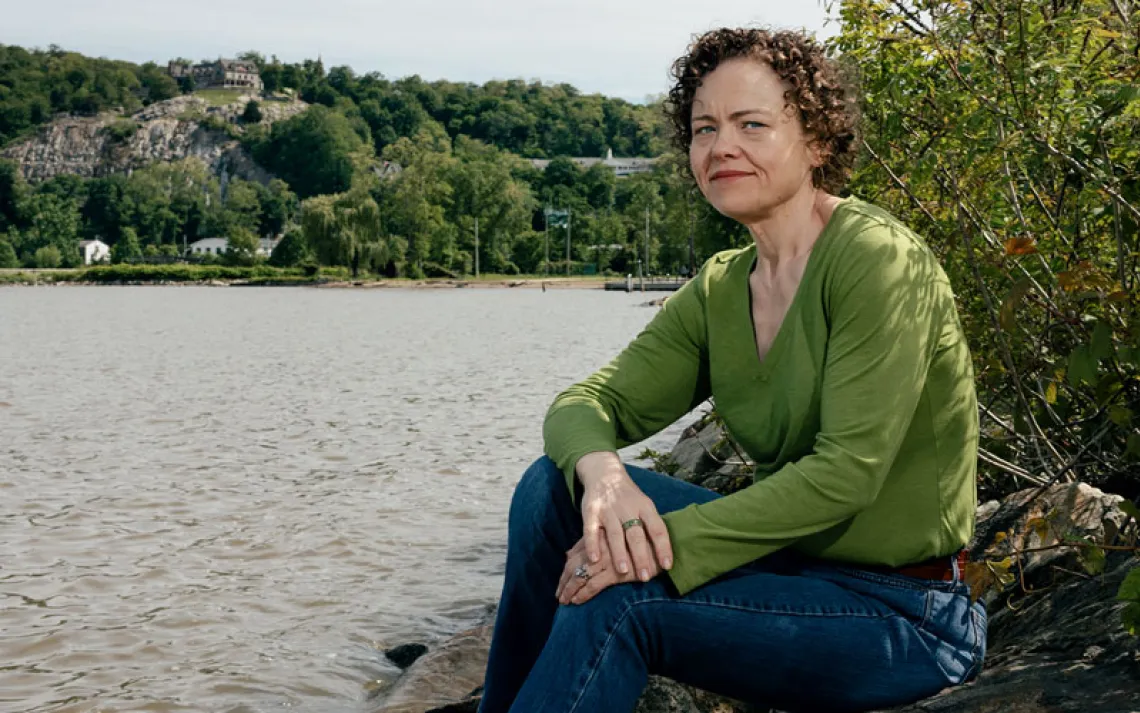
“The support for a new pipeline, combined with the massive expansion in fracking and LNG, the reconsideration of offshore oil drilling, and the weakening—if not gutting—of climate policies put in place over the last decade, signals clearly to the international community that Canada is abandoning its climate targets and international commitments,” said Tzeporah Berman, who has been one of the leading figures in the Canadian environmental movement since the Clayoquot Sound protests of the early 1990s.
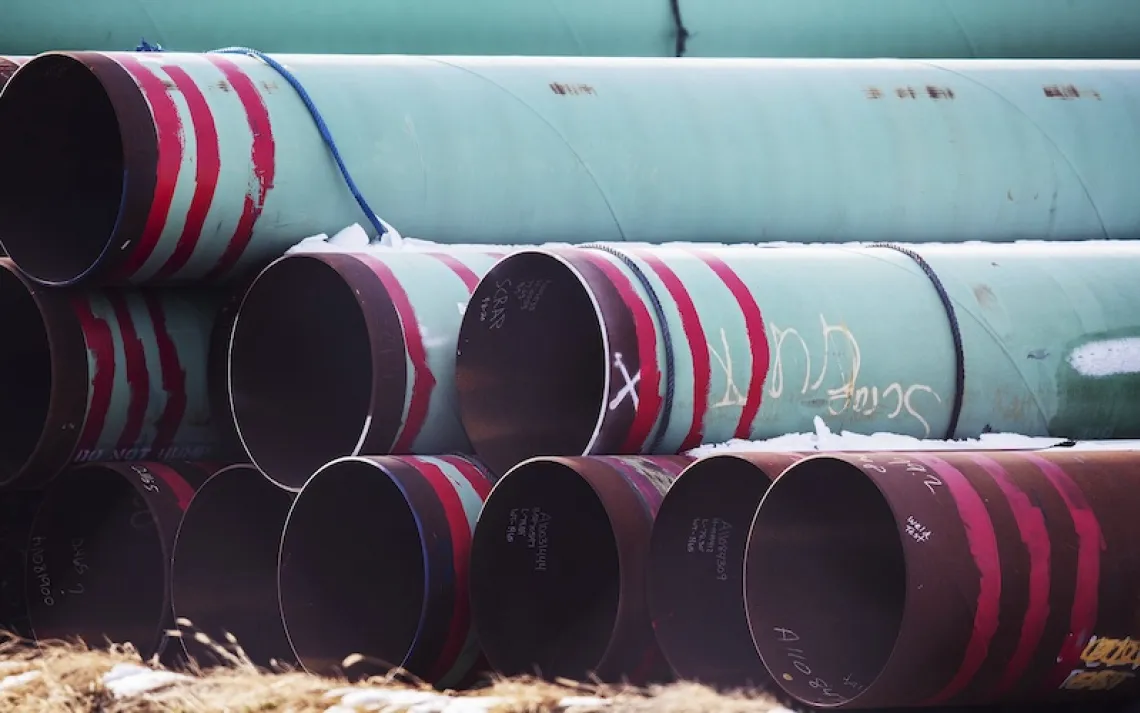
Although an exact pipeline route and other details have not been finalized, it is expected that it would travel from the Alberta oil sands to the west coast of British Columbia to be transported on tankers to markets in Asia. Increased tanker traffic on the west coast of British Columbia carries significant risk to the environment—not just to BC fisheries but to entire ways of life for the Indigenous people of the province and coastal communities.
“Coastal communities in British Columbia have long raised concerns about tanker traffic, spill risk, and marine ecosystem damage,” Berman said. “In your view, are today’s “world-class” marine safety claims sufficient to eliminate those risks, or are some impacts fundamentally unavoidable?”
It is a concern echoed by the Union of BC Indian Chiefs (UBCIC), which issued a statement opposing the new oil pipeline to the British Columbia coast.
“We are gravely concerned about ongoing political efforts to weaken environmental oversight and expedite approvals for major industrial projects under the guise of economic urgency,” said Chief Marilyn Slett, UBCIC Secretary-Treasurer. “Environmental organizations and legal advocates have also raised alarm about proposals to streamline approvals and weaken existing safeguards. The message from UBCIC is simple and unequivocal: Our Nations will not be sacrificed for the political ambitions of Ottawa or Alberta.”
The Alberta government has long sought to get bitumen from the oil sands to overseas markets, where it fetches a higher price in addition to reducing reliance on markets and refineries south of the border. Doing so means a higher price per barrel of oil, and increased profits.
The plan, called Pathways, is the brainchild of Oil Sands Alliance, a group of fossil fuel conglomerates that operate in the Alberta oil sands including Canadian Natural Resources Ltd., Cenovus Energy Inc., Imperial Oil Ltd., Suncor Energy Inc. and ConocoPhillips Canada. Together, the companies represent 95 percent of oil sands production in Canada, one of the world's largest oil reserves.
The conglomerate claims that Pathways will capture and store 16 million tonnes of carbon dioxide. But, the companies, Alberta, and the federal government have still not agreed on how to split the costs for getting the project up and running. In addition, the Oil Sands Alliance, formerly the Pathways Alliance, has come under scrutiny following the publication of a research paper entitled Greenwashing, Net-Zero, and the Oil Sands in Canada: The case of the Pathways Alliance, which is critical of the group’s proposals and carbon capture in general.
The Energy Research & Social Science journal article, researched and written by Melissa Aronczyk, Patrick McCurdy and Chris Russill, shows that carbon capture functions less as a clearly defined emissions solution and more as a strategic hinge in the net-zero narrative.
“There are numerous indicators of greenwashing in Pathways Alliance’s public communication,” the report stated. “Their messaging omits important information, uses misleading framing and comparisons, and fails to meet standards expected of a credible net-zero plan.”
As a result, proposals that link new export infrastructure—such as a West Coast pipeline—to “reduced carbon capture targets” raise an issue that is firmly detailed in the research: whether proposals to capture and store carbon are being used as a justification for continued fossil fuel growth.
“The math just doesn't add up,” Berman said. “Up to 78 percent of large-scale CCS projects have historically been canceled or put on hold. Furthermore, up to 88 percent of CCS projects fail overall. It's still way more expensive than a real switch to renewables and it's not working at scale.”
The West Coast Pipeline project is unfolding as a global energy shift moves towards renewable energy. Emilia Belliveau, program manager at Environmental Defence, noted that this puts Canadians at risk. “With the current fossil fuel supply constraints and affordable, reliable renewable energy technologies, we're seeing other countries ramp up their energy transitions for their own energy sovereignty and security, with indications that these shifts are accelerating oil structural decline,” she said. “A pipeline's risk would be borne out by Canadians to boost the short-term profits of wealthy, largely US-owned oil companies, who are already expected to see over $90 billion in profit this year.”
Belliveau’s statement aligns with findings from the International Energy Agency, which states in Oil 2024 that “based on today’s policies and market trends, global oil demand will reach a peak of around 106 million barrels per day by 2030.”
Alberta is set to submit a formal proposal for the West Coast Pipeline to the Major Projects Office of the federal government. In addition, Prime Minister Carney’s government is looking to designate the project as one of national interest by October 1. If that happens, the project will be fast tracked past several important regulatory protocols such as the Impact Assessment Act, the Fisheries Act, and the Species at Risk Act.
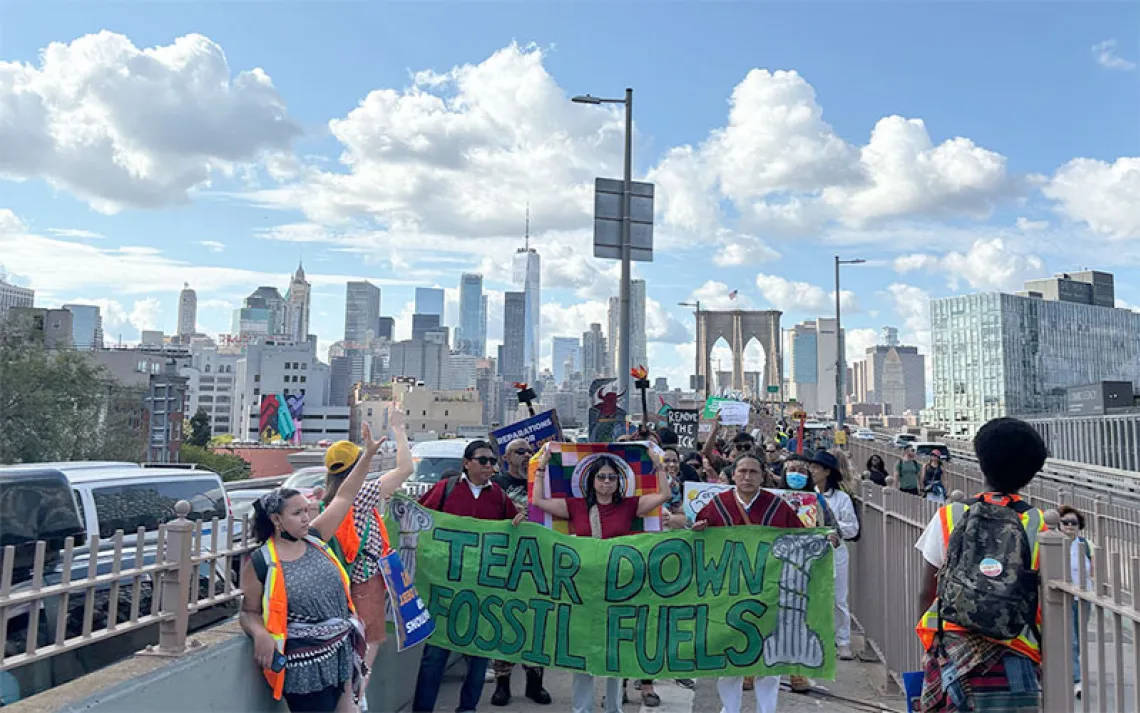
On June 6, leaders and prominent members of three federal political parties—Bloc Québécois MP Patrick Bonin, NDP MP Leah Gazan, and Green Party Leader Elizabeth May—spoke out as part of a growing coalition that includes more than 120 organizations opposing any new fossil fuel pipelines to the West Coast or anywhere in Canada.
“Whether it’s a new gas pipeline to the West Coast or new LNG projects in Quebec, the Carney government seems to be reverting to the drill, baby, drill philosophy that characterized the Harper era,” said Robb Barnes, climate program director, Canadian Association of Physicians for the Environment, at the press conference. “We must put a stop to the reckless expansion of oil and gas infrastructure.”