Sea level rise is no longer a distant threat. It is an active planning challenge confronting every Bay shoreline community. This is the first of a series of articles highlighting the Bay Alive Campaign’s commitment to preserving and restoring our natural Bay ecosystems, promoting the implementation of nature-based solutions, evening the playing field by advancing environmental justice, and addressing shoreline contamination by cleaning up toxic sites on the Bay. We’ll highlight the policy moment we helped create, explain why informed, local leadership is essential to turning strong standards into real, resilient outcomes, and showcase the many ways you can help shape the Bay’s future.
Why Do We Need Healthy Bay Ecosystems?
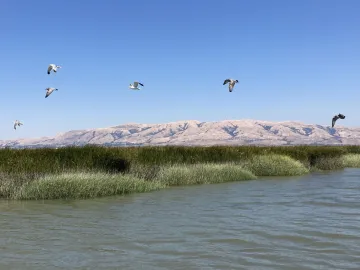
The Bay is a nationally recognized hotspot for biodiversity, providing critical habitat for countless birds, microorganisms, and endangered species, such as the Salt Marsh Harvest Mouse and Ridgway’s rail.
In addition to its benefits to wildlife, healthy and connected Bay ecosystems also provide essential ecosystem services that keep our communities safe and healthy while protecting us from the impacts of sea level rise, and climate change more broadly.
Bayland ecosystems safeguard our resilience by
- Regulating temperatures by acting as a buffer,
- Absorbing floodwaters in its porous soil,
- Sequestering carbon, tidal wetlands can sequester up to ten times as much carbon as tropical forests, and
- Filtering out pollutants, ensuring we have clean air and water.
When thinking about sea level rise, it is really important that we think about the Bay as one, large interconnected resource. What happens on one portion of the shoreline will impact the entire Bay. In all activities along our Bay shores it is imperative we are thinking not only about local effects, but also about how unintended impacts of that activity may be detrimental to the health and vibrance of these ecosystems that we all depend upon.
What is Threatened by Sea Level Rise?
Sea level rise poses threats to Bay ecosystem services, infrastructure, and community health.
Our Bay ecosystems are on the frontlines for sea level rise and the ecosystem services that are critical to our resiliency are at risk of being drowned out. In addition to threats to our ecosystem services, sea level rise also poses threats to
- Infrastructure – as salt water interacts with underground infrastructure, like pipes or building foundations, it poses great risk to structural integrity due to its corrosive capabilities. Rising waters, both above and below ground can change the geology under our feet, contributing to subsidence, liquefaction, and other instabilities.
- Community health – San Francisco Bay has a strong history of industrial activity on the shoreline, and this has left us with legacy contaminants around the Bay. As sea levels rise and inundate these sites, floodwaters can interact with and mobilize these contaminants, releasing them into the floodwaters, or in some cases into the air, and even posing the risk of contaminating drinking water.
The California Ocean Protection Council projects the Bay could experience as much as 6.6 feet of sea level rise by 2100. Without any action, this would flood much of the Bay’s shoreline.
In our next article in the series, we’ll discuss how sea level rise will impact each shoreline differently.
Until then, you can help us keep the Bay alive! Learn how you can take action or join the campaign.