In last month’s article we discussed how sea level rise will impact each shoreline differently. This month we focus on related but less visible threats: rising groundwater, the mobilization of contaminants, and the environmental justice implications for shoreline communities.
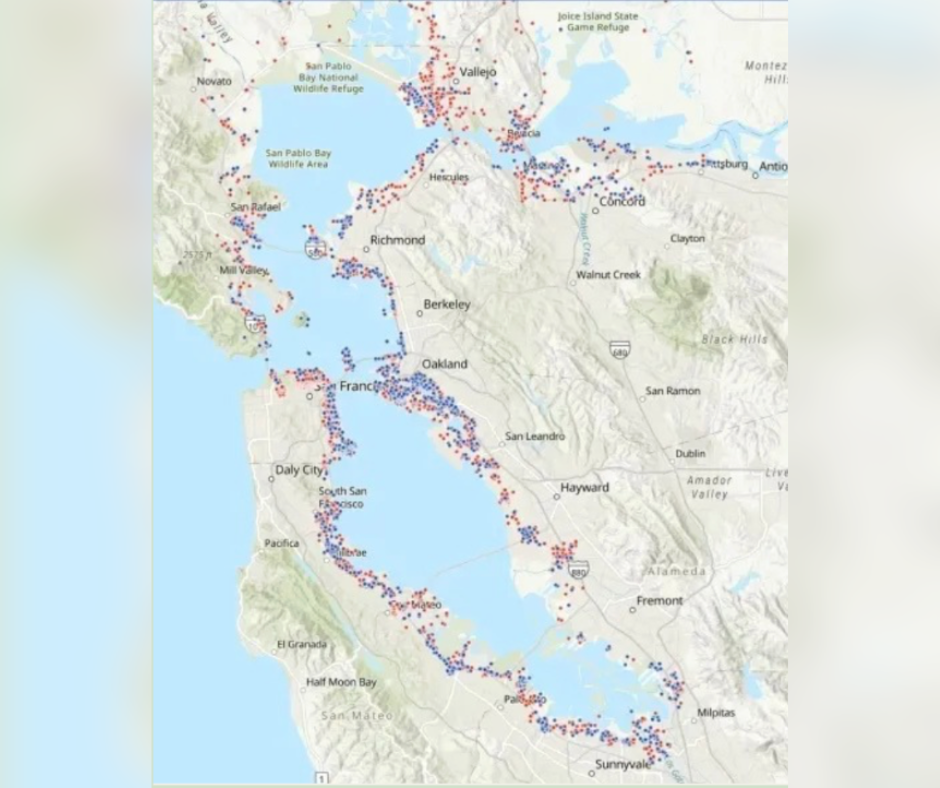
As we’ve explained in prior blogs, as sea levels rise, it doesn’t only cause surface flooding. Below ground, it also raises our shallow groundwater aquifers. One of the most serious hazards of groundwater rise is that it can mobilize contaminants already present in the soil. This first map (on the right) depicts existing contaminated sites around the Bay, with different colors denoting whether the sites are considered “open” or “closed.” Closed sites are those where cleanup has been deemed complete. However, this distinction does not necessarily mean they no longer pose a risk. Many of these sites were closed decades ago, before regulators were paying attention to some hazardous materials that are now recognized as contaminants of concern. Furthermore, many cleanup standards were established before the threat of sea level rise was recognized so they didn’t consider the possibility of submergence and contaminants being carried far from the source by groundwater rise.
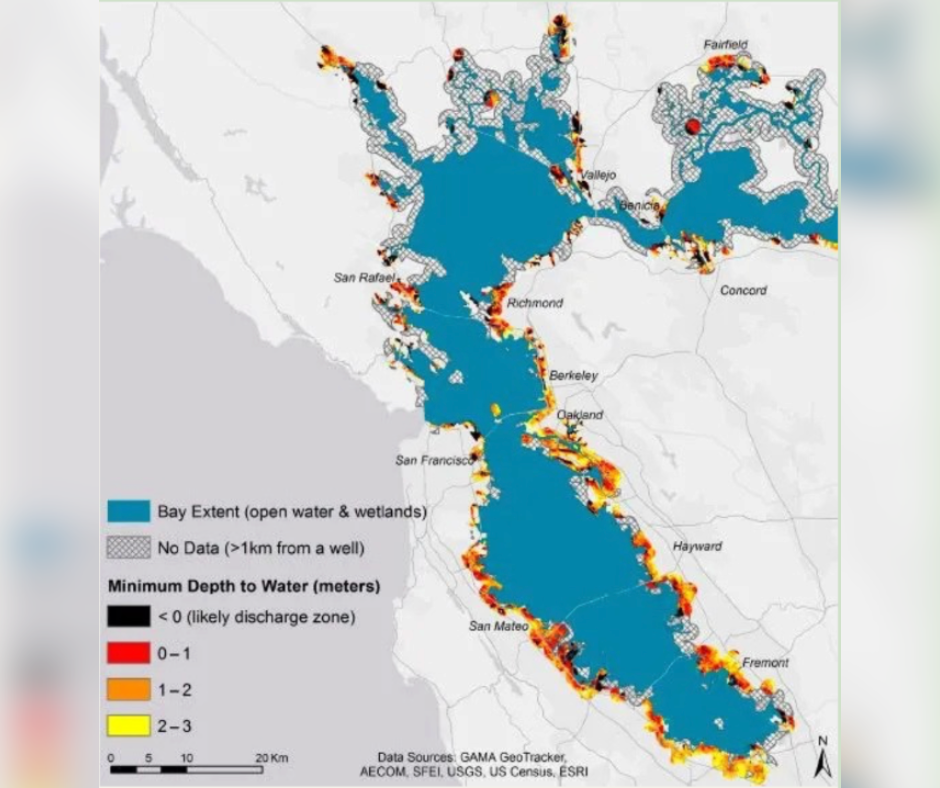
The second map (on the left) depicts how close groundwater is to the surface around the Bay. The darker colors denote groundwater closer to the surface. When viewed together, these maps make the risk clear; as groundwater rises, contaminated sites may become a greater threat to public and environmental health. That is why Bay Alive advocates for identifying and removing toxins before rising groundwater makes those risks harder to contain.
Environmental justice is also central to this work. Socially vulnerable communities often bear the largest environmental burdens while having the fewest resources to respond. The maps below clearly show overlaps in social vulnerability and contamination vulnerability. This correlation is no coincidence but rather the result of historical discrimination often placing contaminated sites in socially vulnerable communities. Now, sea level rise only exacerbates this disproportionate burden. This is why we advocate for leveling the playing field by acknowledging and addressing disproportionate environmental burdens, prioritizing cleanup and protection where risks are greatest, and ensuring that impacted communities are not only informed, but meaningfully involved in sea level rise planning decisions that will shape their future.
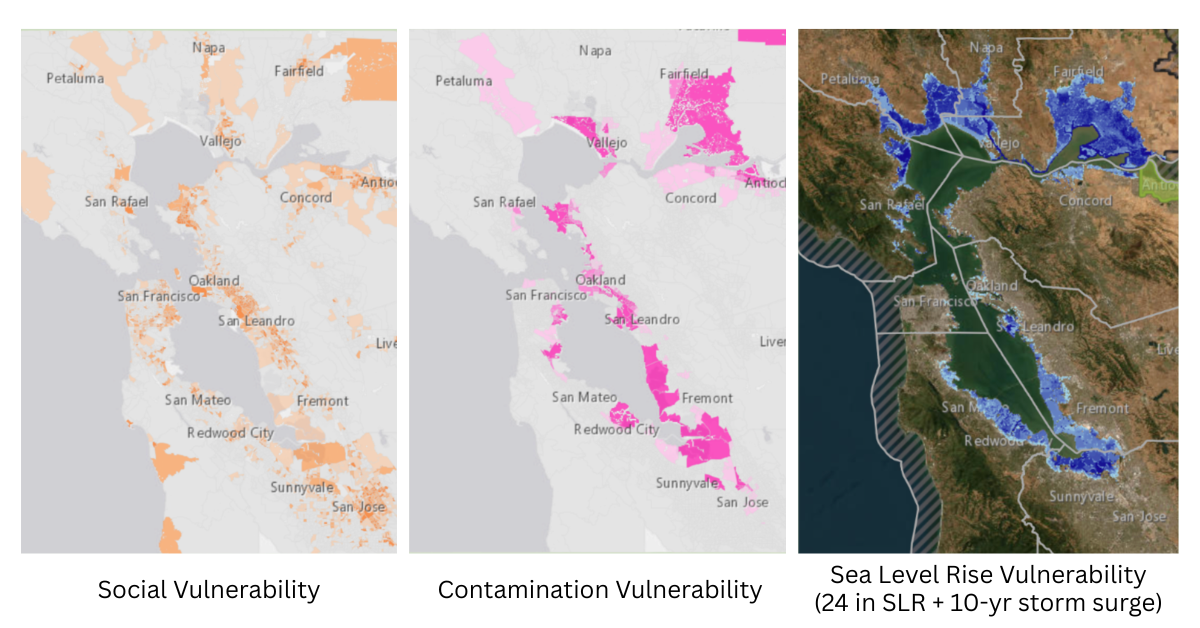
Sea level rise vulnerability map, credit: Adapting to Rising Tides Flood Explorer
Sea level rise is no longer a distant concern and its likely impacts are much larger than what we can see with our eyes.
We are in a unique moment. Thanks to the Regional Shoreline Adaptation Plan (RSAP), every Bay shoreline community is now beginning to confront the active planning challenge of adapting to sea level rise. This is your time, working with local communities, to shape our collective future in lasting ways by helping to keep the Bay alive and strengthen the resilience of all our shoreline communities. In this series of articles we’ll highlight the Bay Alive Campaign’s commitment to preserving and restoring our natural Bay ecosystems, promoting the implementation of nature-based solutions, evening the playing field by advancing environmental justice, and addressing shoreline contamination by cleaning up toxic sites on the Bay. We’ll address the policy moment we helped create, why informed, local leadership is essential to turning strong standards into real, resilient outcomes, and the many ways you can help shape the Bay’s future.
In our next article in the series, we’ll cover how and when we adapt to sea level rise matters.
Until then, you can help us keep the Bay alive! Learn how you can take action or join the campaign.