Creating Outdoor Space for All
How a grassroots movement transformed former railroad land into trails for public use
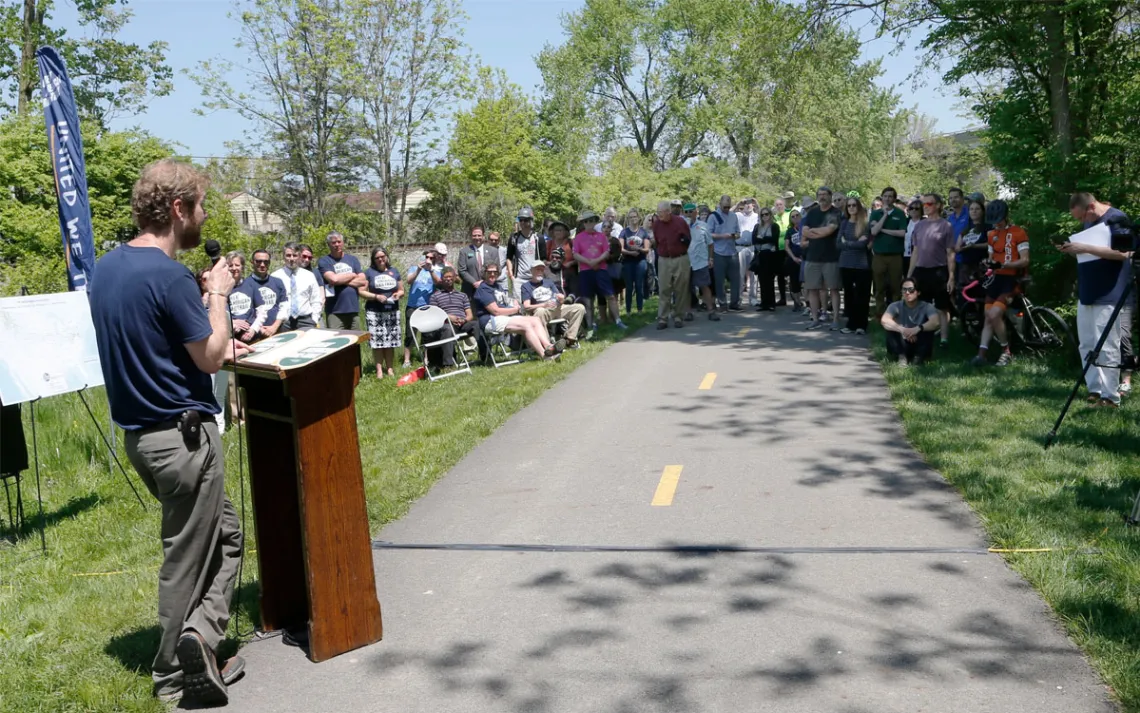
Eric Oberg, director of trail development for Rails to Trails Conservancy, addresses a crowd in Columbus, Ohio. | Photo courtesy of Jay LaPrete/AP Images for Rails to Trails Conservancy
When a group of Alabama runners helped create a mile-and-a-half trail back in 1986, they didn’t realize exactly what they were getting into—or that they were joining a nationwide movement.
“We had no place to run,” said Richard Martin, who was part of the Roadrunners Club in Athens, Alabama. Their little trail project soon morphed into an effort to repurpose miles of abandoned railway into a new multiuse trail, and Martin helped lead the charge.
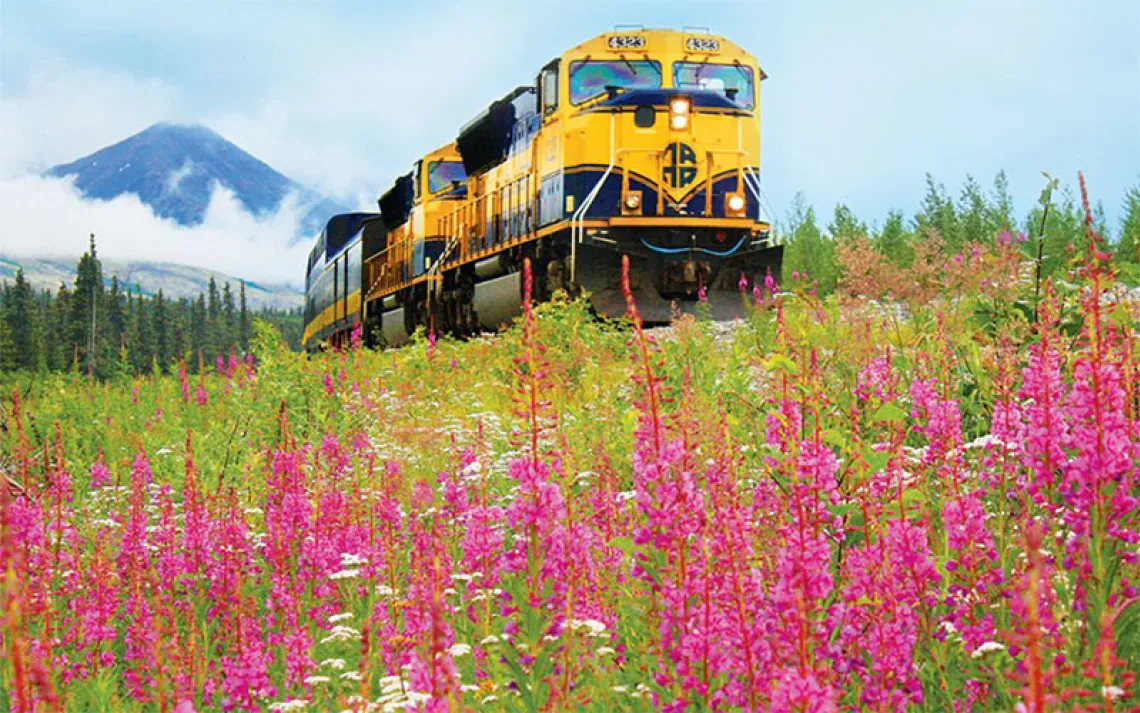
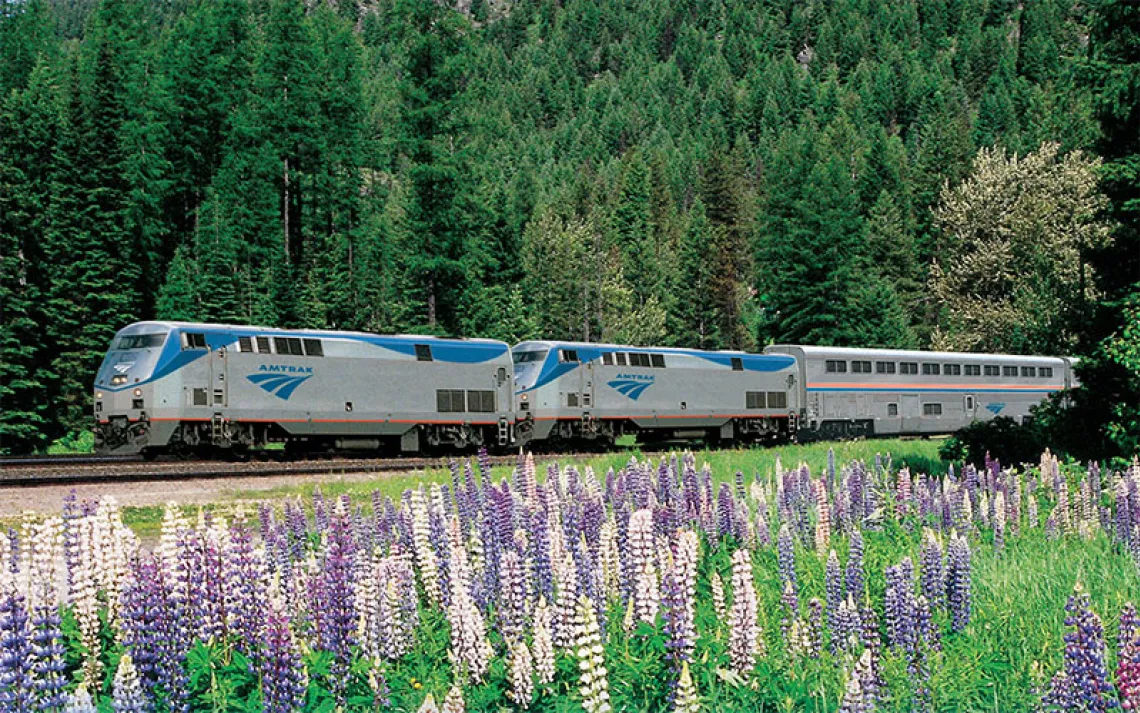
More than 20 years and $1.4 million later, they celebrated the completion of a nearly 11-mile trail. It’s a short segment, but similar groups have emerged, each creating their own special trail, all creating a network of nearly 26,000 miles of rail trails around the country. Where steam engines once thundered, carrying the nation’s economy, moms now push strollers down serene, gentle paths, alongside kids on hoverboards and hikers taking a reprieve from busy days.
Millions of Americans live within a short distance of these trails, treasured spaces where they can safely get outside without fear of getting run over by a truck. Yet 60 years ago, there were practically none. How did this transformation happen?
The opportunity came with the crumbling of those once-mighty railroads that were crucial to the building of the United States, wrote Peter Harnik in his book From Rails to Trails: The Making of America’s Active Transportation Network. Railways were engineering marvels, crossing ravines and tunneling through mountains, and all with a slight, finely tuned grade that the engines could handle. “We are the lucky beneficiaries,” Harnik noted.
An Illinois naturalist named May Thielgaard Watts is one of the heroes of the rail trail movement, penning a famous letter to the Chicago Tribune in 1963 with the suggestion for what would become the 61-mile Illinois Prairie Path. The idea began to catch on in patchwork fashion, with no central organization or strategy. “It was a heartland idea that spread to the coasts,” said Harnik.
He and lawyer David Burwell founded the nonprofit Rails to Trails Conservancy in 1986, bringing energy and resources to the effort. They rallied support, battled in court, cheered on local organizations, and generally played a major role in building momentum. By 1993, less than a decade after the founding of the RTC, the nation had already reached nearly 7,000 miles in rail trails, the organization estimates. By 2003, that number was 12,000. It has more than doubled since, and the RTC today counts nearly 42,000 miles when including non-rail-based recreational trails.
Visionary legislators laid the groundwork to make it possible, most crucially with the idea of “railbanking.” This allowed for the preservation of railroad corridors for potential future use by trains, and for the creation of recreational trails in the meantime.
Harnik and Burwell seized on this opening to begin lobbying. It was just in time, as several major rail companies, including Penn Central and Conrail, had begun ditching miles of track. “Suddenly, what had been kind of a fast trickle of abandonments became a total flood of abandonments, like a fire hose,” Harnik said. “Frankly, if we had been able to start the organization a little bit earlier, we probably could have saved a lot more tracks.”
Lawmakers started to sponsor bills to create a funding framework that added even more impetus to the efforts, and court rulings upheld the principle of railbanking. At first, though, it was far from clear how much they’d be able to save. Farmers and developers had other ideas for the land, and neighboring landowners often put up a fight. “Most of the experts said, ‘You’ll never get an organization going on such a specific niche issue,” recalled Harnik, now retired.
Marianne Fowler, senior strategist for policy advocacy and a 37-year veteran of the conservancy, was drawn to the new Rails to Trails Conservancy as a place where she could make a difference for women by providing opportunities for safe recreation. She found a willing audience of people who wanted to safely get outdoors. Fans of trails are a diverse bunch: Horseback riders, runners, hikers, bikers, and even snowmobilers in northern climates.
What’s great about the rail trail movement, said Kevin Mills, the RTC’s vice president of policy, is that “it’s been driven from the ground up and the top down, and met in the middle, and it’s something that people really want.”
The real muscle of the movement was residents and local officials who rallied support. Once, Martin and his fellow runners in Alabama took a costumed Bigfoot around to local schools, recruiting classes to compete for a chance to win a pizza dinner with the famous cryptid.
“I just love thinking about how many people are working on this,” Harnik said. “It isn't something that’s like a marionette being driven by Washington. It’s happening locally everywhere.”
As trails spread, they’ve become their own advertisement. “Success begets success,” Mills said. People saw what their neighbors had and craved their own trails. Early on, “we would have field trips from one community to the next to show that example,” Fowler added. “You go back and look at communities all over the country.… Their rail trail was really their first major trail investment.”
The end result can win over even the skeptics. “Time after time after time, I hear stories of the opponents fighting tooth and nail against having a trail, putting in fences … so they won’t have to see people going by their backyards,” Harnik said. “And then a year later, cutting a hole in the fence so that they can get to the trail from their backyard.”
As Martin and his fellow volunteers discovered, a trail can be a ton of work. But, Liz Thorstensen, vice president of trail development at RTC, pointed out, “People do realize it is something that brings joy and happiness and something special to their community.” This includes better transportation, economic benefits, and improved physical and mental health.
The latest big dream is the Great American Rail-Trail, an effort to connect a more-than-3,700-mile network of trails continuously from Washington state to Washington, DC. It’s a little over half complete, Thorstensen said. Much of that progress is in the east, but the group is making strides further west and hopes to see it finished in the next couple of decades.
Money for projects has gotten tighter in the latest presidential administration, as all kinds of nonprofits are discovering. Mills said some communities thought they had projects funded, only to find out at the last minute that they didn’t. But trails remain beloved by citizens of various parties and beliefs and still have strong bipartisan support.
They appeal to rural and urban areas alike, Harnik said. “My personal feeling is that rails to trails, more than almost any other conservation issue, has the opportunity to be a meeting ground of both the blue and red sides of our political struggles right now.”
Martin has seen volunteer persistence pay off in Alabama. He lobbied to name the new rail trail after Pryor and Hobbs, the men who had built the railroad in the 1800s. But at a National Trails Day celebration, he learned he’d been overruled: The route would be named the Richard Martin Trail.
These days, he doesn’t get out on the trail as much as he used to but lives right next to it and can watch others enjoying it. Once, sitting on his front porch, he saw a young mother pushing a stroller down the trail, accompanied by her son. Not long after they passed by, he heard an excited scream from the creek by the trail. “Mama, Mama, I got a crawfish!”
For Martin, “that’s worth the whole trail right there.”