 The Magazine of The Sierra Club
Rewilding Takes Hold in Illinois
Lawmakers pass a measure to bring a novel conservation strategy to the Prairie State
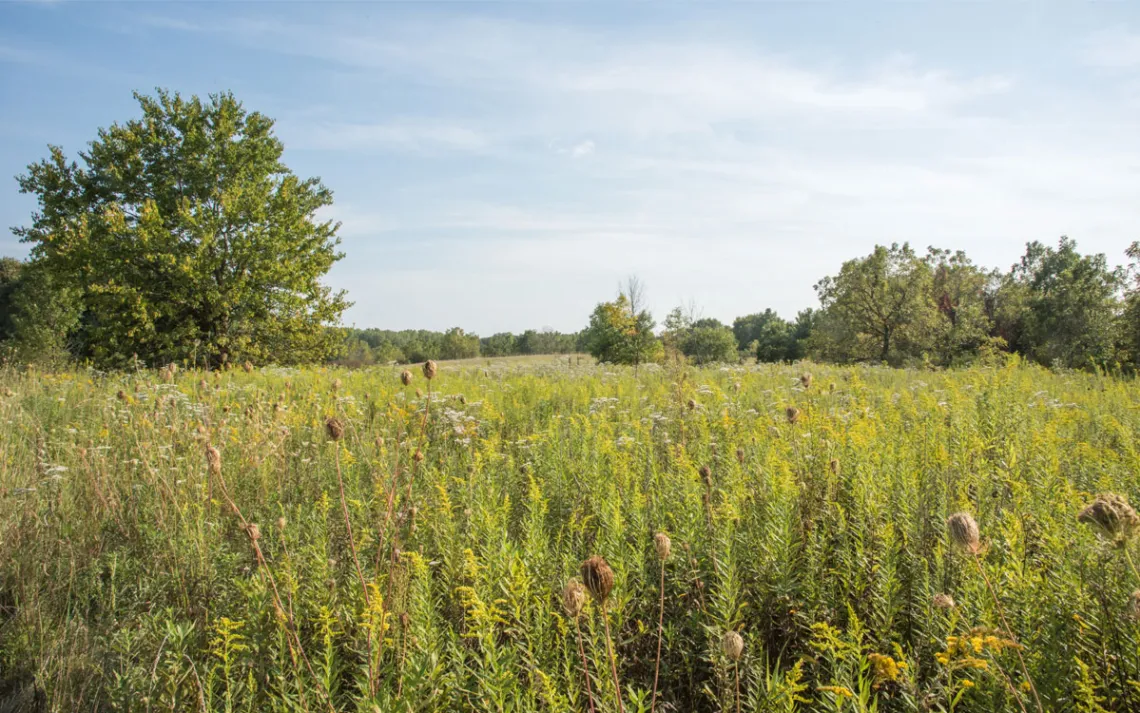
When leaders at the Severson Dells Nature Center purchased the abandoned Elliot Golf Course, they had an ambitious plan to transform the manicured turf. They wanted to turn formerly manicured lawns in Rockford, Illinois, back into prairie and wetlands. What they didn’t anticipate was that the project would become the inspiration for a new state law.
While talking to funders about investing in the project, Ann Wasser, the executive director of Severson Dells, now called Wild Roots Nature Center, became interested in turning the idea of restoring native ecosystems into a form of policy that could be a state law. Wasser liked the idea that Illinois could be the first state in the US to adopt a rewilding law and contacted the Illinois Environmental Council (IEC), an advocacy organization promoting a healthy environment through public policy.
Rewilding hands the steering wheel back to nature. By restoring native habitats such as grasslands, reconnecting fragmented land with wildlife corridors, and, where appropriate, reintroducing species, this conservation approach focuses on rebuilding the conditions nature needs to function effectively on its own. In Illinois, the state environmental agency was already doing some of this work.
“Making [rewilding] a law was not complicated to do,” said Cynthia Kanner, executive director of the Prairie State Conservation Coalition.
Introduced in February 2025 by Democratic representative Anna Moeller, it passed on August 1, 2025, and officially became Illinois state law on January 1, 2026. The legislation amended the existing Illinois Department of Natural Resources (DNR) Conservation Law, formally recognizing work the agency was already doing to restore ecosystems. Because it was simply codifying what many in the state wildlife agency were already doing, lawmakers were familiar with the types of projects that the state would undertake.
Initiatives such as the Public Lands Hill Prairie and Associated Wildlife Habitat Restoration Project illustrated the DNR’s long-standing acceptance of rewilding work across the state. Working with the federal government and private donors, state ecologists have removed invasive species, reintroduced prescribed fire, and improved habitat for native plants and wildlife to restore rare hill prairie ecosystems.
Of course, not everyone was initially enthused by the rewilding law, which authorized the state, if needed, to introduce species, such as bison, beavers, and predators into the landscape. These animals are known as keystone species, or creatures whose biological needs play an outsized role in shaping the ecosystems around them.
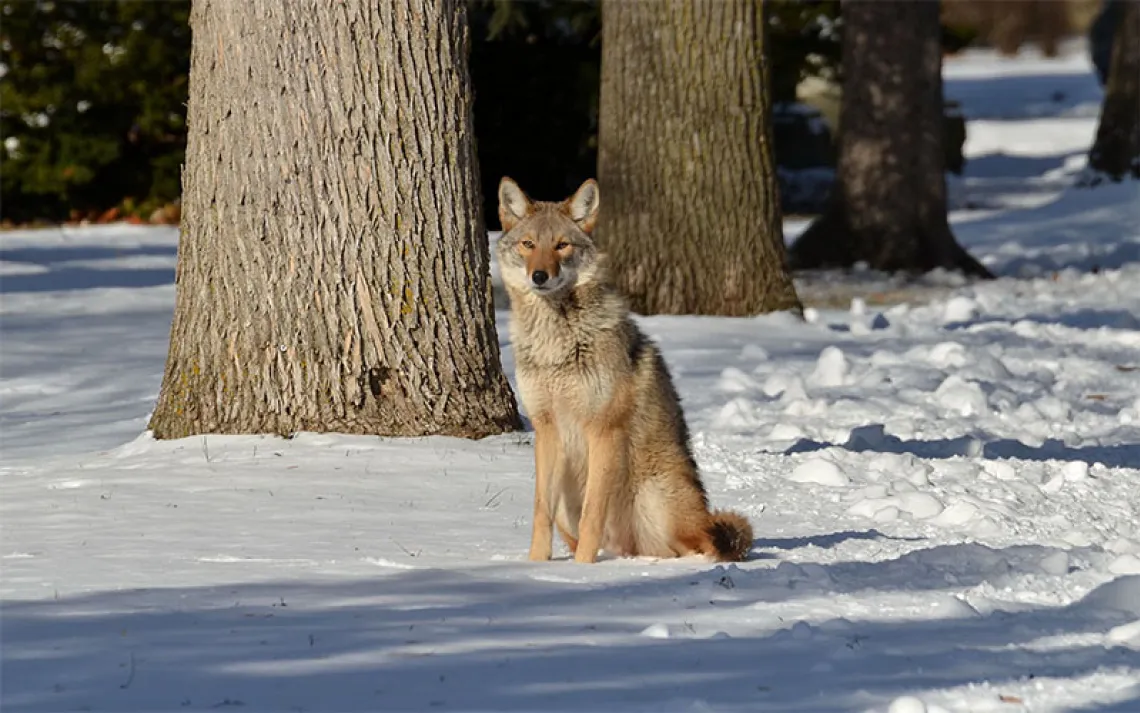
The idea of bringing native carnivores, such as wolves and cougars, back to Illinois initially raised concerns among some homeowners who feared apex predators would start roaming through their neighborhoods or attack livestock. The DNR quickly reassured residents that, although the law permits it, they had no plans to restore these predators to the landscape.
Beavers, however, are another story. Renowned for building dams that flood surrounding areas, reintroducing beavers as part of Illinois's ongoing rewilding strategies could help restore wetlands, say supporters of the plan. The state has lost 90 percent of its historic wetlands through drainage for agricultural and development. Additionally, recent legal challenges, such as the 2023 US Supreme Court ruling in the Sackett v. EPA case, have further erased federal protections for wetlands that lack a continuous surface connection to navigable waterways. This has left the state with over 500,000 acres of unprotected wetlands, according to a University of Illinois Urbana-Champaign study.
Wetlands act as natural flood buffers by soaking up and slowing down excess water during heavy rain, snowmelt, or storms. Maintaining and restoring what is left could be crucial to flood mitigation and drought prevention in the future. Returning beavers to the landscape could be one of the most cost-effective ways to do this.
At Elliot Golf Course, the former owners buried and diverted a creek that ran through the premises. To reverse this, Wild Roots is unearthing it so that it meanders in S-shaped curves. This will increase the amount of shore available for plant growth and will provide shelter and clean water to birds, fish, and amphibians. Proponents of the plan say it will also extend the watershed.
While headline-grabbing mega-rewilding projects such as the American Prairie Reserve in Montana—where conservationists are trying to restore 3.5 million acres to short grass prairie—have become the stars of what rewilding efforts can accomplish, Illinois is unlikely to see conservation on such a grand scale. Instead, it will be smaller projects, such as the rewilding of abandoned golf courses, where the law will be implemented and most effective. Wild Roots' work on restoring the Elliot Golf Course is the first project to be tested under the new law, according to Wasser.
One of the benefits of the new law is that work can proceed at a slower pace than in the past. Traditionally, conservation groups felt pressured to move quickly to satisfy the desire of private funders to see tangible results. If proof of concept can be seen, there is a higher chance that existing grants will be renewed. Ecological restoration, however, rarely works on funding timelines. Prairie restoration, such as at Elliot, has taken several years. Because most native prairie plants are perennials, they spend their first years growing roots underground. For this reason, many won’t flower until the second or third year after planting.
As the state develops its own rewilding grant programs, Wasser believes that organizations such as Wild Roots will be able to compete for public funding designed around long-term ecological outcomes instead of short-term milestones. “We can take our time a little bit more,” she said, “and let nature do some of the work.”
Supporters say the law's greatest value, though, is not what it accomplishes today, but that it has created an insurance policy that ensures Illinois can continue restoring and protecting its natural landscapes, regardless of how political priorities change. “Right now,” said Tucker Barry, IEC’s chief communications officer, “we have a state administration that embraces protecting the environment and climate action.” But administrations change, and so do their priorities. As Barry put it: "It's not uncommon to hear [new administrations] say, 'Oh, our hands are tied. We can’t do that.' This says, 'Yes, you can.'"