 The Magazine of The Sierra Club
Who Owns the Moon’s History?
Efforts begin to protect historical spots on the moon as companies seek to commodify the celestial body

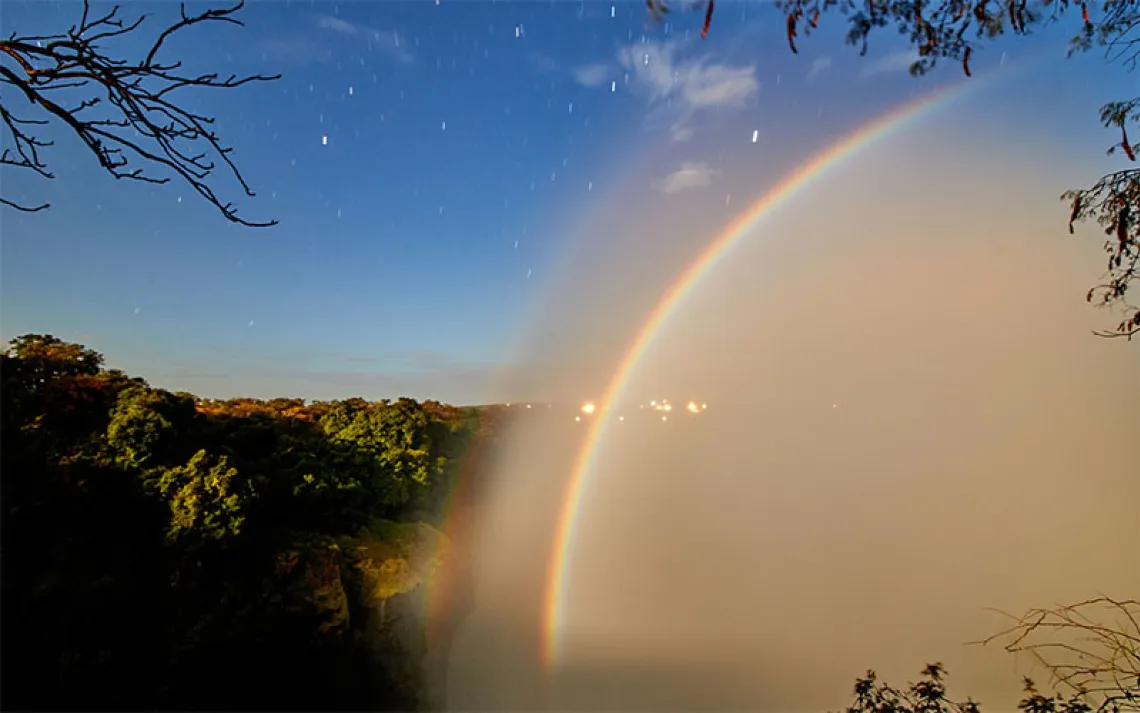
Photo by Michael Leitner/500px via Getty Images
In January 2025, the World Monuments Fund made history. The nonprofit organization, which is dedicated to safeguarding irreplaceable cultural heritage sites around the globe, added a non-earth entity, the moon, to its Watch List of at-risk heritage sites. The main aim of this designation is to bring the world’s attention to the urgent issue of how to preserve and protect the bootprints, flags, and artifacts left behind by humanity’s earliest space explorers. Because of the World Monuments Fund, Tranquility Base, where Neil Armstrong and Buzz Aldrin first set foot in 1969, now stands alongside historical monuments around the world that are under threat.
A large part of this attention is due to the fact that, as a new space race accelerates, policymakers are struggling to establish guidelines for moon tourism and visitation. Now, it’s not only nations but also private companies vying for a foothold on the lunar surface; brands may even be able to advertise on the moon as soon as next year. All of this new activity carries the risk of unregulated landings, putting the fragile areas such as the Apollo landing sites in danger. With more missions to the moon planned in the next five years than in the previous 50, moon-protection advocates and experts in outer space diplomacy face the challenge of building a framework that will safeguard human history on the moon for generations to come.
The legal black hole surrounding the moon’s heritage
Despite the moon’s status as a symbol of shared human achievement in space, the legal framework meant to protect its historic sites remains strikingly thin. The 1967 Outer Space Treaty, often called the “constitution” of space law, was designed to prevent conflict and national appropriation beyond Earth. Its core principle, banning nations from claiming sovereignty in space, was a triumph for peaceful space exploration, but it left the question of how to protect space exploration equipment and historical sites in a legal gray area.
Michelle Hanlon, a leading space law expert and cofounder of the nonprofit For All Moonkind, has made it her mission to ensure that the lunar landing sites are recognized and preserved through protective measures. Her organization has spent years advocating for the moon’s recognition as a shared human heritage site, arguing that the artifacts and footprints on its surface belong not to any one nation or company, but to all of humanity. For Hanlon, the challenge is as much legal as it is philosophical. She points out that this jurisdictional vacuum means that, as of now, “there is nothing safeguarding cultural heritage; there’s nothing stopping anybody from running over the boot prints.” The only binding obligations are to avoid harmful contamination and to act with “due regard” for the interests of other states, but what that means in practice remains undefined.
A contested space in space
As lunar exploration accelerates, a new and urgent debate has emerged: Which parts of the Moon’s history should be preserved, and how do we decide what truly matters? Robert Pearlman, a space historian and founder of collectSPACE, points out that while the hardware left behind by NASA is technically protected under the Outer Space Treaty, the intangible elements, like rover tracks, are not currently protected. “Almost everyone agrees that the Apollo 11 landing site, Tranquility Base, should be left pristine—that no one should be allowed to just go in there and bulldoze the equipment off to the side,” Pearlman notes. However, the landing sites being potential targets for space tourism worry him. “The actual hardware that was left on the moon is protected. It belongs to the United States. The bigger issue is where it’s located on the Moon. And the additional question of: what about the footprint?”
The debate over what to protect on the moon extends beyond objects or sites. It encompasses the values and priorities of the collective stakeholders represented in humankind. As more and more actors venture onto lunar soil, the challenge will be to define a rubric for visitation that respects all humanity, not just to those who get there first. This topic was brought to national attention last year, when the Navajo Nation expressed outrage over the planned placement of human remains on the moon. For the Navajo and many other Indigenous peoples, the moon is a sacred part of their culture, deeply embedded in their cosmology and spiritual traditions. For them, depositing cremated remains on its surface is viewed as a desecration, not a technical achievement.
President Buu Nygren’s message was clear: “The moon holds a sacred place in Navajo cosmology. The suggestion of transforming it into a resting place for human remains is deeply disturbing and unacceptable to our people and many other tribal nations.” This controversy underscores a much larger issue: if the Moon becomes a blank canvas for commercial interests, what else will end up there in perpetuity?
The Artemis Accords, a set of nonbinding international agreements to establish cooperative space exploration, have been signed by 55 countries. These accords outline a framework for peaceful exploration, transparency, interoperability, and the preservation of heritage sites in outer space. Some space advocates say this serves as a promising start to creating collective principles for responsible space activity. Yet, as Hanlon and others emphasize, these guidelines remain voluntary and lack the binding force needed to ensure compliance from all spacefaring nations and companies. Other international efforts such as the ongoing discussions within the United Nations Committee on the Peaceful Uses of Outer Space (COPUOS) have begun to address these issues, but progress is incremental. “We’ve gone from nobody really thinking about [heritage] at all at a legal level, to now having bracketed language in what could be very, very important guiding principles for lunar governance,” Hanlon said.
A call for international diplomacy outside the earth’s bounds
Some experts are drawing on their experience brokering international agreements on Earth to envision how similar cooperation might be achieved in space. One such expert in cultural diplomacy, Mai’a Davis Cross, explained, “space diplomacy is not simply the foreign policy of countries involving space, but processes of dialogue among specific actors engaged in space policy … an effort to really find common ground.” Cross shared this perspective during a Space Diplomacy Lab Webinar, emphasizing the need for collaborative dialogue to safeguard extraterrestrial heritage. As a professor of political science at Northeastern, she sees how international diplomacy can function as a critical tool for space exploration and cooperation. This approach, she explains, recognizes that the moon’s legacy is a shared inheritance—one that reflects the aspirations and values of all humanity.
Expanding access to lunar artifacts here on Earth, Cross notes, can foster a sense of respect and stewardship for the moon. “We do have this advanced technology that can allow people on Earth to operate rovers that can safely and within already predetermined guidelines, allow people to see artifacts in real time and to have a virtual reality experience,” she said. Such experiences, she added, can inspire the so-called overview effect—that profound shift in perspective astronauts describe when viewing Earth from space. “It helps people imagine that we really are on this fragile planet moving through the universe … [focusing] perhaps not so much on national borders and national conflicts, but really the fact that we are all together on Island Earth.”
Ultimately, Cross reminds us that cultural heritage is not just about preserving objects, but about nurturing a shared worldview. “Sometimes cultural heritage is a process … it’s a culture of belief, a worldview that can be more than the sum of its parts, and it’s something we also should be thinking about going forward in space.”