Toxic Sewage Sludge is on our farmland and contaminating our water
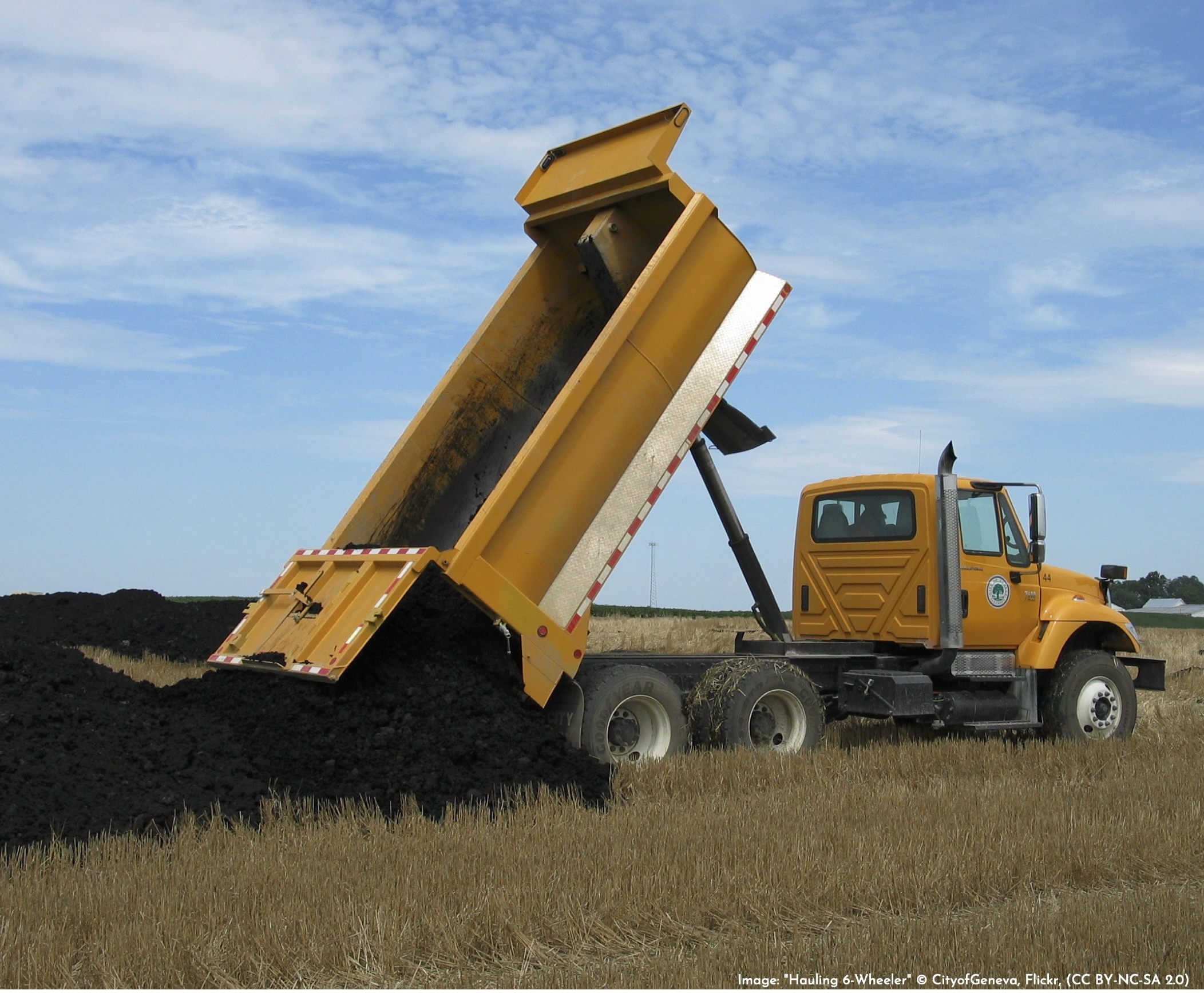
Dangerous PFAS “forever chemicals” are found in sewage sludge, the solids left over from wastewater treatment plants. But the toxic sewage sludge is spread on farmland, golf courses and sold as “compost” OR fertilizer. (See more in our report here)
That’s why we’re taking action, together.
- The sewage sludge is rich in beneficial nutrients but is also saturated with toxics because of what goes into the wastewater facilities.
- Sewage sludge mixes together both household waste and industrial/commercial waste. Both go into wastewater treatment plants, so toxics in both end up in sewage sludge. This includes dangerous forever chemicals called PFAS.
- Added to the mix is “leachate” from landfills. Leachate is contaminated water that continuously leaces out of a landfill as a result of precipitation. Leachate is loaded with PFAS. But leachate is “disposed of” in our sewage treatment plants, which are not equipped to remove or detoxify toxic chemicals.
- In 2024, the state DEC tested the leachate from the Franklin County landfill and found dangerously high levels of PFAS at 9471 parts per trillion.
- It spreads easily into our water supply and is taken up into crops and cattle.
- Read more about the issues with leachate and what is called the "leachate loophole" here.
- Wastewater treatment plants have little to no ability to capture or destroy PFAS.
Some PFAS end up in the sewage sludge (which is then spread on farmland), and some PFAS flow through the plant and into our waterways.
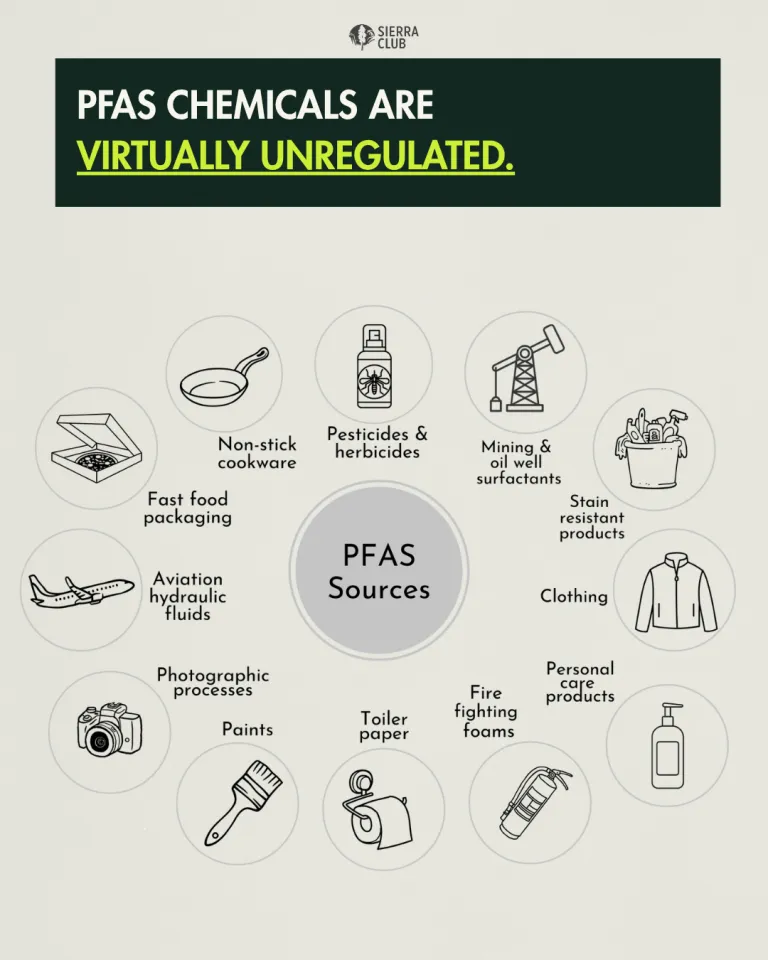
Where do they come from?
How do they impact you?
PFAS are "forever chemicals" and they are dangerous.
- PFAS, aka 'forever chemicals': What the science says (Stanford Medicine)
- NYS Dept of Health: PFAS
- What are PFAS? (Environmental Health News)

What can we do about it?
Maine and Connecticut have banned the spreading of dangerous sewage sludge on farmland and the sale of sewage sludge-derived “compost” in stores.
New Yorkers need to stop the spreading of sewage sludge too. We can if we work together.
But the state is doubling down.
The NYS Dept of Environmental Conservation (DEC)'s 2023-2032 State Solid Waste Management Plan proposes to more than double the amount of sewage sludge spread on land by 2040 under the guise of recycling. as a way to get rid of it. But it is too dangerous as other states and farmers have found.
- Maine (2022): 60 farms closed; milk contaminated with PFAS; Maine then banned all spreading of sewage sludge on land - [Growing Broke video]
- Texas (2022): 2 farms in Johnson County saw a large die-off of farm animals. Drinking wells were contaminated with PFAS (total PFAS)at 90.9 ppt and 268.2 ppt (NYS’s drinking water standard for 2 PFAS chemicals is 10 ppt.)
- Michigan (2022): 300-acre beef cattle farm shuttered, and the state confiscated meat because it was highly contaminated with PFAS. The farmer lost his livelihood as the farmland is contaminated. The PFAS came from wastewater from a metals finishing plant. PFAS is used in metal finishing by being sprayed to keep down chromium fumes in such factories.
- New Mexico (2018): dairy farmer euthanized 3,600 cows due to PFAS contaminated milk.
Finger Lakes Group Found Water Contamination from Sewage Sludge Spreading in Steuben County, NY
- The Sierra Club Finger Lakes Group tested water for PFAS contamination in the Steuben County towns of Thurston, Bath, and Cameron where sewage sludge was spread by Casella, a private garbage company. We wanted to see if any PFAS had seeped into wells and waterways.
- We knew from a USDA report that 95% of the three towns’ lands are not suitable for land-spreading.
- Sierra Club's Study parameters
- 83 total tests, including 6 certified tests.
- 67 samples were of wells, 16 samples of ponds/streams
- Test locations were roughly split between locations that were adjacent to and not adjacent to landspreading of sewage sludge.
- We found that there was NINE times more total PFAS in tests next to sewage sludge spreading than in samples that were not next to the spreading: 15.1 parts per trillion (ppt) vs. 1.7 ppt, respectively.
- 1 in 8 private drinking wells next to land that was spread with sewage sludge had PFAS levels above the maximum contaminant level set by the EPA for drinking water. There may not be any safe level of PFAS in drinking water.
Local Land Spreading of Sewage Sludge - Milestones
- Leo Dickson & Sons Inc. closed their dairy farm in Thurston, NY and sold/leased the land used for spreading sewage sludge to Casella Waste Systems Inc. Casella renamed the operation Bonny Hill Organics.
- Bonny Hill Organics requested that Bay Park, a municipality on Long Island, be added as a permitted source of sewage sludge for the Thurston site, doubling the tonnage of sewage sludge allowed to be spread.
- Thurston passed a moratorium and then a ban to stop the spreading in 2024.
- Casella sued Thurston over the ban law, citing the state’s “Right-to-Farm” law
- The Right-to-Farm law protects farming practices that are safe and do not pose a health risk, unlike sewage sludge spreading.
What does the EPA think?
- The EPA published in January 2025 a Draft Sewage Sludge Risk Assessment for Perfluorooctanoic Acid (PFOA) and Perfluorooctane Sulfonic Acid (PFOS)
- “The preliminary findings of the draft risk assessment indicate that there can be human health risks exceeding EPA’s acceptable thresholds, sometimes by several orders of magnitude, for some scenarios where the farmer applied biosolids containing 1 part per billion (ppb) of PFOA or PFOS (which is near the current detection limit for these PFAS in biosolids).”
- The EPA declared in 2024 PFOA and PFOS as hazardous substances under the Superfund law.
What are local governments doing in NYS?
- Thurston, NY banned the spreading of sewage sludge.
- Cameron, NY banned the spreading of sewage sludge.
- Goshen, NY banned the spreading of sewage sludge
- Guilderland, NY passed a 6 month moratorium on the sale and spreading of sewage sludge (Dec 2, 2025)
- Albany County, NY passed a 90-day moratorium on spreading of sewage sludge on land in January 2025 and has since extended that moratorium through April 22, 2026.
- Schoharie County, NY passed a moratorium on spreading of sewage sludge on land in May 2025 and has since extended that moratorium through April 2026.
What else can we do about it?
- New York State should ban spreading of sewage sludge on farmland (like Maine).
- In the meantime, towns and counties should ban the land-spreading of sewage sludge.
- The DEC should redo their Solid Waste Management plan and acknowledge that PFAS contamination makes the sewage sludge unsuitable for spreading on farmland.
- The DEC should end its “beneficial use” designation for sewage sludge. Sewage sludge has no beneficial use.
- The state should require that all leachate and sewage sludge be tested for PFAS.
- DEC/DOH should comprehensively study the land/water in areas with a lot of sewage sludge spreading.
- The PFAS Exchange - online resource center about PFAS contaminants in drinking water—helping communities understand their exposures and take action to protect their health.