Sections
- What are old-growth forests?
- What are mature forests?
- What are the characteristics of old-growth and mature forests?
- What are threats to old-growth and mature forests?
- What are the ongoing efforts to protect mature and old-growth forests?
What are old-growth forests?
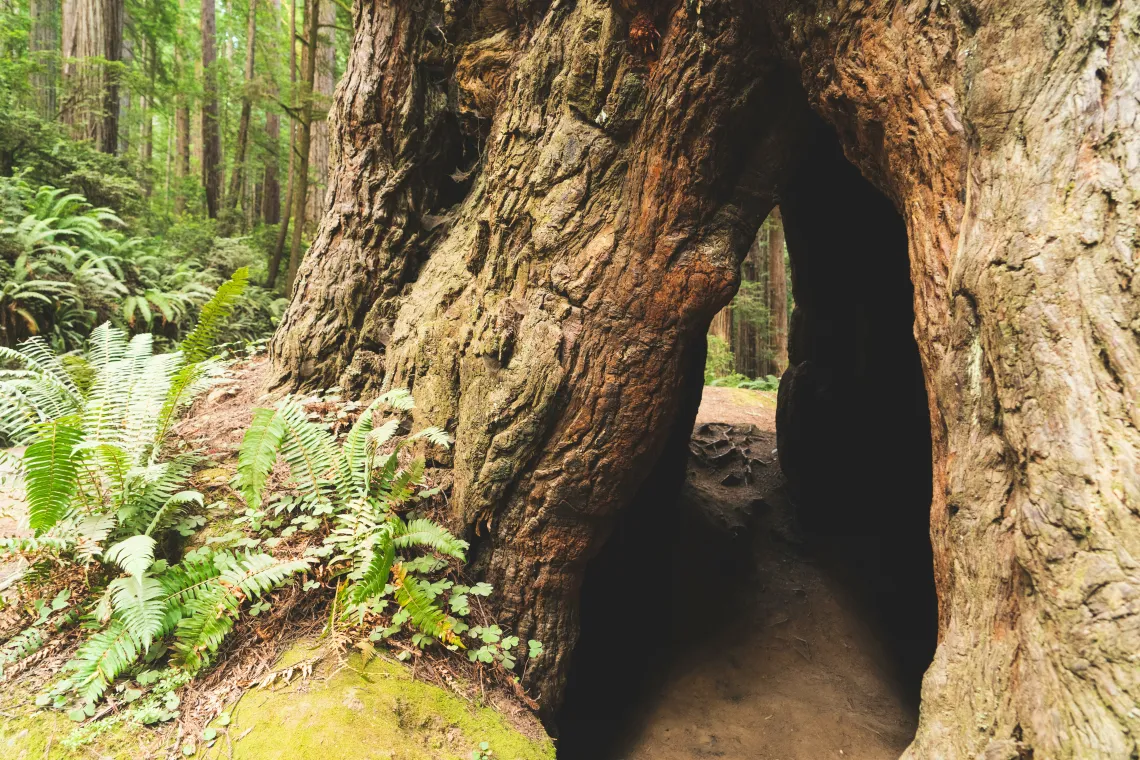
Photo by Dan Meyers on Unsplash
An old-growth forest is a forest that has reached a mature ecological state with minimal disturbance. It is typically 150-250 years old, but many are much older. California’s redwoods can live for over 2000 years.
The term "primary forest" is often used interchangeably with "old-growth forest," but some distinguish between the two. The Food and Agriculture Organization of the United Nations defines primary forests as naturally developing forests of native tree species, with no visible indications of human activity and ecological processes not significantly disturbed.
Thus, primary refers to the forest’s origin and lack of human impact, while old-growth refers to the forest’s age and ecological complexity. A forest can be both primary and old-growth, but not all old-growth forests are primary (some may have regrown naturally after past disturbances).
One-third (34 percent) of the world's forests are classified as primary or old-growth forests. While they are highly valued for the carbon they have captured, the biodiversity they support, and the recreational opportunities they offer, many are also constantly threatened by logging interests that seek their high-value wood.
To put it in perspective:
- Forests cover about 31% of Earth’s land area.
- Of that, approximately 34% are classified as old-growth or primary forests.
- That means around 10% of the planet’s land surface is covered by old-growth forest.
What are mature forests?
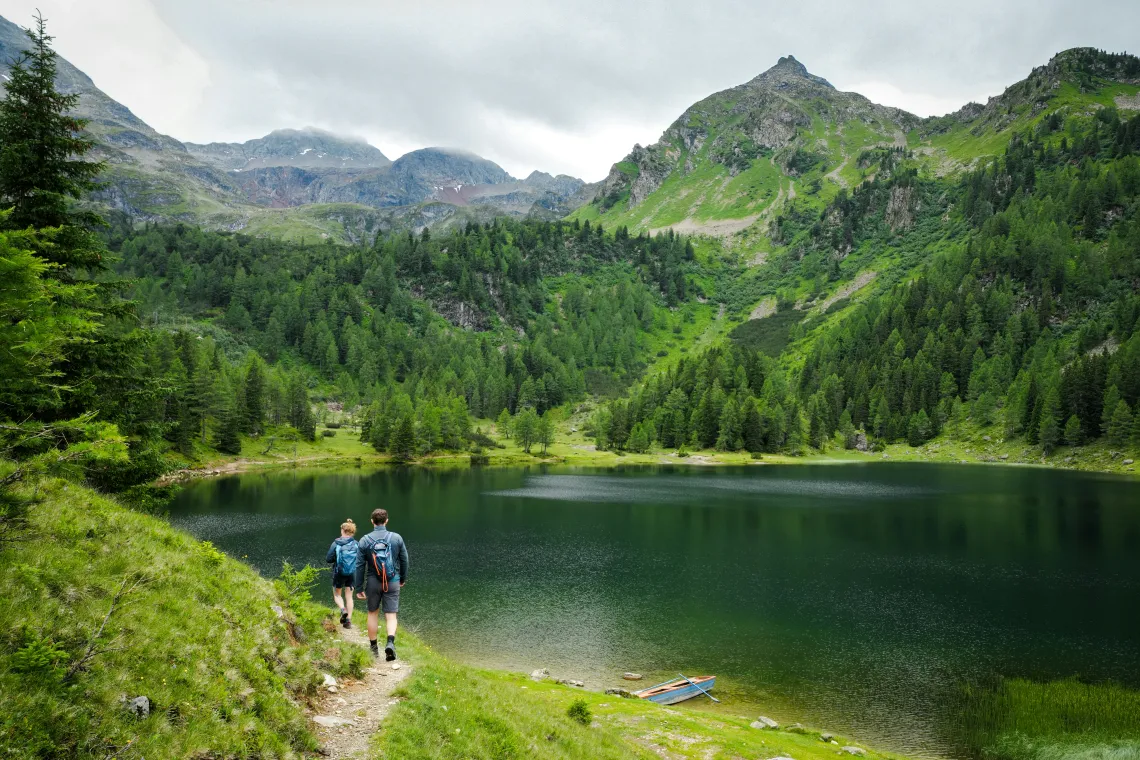
Photo by Alexander Kagan on Unsplash
A mature forest is a woodland ecosystem that has reached a stage of development in which its trees and ecological processes exhibit stability, complexity, and resilience. It’s not quite “old-growth,” but it’s well beyond the early stages of regrowth. Trees are considered mature at 80-150 years, although definitions vary by region and forest type.
What are the characteristics of old-growth and mature forests?
Because old-growth/primary forests have developed without significant disturbance, they exhibit unique features that include:
- The presence of large, old trees and standing deadwood.
- Multi-layered canopies and canopy gaps.
- Rich in biodiversity and complex habitats.
- May include coarse woody debris and rare species of mosses and lichens
As of 2020, the world inventory of old-growth forests totaled approximately 2.74 billion acres, of which 32 million acres are located in the United States. Three countries—Brazil, Canada, and Russia— host more than half (61 percent) together. Since 1990, acreage has decreased by about 200 million.
Old-growth forests are valuable for the essential ecosystem services they provide, including water purification, flood control, weather stability, biodiversity maintenance, and nutrient cycling. Additionally, old-growth forests are more effective at sequestering carbon compared to newly planted forests and fast-growing timber plantations. Therefore, preserving these forests is vital for mitigating climate change.
Additionally, old-growth forests are often revered for their beauty and tranquility, offering spaces for recreation, inspiration, and cultural practices, and they serve as living laboratories for ecological research and environmental education.
Mature forests exhibit many of the same features and also provide the same services as old-growth forests, albeit on a slightly less grand scale. They are, in essence, the old-growth of the future. Global estimates about how much acreage of mature forests exists in the world vary depending on how “mature forest” is defined. According to the most recent federal inventory, the United States has an estimated 80 million acres of mature forests on public lands, managed by the U.S. Forest Service and the Bureau of Land Management (BLM). This represents about 45% of the total forested land under their stewardship.
What are threats to old-growth and mature forests?
- Logging has long been the primary threat to old-growth forests, and now, they are more threatened than ever, under President Donald Trump’s leadership. Shortly after taking office for a second time in 2025, he issued two executive orders to open half of all national forests to logging. These orders were justified by claims of the need for "wildfire mitigation" and "economic benefits," despite evidence that old-growth and mature forests are the least flammable. His administration intends to reduce, if not eliminate, the role of environmental laws that regulate such activities. Furthermore, a few months later, he issued an order to rescind the Roadless Area Conservation Rule, also known as the Roadless Rule. It is a landmark U.S. Forest Service regulation enacted in 2001 to protect some of the last remaining wild areas in America's national forests. The Rule prohibits road construction and reconstruction in designated "inventoried roadless areas,” restricts timber harvesting in these areas, and applies to nearly 45 million acres of national forests and grasslands across the U.S.
- Climate change is causing trees to struggle because they cannot adapt quickly enough to the rapid global warming. To address this issue, scientists and forest ecologists are exploring the concept of "assisted migration," which involves replanting tree species that are more adapted to dry conditions in areas farther north. This strategy aims to help trees cope with the changing climate.
- Wildfires: While dense old-growth and mature forests are generally the least flammable, the increasing severity of fires—intensified by dry vegetation from drought, prolonged extreme temperatures, and high wind speeds that create ember storms that travel for miles—is significantly impacting these forests.
- Invasive pests pose significant threats to old-growth and mature forests, often leading to long-lasting ecological consequences. Both native pests, such as bark beetles, and invasive species, such as the Mediterranean Oak Borer, are vectors of fungal spores that can cause widespread tree mortality. Certain pests target specific tree species, leading to their decline or even local extinction. This shift alters forest composition and reduces biodiversity. Infestations can also disrupt nutrient cycling, carbon sequestration, and other valuable ecosystem services provided by these forests. Mature and old-growth trees, due to their high biomass and age, often have reduced resilience to stressors, making them more susceptible to pests. Additionally, the genetic variation in old-growth trees may be limited, hindering their ability to adapt to emerging threats. Warmer temperatures and increased drought stress further weaken these trees, potentially expanding the range and activity of pests.
- Invasive pathogens spread not through insect vectors but via environmental dispersal mechanisms such as rain splash and runoff, as well as human activities, including the movement of contaminated nursery stock and contaminated soil on shoes. Research suggests that birds may also play a role in spreading spores via feathers or feet. Notable examples of invasive pathogens include Phytophthora ramorum (Sudden Oak Death), Cronartium ribicola (White Pine Blister Rust), and Cryphonectria parasitica (Chestnut Blight).
- Invasive plants pose a serious threat to old-growth and mature forests by disrupting ecological balance, reducing biodiversity, and altering forest structure and function. Examples include Bromus tectorum, also known as Cheatgrass, and Cytisus scoparius, also known as Scotch Broom. Bromus tectorum alters fire cycles by creating highly flammable ground cover, and Scotch Broom forms dense thickets that inhibit tree seedling growth. Invasive plants, similar to invasive pathogens, reach old-growth and mature forests through a combination of natural dispersal mechanisms (including wind and water movement, as well as animal vectors) and human-mediated pathways (trail and road construction, logging and land management, recreation and foot traffic).
What are examples of efforts to protect mature and old-growth forests?
The first effort to protect old growth was in 1918 with the founding of the
Save the Redwoods League in California. It has protected 225,000+ acres of California redwoods, and it established Humboldt Redwoods State Park.
Despite these important accomplishments, Save the Redwoods is considered by some to be a quasi-environmental group because it presents itself as a conservation organization. Yet, its history is deeply intertwined with timber-industry interests, wealthy landowners, and compromises that allowed extensive logging of redwood forests.
Efforts by genuine environmentalists to protect old-growth forests have been underway since the 1960s. These efforts reached a fever pitch and gained national attention in 1990 during “Redwood Summer,” when a mass environmental protest movement, organized by Earth First! and the Industrial Workers of the World, aimed to stop the logging of old-growth redwood forests in Northern California. It became a defining moment in the “Timber Wars,” blending direct action, labor solidarity, and ecological activism. The Ghost Forest also discusses these events in detail.
Efforts to protect old-growth and mature forests in the United States have intensified in recent years, driven by concerns about climate change, biodiversity goals, and public opinion. During the Biden Administration, environmental groups promoted the Forest Service’s recent National Old-Growth Amendment process. These groups include Climate-Forests, the Old-growth Forest Network, and the Sierra Club. California state groups include Forests Forever and the Sierra Club's StopClearcuttingCA campaign. StopClearcuttingCA, for example, played a role in national efforts by mobilizing grassroots pressure, submitting public comments, and advocating for stronger protections mapped out during the process. They joined coalitions urging the Forest Service to move beyond inventorying old-growth and mature forests toward legally binding conservation measures, highlighting the risks of clearcutting, biomass expansion, and weak wildfire policies.
The 1994 National Old Growth Amendment is an example of a government action that failed to provide fundamental protections for old-growth despite broad public support. While it aimed to create a unified framework across all national forests to conserve old-growth and mature forests, the Amendment was shelved by the US Forest Service after Donald Trump's 2024 presidential election victory.
State governments have taken steps to protect old-growth forests, but many of these actions have been criticized as insincere and merely symbolic. An example is the Z'Berg-Nejedly Forest Practice Act of 1973. While it does not explicitly protect old-growth, the Act was considered groundbreaking in 1973 as the first comprehensive forest regulation in California. However, it was written during a time when old-growth logging was still considered economically essential. Its legacy is mixed: it improved reforestation and soil stability, but left old-growth forests vulnerable until later conservation efforts stepped in.
Despite the enactment of the Act, logging of old-growth redwoods and other ancient trees continued unabated under Timber Harvest Plans (THPs) approved by the Board of Forestry. The Act has been criticized for enforcement inconsistencies, and legal challenges, and evolving ecological pressures have exposed gaps between policy and practice. Many consider the Act an example of governmental greenwashing because of its use of symbolic environmental language, industry influence in its implementation, and a disregard for cumulative impacts post-implementation. California courts repeatedly found that Forest Practice Rules under the Act failed to adequately protect water quality, wildlife, and cumulative effects. Others argue it wasn’t greenwashing but a compromise: a step forward in a political climate where outright preservation of old-growth was not politically feasible.
A clear example of one of the few sincere government actions that has provided fundamental protections to old-growth forests was the 1978 expansion of Redwood National Park in Northern California. Congress added 48,000 acres of privately owned old-growth redwoods to the park, halting logging in those groves and ensuring their permanent preservation.
Another bona fide altruistic government action is the Northwest Forest Plan (1994), adopted under the Clinton administration, which restricted logging across 24 million acres of federal forests in the Pacific Northwest to protect old-growth ecosystems and endangered species such as the spotted owl. Clinton also enacted the Roadless Area Conservation Act in 2001, which prohibits most road construction, reconstruction, and timber harvesting on about 58.5 million acres of national forest lands to protect undeveloped wilderness areas. It remains one of the most significant conservation measures in the history of American public lands. Unfortunately, both of these actions are now under attack by the Trump Administration.
The Sierra Club and its StopClearcuttingCA campaign, along with other environmental organizations, are committed to opposing the Trump administration's assault on old-growth and mature forests, other public lands, and environmental policies, including the National Environmental Protection Act.
For more resources on Old and Mature-Growth Forests, click here