Sections
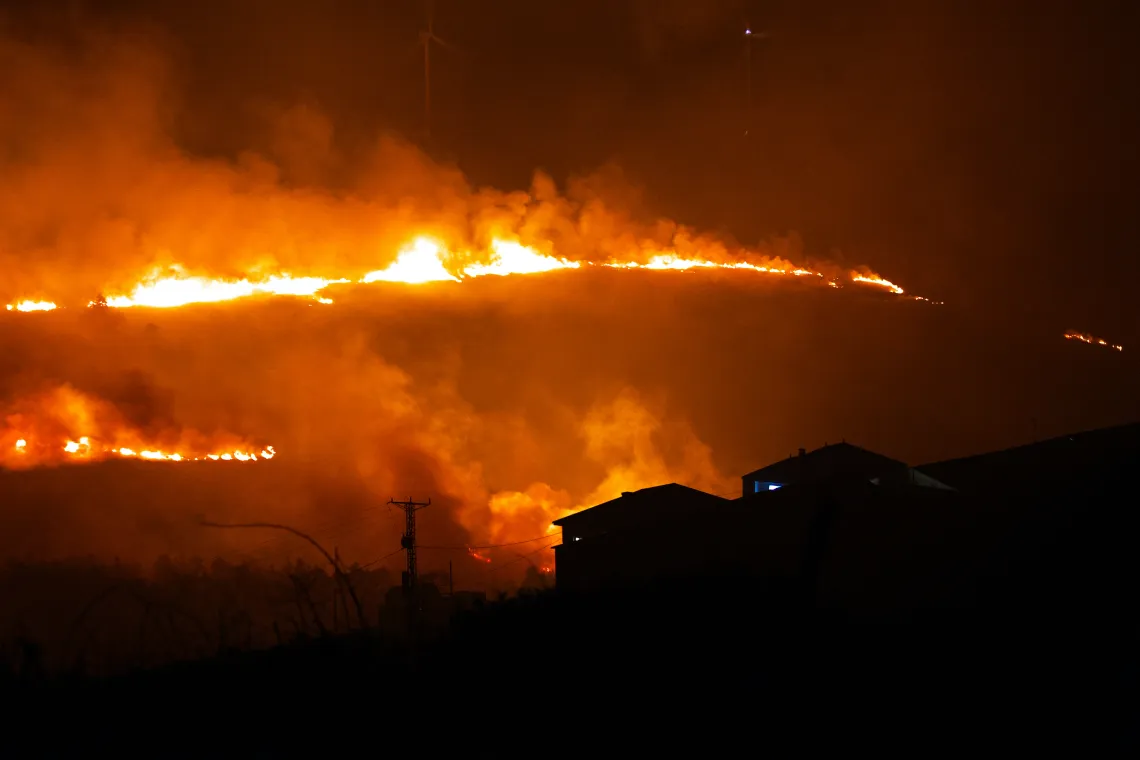
Photo by Ignacio Fernández Álvarez on Unsplash
What are current wildfire mitigation strategies?
Several wildfire mitigation (risk reduction) strategies have been deployed. Here are the most common ones. The two most common are forest thinning and prescribed burns. Opponents of these methods argue that more attention should be given to home hardening and defensible space, community preparedness, and advocate the optimal use of technology.
Thinning
Thinning involves cutting down excess vegetation and small trees in what are touted as “overgrown” forests using chainsaws or heavy machinery, often under the guise of “wildfire risk reduction” zor “forest restoration.” Despite being a widespread practice, thinning is highly controversial.
Pros
Thinning, when done ethically, removes excess fuel, particularly ladder fuels. It can reduce the likelihood of severe crown fires and lessen competition among trees for sunlight, water, and nutrients.
Cons
- If done unethically and especially using egregious practices like clearcutting, it can increase flammability by exposing the forest floor’s fuels to greater sun drying and wind penetration through the open forest stands.
- Carbon loss from felled trees and logging operations releases significant amounts of greenhouse gases into the atmosphere.
- Can be used as a pretext for commercial logging, targeting large, valuable trees instead of the more fire-prone vegetation
- Requires immense investment in labor and equipment, burdening public land agencies that already possess limited resources
Prescribed fires
A prescribed fire is a planned fire, sometimes called a “controlled burn” or “prescribed burn,” used to meet specific forest management objectives. A prescription is a set of conditions that considers public and fire staff safety, weather, and the probability of meeting the burn objectives.
This is in contrast to cultural burning, the intentional use of fire as a land management practice primarily led by Indigenous peoples. This practice has been used for over 60,000 years to manage landscapes, reduce fire hazards, promote the growth of culturally significant species, and enhance ecosystem health. Cultural burns were set in the vicinity of the areas adjacent to communities. It is recognized for its role in maintaining biodiversity and protecting native wildlife, reflecting the cultural values and practices of the communities involved.
There are two main types of prescribed fire: broadcast and pile burning. The former involves lighting fires across a tract of land, while the latter involves burning individual stacks of vegetation. Pile burning is usually chosen when conditions aren’t safe to set a larger fire.
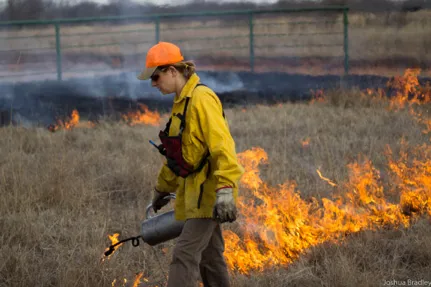
extension.okstate.edu/public domain
Pros
- Burns off dry undergrowth that accumulates over time, a key ingredient for lethal wildfires
- Recycles nutrients back into the soil, resulting in healthier vegetation growth that can favor native species
Cons
- Can lose control under unexpected weather shifts (e.g., wind gusts, low humidity), transforming into wildfires
- Generates smoke, which affects people suffering from respiratory illnesses in nearby communities
- Prescribed fires must be repeated regularly to maintain effectiveness, a challenging feat that requires detailed planning and permitting and can be expensive.
- Can lower the quality of natural drinking water by harming the soil and causing contaminants to flow into nearby streams
- It is low-intensity only and may deprive forestlands of needed mixed-intensity natural fire
Home/community hardening
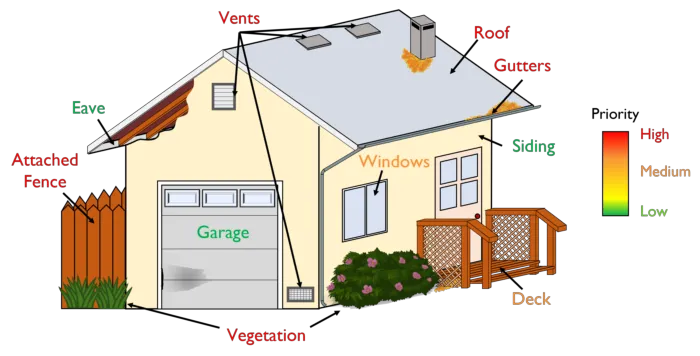
Home hardening graphic/public domain
Home hardening involves building or retrofitting homes with fire-resistant materials and creating defensible space by managing vegetation within the first 100 feet of the home to minimize the risk of home ignition. Unlike thinning and prescribed burns, these strategies have proven value for protecting people and their property from wildfires.
Furthermore, a hardened home is more likely to survive if its neighbors are hardened as well, and evidence suggests that when enough homes in a neighborhood are hardened and maintained properly, the entire community becomes less likely to burn—even those homes that didn’t take every possible precaution. This “herd immunity” is possible when an estimated 40-60% of structures are hardened.
Examples of home hardening strategies include disallowing wood-shingle roofs in favor of fire-resistant alternatives such as metal or clay roofing, and mandating the installation of double-pane windows with tempered glass to prevent ember entry. Homeowners should harden their properties long before a fire starts; local government educational efforts are paramount.
Pros
- Prevents flying embers from causing ignitions. Embers are responsible for up to 90% of homes lost in wildfires
- It can save homeowners from total property loss and emotional devastation in a wildfire event
- May decrease insurance premiums or qualify homeowners for wildlife insurance in high-risk areas
- Protects neighborhoods collectively by diminishing structure-to-structure spread
Fire ember PNG Transparent/Vector Files?Pingtree
Cons
- The upfront costs of retrofitting are high, especially for older structures needing major upgrades.
- Homeowners must commit to regular outdoor maintenance of defensible space, adding to the overall effort and cost.
- An optimally hardened home may still be destroyed in a wildfire if it is in close proximity (less than 30-50 feet) to an adjacent unhardened home, due to radiant heat from the unhardened home.
Community Preparedness
Community preparedness is most effective when community governments and citizenry join forces and connect with various local and state agencies. Early alert systems are devised. Safe zones are created, and evacuation routes are cleared, making it safer for residents to flee and emergency responders to do their jobs to protect people and homes during an actual wildfire. Community preparedness also includes educational programs that cover wildfire risks, mitigation strategies, and crucial prevention measures. This encourages proactive behavior and decreases the reliance on external assistance.
Another critical aspect of community preparedness is stressing to residents the importance of creating “go-bags” that are easy to carry and access. People should prepare for the possibility of being away from home for an extended period following a fire. Go-bags typically include essentials such as food, water, and clothing, along with personal documents. Additional items may include family mementos, personal computer data on hard drives/disks, and other valuables that are easy to store.
Pros
- Increases public awareness by encouraging fire-safe behavior, which helps debunk wildfire myths and instill a proactive attitude
- Advocates for resources and better emergency services, helping responders tailor strategies to meet the specific needs of the community
- Builds relationships and trust among neighbors, which is crucial in mitigating panic during evacuations
- Can spot smoke or fire early and report hazards more quickly, leading to a rapid response
Possible Drawbacks
- Not all residents may be equally engaged or willing to participate, creating gaps in preparedness.
- Potential for misinformation, as grassroots efforts sometimes spread myths if not guided by professionals
- Higher-income communities have the resources to better invest in wildfire preparedness, while lower-income neighborhoods often get left behind.
Technology
New technological breakthroughs are emerging to enable wildfire risk reduction. AI-driven wildfire risk maps can predict fires with 80% accuracy up to 24 hours in advance, enabling authorities to prepare for and monitor wildfires in real time. Unaffected by smoke or darkness. Intelligent sensors enable first responders to address the source of ignition sooner, suppressing the initial blaze before it spreads out of control. Other innovations focus on the causes of wildfires. Satellites, such as NOAA-20, can capture real-time images of the Earth, enabling the detection of illegal deforestation as it occurs. Even subtle signs, such as smoke from fires or scars left by clear-cutting, can be identified—allowing authorities to prioritize high-risk zones and draw containment lines.
Pros
- Early detection and real-time monitoring enable faster response times, preventing danger to communities before it arises.
- Big data and AI can support efficient resource allocation by prioritizing high-risk zones.
- Centralized platforms streamline communication between fire agencies and communities.
- Automates wildfire mitigation efforts that would be expensive and difficult to cover manually.
Cons
- Depends on stable internet and power infrastructure, which may not be available in rural areas.
- Effective use often requires training and technical skills that not all users necessarily possess.
- Systems can break down or provide inaccurate data due to incorrect or inadequate inputs.
- It can be costly.
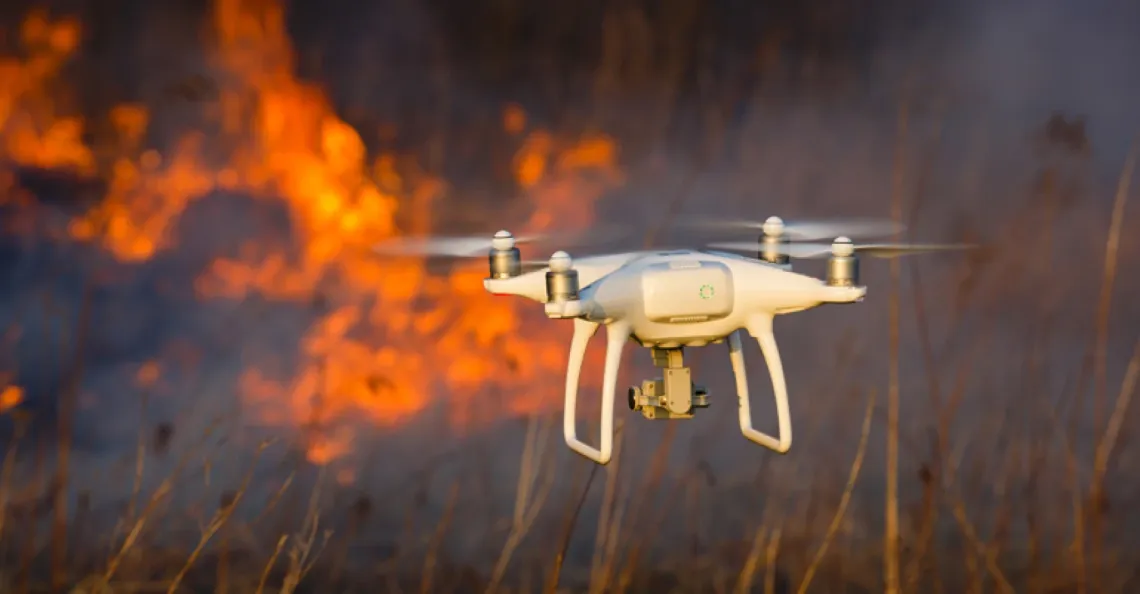
Use of technology to combat wildfires/public domain
What are the best wildfire mitigation strategies?
Thinning and prescribed fires pose different problems. “Thinning” is often practiced without regulation or environmental impact assessment and is merely logging for profit that can make forests more, not less, flammable, especially when it involves practices like clearcutting. What’s most concerning, though, is that the politics of thinning encourage more logging. The timber industry has effectively promoted the idea that thinning trees can prevent large wildfires, influencing public perception and political support for logging practices that are, according to skeptics, geared towards accessing high-quality wood.
Prescribed burning has unique challenges. It can be risky and escape control. It releases smoke into the atmosphere in areas that would otherwise not experience natural wildfires. It is a low-intensity fire and can be undertaken in areas that would benefit more from mixed-intensity fire. Additionally, the window of opportunity for fire agencies to set fires is limited. It can be an important strategy when practiced carefully, but it is not a panacea due to its limitations.
Conversely, home/community hardening mitigates wildfires without damaging the environment and, unlike thinning and prescribed burns, has proven value in protecting people and their property from wildfires. Retrofitting homes with ember-resistant vents, non-combustible roofing, and ignition-resistant siding materials, among other measures, establishes a protective barrier against flying embers and direct contact. Coupling this with defensible space around the perimeter of a structure increases the likelihood of its survival against wildfire.
Finally, as technology continues to improve, people have more tools at their disposal to reduce the impacts of wildfires on communities. Predictive tools like AI-driven risk assessments and satellite monitoring help communities prioritize retrofits based on localized threat levels. Meanwhile, smart irrigation systems and fire-detection sensors are valuable tools at urban-wildland interfaces. There is to be expected to be a learning curve when transitioning from more traditional strategies to more futuristic ones, but the payoff is worth it. We must adapt to the impacts of our changing climate.
Changing our priorities
Thinning and prescribed fire for wildfire risk-reduction pose unique risks and can do more harm than good. Adopting a holistic approach to wildfire prevention that prioritizes proven, non-harmful strategies, such as home/community hardening and the use of technology, is paramount to coexisting with wildfires and building a healthier, safer planet for future generations.
Learn more about wildfire mitigation