Written by Chad Stephens, Clean Energy Conservation Program Coordinator
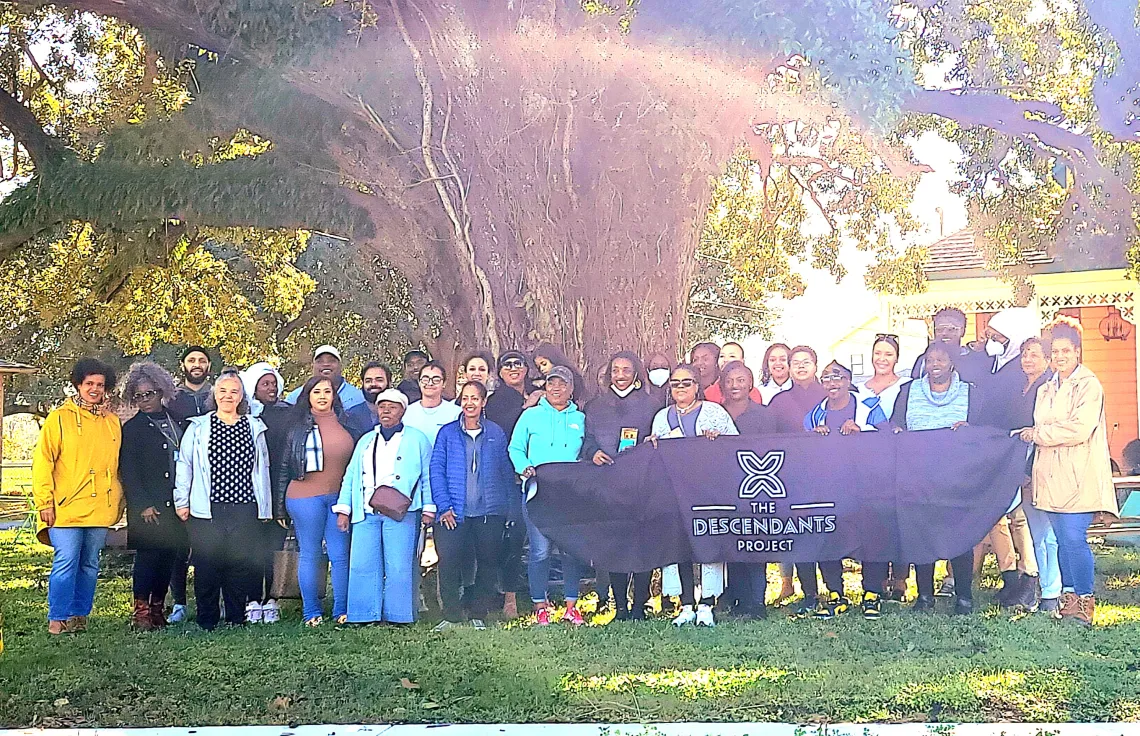
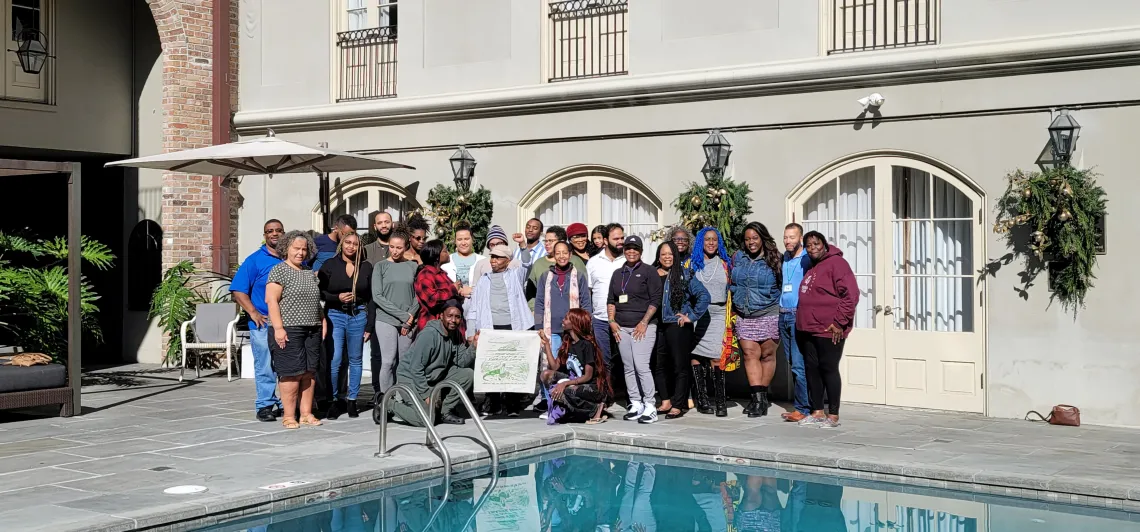
Sierra Club history was made in December. For the first time, Black staff and volunteers from across all departments were able to gather and fellowship through a unified planning meeting. The affinity group known as the Black Action Team met in person in New Orleans, LA. The planning meeting was the first of its kind. Black staff and volunteers, who have traditionally been one or two in mostly all-white spaces, could finally meet without our white colleagues present.
You may be asking what the Black Action Team is. The Black Action Team was formed in 2020. Initially, as a healing space in the Sierra Club, separate from the BIPOC Affinity Space. Black Action Team is made up of staff and volunteers who have been dealing with racism in all forms from inside and outside the Club.
In 2020, the racial unrest that was and is perpetuated by white supremacy will be a matter of life and death for black people. For centuries, the people entrusted to serve and protect have been hunting and killing black people—destroying Black communities and breeding legacies of violence and trauma. The tragic murders of George Floyd, Ahmaud Arbery, Breonna Taylor, Tony McDade, and countless others have renewed global demands for justice. We couldn’t stand by while our governments continue to fund an excessive, brutal, and discriminatory system of policing and anti-Black policy with taxpayer dollars.
During our retreat, we learned from the Descendants Project and the Whitney Plantation. The Descendants Project was founded to preserve and protect the health, land, and lives of the Black descendant community located in Louisiana’s River Parishes. The lands of the river parishes hold the intersecting histories of enslavement, settler colonialism, and environmental degradation.
We are descended from the enslaved men, women, and children who were forced to labor at one or more of the hundreds of plantations that line the Mississippi River from New Orleans to Baton Rouge. Starting in the 1970s, large industrial petrochemical plants began purchasing the land of these plantations, still surrounded by vulnerable Black descendant communities. The region is now known as the “Cancer Alley” for the extreme risks of cancer and death due to pollution. The community faces many other problems such as food insecurity, high unemployment, high poverty, land dispossession, and health issues that stem from a culture of disregard for Black communities and their quality of life.
Through programming, education, advocacy, and outreach, The Descendants Project is committed to reversing the vagrancy of slavery through healing and restorative work. We aim to eliminate the narrative violence of plantation tourism and champion the voice of the Black descendant community while demanding action that supports the total well-being of Black descendants.
Whitney Plantation educates the public about the history and legacies of slavery in the United States. Whitney Plantation is a 200-acre former sugar plantation that has been turned into a historic site dedicated to telling the story of slavery in the United States through the eyes of the enslaved Africans, African-Americans, and Creoles of Color who built America's wealth. However, sharing and interpreting this history takes much more than just opening the door. The local descendants of the former slaves of the plantation do the guided tours.
These encounters gave me a solid foundation. My conviction that every one of us, both individually and collectively, must do more to shield communities on the front lines from racism's systemic assaults on the environment solidified. History positions us to recognize patterns that might otherwise be invisible in the present, allowing us to comprehend (and solve!) problems from a crucial viewpoint. History gives us the tools to analyze and explain problems in the past.