By Emily Engel
Sierra Club California celebrated a major victory at the end of 2024.
Our leaders and members persuaded CalPERS, the nation’s largest public investment fund, to oppose the executive leadership of ExxonMobil. Exxon has previously taken steps to evade climate targets by suing its shareholders. This decision by CalPERS marks a crucial step towards divesting from oil and gas companies.
As many of you know, divestment is the opposite of an investment – it simply means getting rid of stocks, bonds, or investment funds that are unethical or morally ambiguous. When we invest our money, we might buy stocks, bonds, or other investments that generate income on our behalf.
Universities, religious organizations, retirement funds, and other collective institutions put billions in these same kinds of investments to generate income to help them run. When individuals and groups are invested in fossil fuels there are risks for investors and the planet. So, we must continue our efforts to encourage individual divestment and expand institutional divestment from these climate-harming companies.
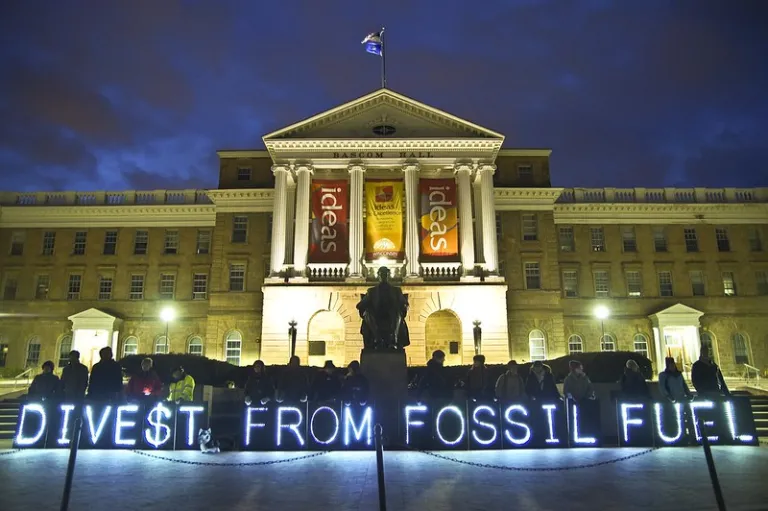
Divestment is an effective strategy for limiting the influence of fossil fuel companies and prevents them from expanding operations at a time of growing climate crisis during an increasing need for climate justice especially in frontline communities. Fossil fuel divestment takes the fossil fuel industry to task for its culpability in the climate crisis by naming the industry’s destructive influence and highlighting the moral dimensions of climate change.
Every individual action can help break the hold that the fossil fuel industry has on our economy and our governments.
You can directly divest from any commingled funds that include fossil fuel public entities and corporate bonds and be sure not to put any new investments indirectly into fossil fuel companies. If you want to create a cleaner, greener world with fewer fossil fuels, move your money out of banks that support fossil fuel companies, giving them less capital to finance dirty energy projects.
And divest publicly – send a powerful message that can help build consensus toward a cleaner energy future. Explore a local, more ethical banking service, such as Aspiration Bank, based in L.A., which also donates a percentage of all its fees to organizations like the Sierra Club.
You can also move your investments in mutual funds and retirement accounts away from fossil fuels. Don’t just move your money, let banks know why you are leaving by emphasizing that you do not want your money supporting fossil fuel development.
The Sustainable Change Alliance in Santa Barbara recently held an informative workshop on investing in climate solutions, which provided great alternatives to fossil fuel investments. Heather Beatty, founder of ScopeFour Capital and Matthew Stotts, co-founder of Cerulean Ventures, shared about how to align your investment strategy with planet-positive companies.
Professional investment advisors like Beatty and Stotts can help you discover high-growth impact investments from electricity and manufacturing to agriculture, transportation, and construction that are essential to solving the climate crisis.
Use your voice as well as your spending power. Let elected officials know you are fed up with continued public subsidies to the fossil fuel industry and want to see more investment in solar, geothermal, wind, and electric-powered vehicles in public places.
Contact the boards of companies and urge them to switch to renewable energy and less wasteful practices with water and other precious resources. Or you can come up with your own ideas about how to move our world in a greener direction because divestment can make a better world. We have an immense amount of power if we choose to exercise it collectively. Take some time to use your power today!
You can learn more from Sierra Club research at: