 The Magazine of The Sierra Club
Ready for Less Screen Time and More Nature Time? Try WWOOFing.
A network of organic farms offers volunteers a chance to connect with the land, and one another
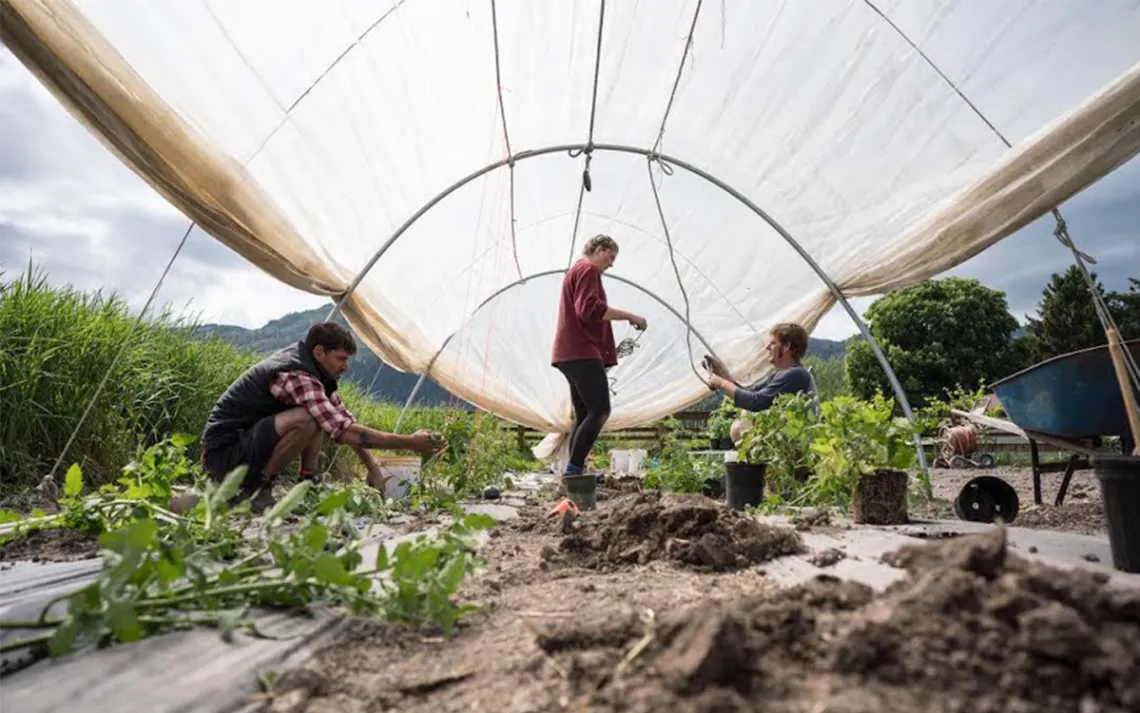
Photos courtesy of Worldwide Opportunities on Organic Farms (WWOOF)
It was a Friday morning in early June, and I was on my hands and knees in the red mud of a vegetable field, harvesting radishes. As the sun rose over the San Juan Mountains in southwestern Colorado, I could hear the Bullock’s orioles migrating overhead.
I was volunteering on a farm through WWOOF (Worldwide Opportunities on Organic Farms), exchanging my labor for housing and meals. For months, I had been itching to leave my Brooklyn, New York, apartment and try living a different kind of life—to feel more connected to the natural world, to do something that would have a positive impact on the planet when I felt at a loss to make a difference. Then I found WWOOF.
In 1971, Sue Coppard was working as a secretary in London. She started WWOOF as a way for people to get away from the city on weekends to work on organic farms (the acronym originally stood for Working Weekends on Organic Farms). It soon spread around the world. Now more than 130 countries across Africa, the Americas, the Asia-Pacific, Europe, and the Middle East have formed their own national organizations, or are a part of WWOOF Independents.
Getting connected to WWOOF’s network of farmers isn’t hard. For a small yearly fee, WWOOFers can create a profile about themselves, access a national organization’s database of hosts, and contact them directly. The selection process works differently for every farmer. Hosts might ask for specific lengths of stay—ranging from several days to many months—or specific skills or references. I’d spoken with my host over the phone a few months in advance to see if I’d be a good fit. After getting approved, I traveled to Colorado to join two other volunteers who were ready to give WWOOFing a try. We were put up in a circle of trailers and renovated buses along a creek bed.
Each of WWOOF-USA’s 1,200 hosts offers something different. Erica Berman, the cofounder and executive director of Veggies to Table, which grows produce to donate to people who are experiencing food insecurity, has anywhere from one to five WWOOFers at a time on her farm in coastal Maine. WWOOFers are put up in apartments or glamping tents on the property in exchange for help with planting, seeding, harvesting, weeding, washing and packing produce, and whatever else needs to get done. While many are younger people, Berman says, volunteers of all ages come through, sometimes for long enough to feel like family.
WWOOF-USA’s 13,000 active volunteers have a lot of choices. “No matter what you're interested in, you could probably find a WWOOF host out there,” says Tori Fetrow, who once helped raise reindeer at a host site in Iceland. She’s now the outreach and marketing manager for WWOOF-USA. Volunteers can choose from a huge range of farms, including bison ranches, off-grid homesteads, and aquaponics and seaweed farms, as well as organic vegetable farms.
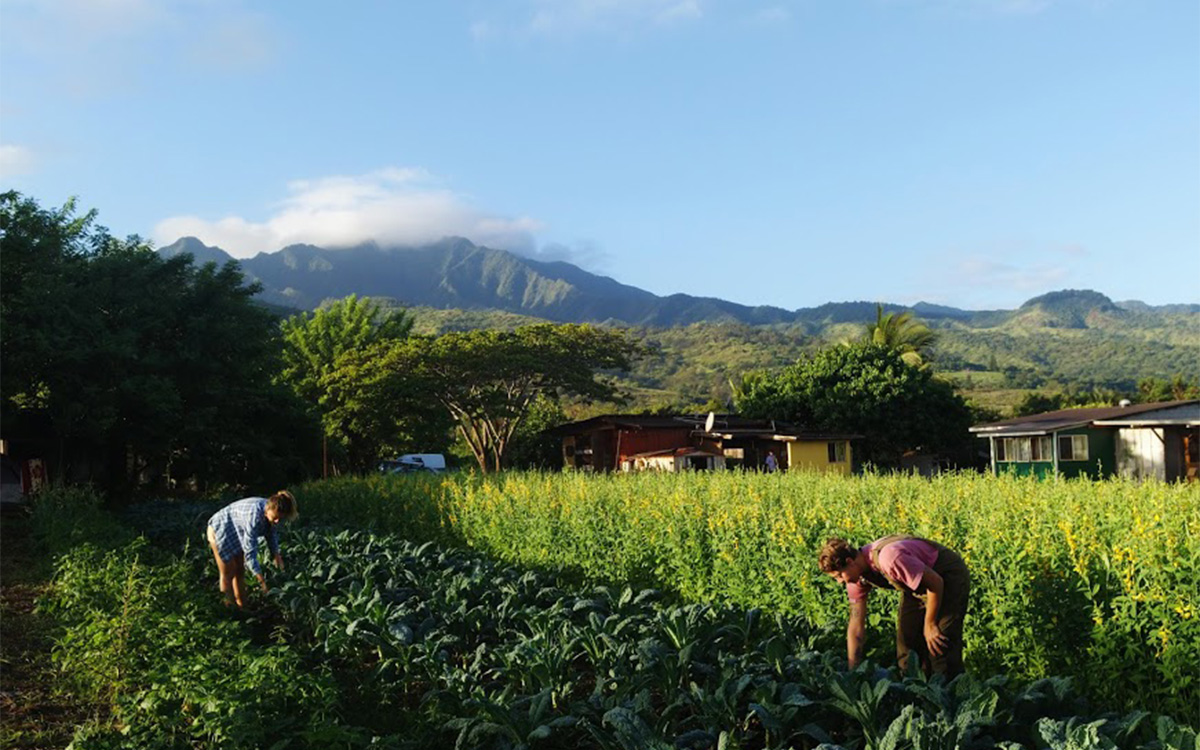
Mohala Farms, a six-acre organic farm and nonprofit in Waialua, on the North Shore of O'ahu.
Tameson Linsen, manager of WWOOF Australia, says that permaculture is big among the 700 total hosts in her country, but they also have places involved in regenerative farming, intentional communities like communes, hobby farms, homesteads, educational centers, and wildlife rescue and rehabilitation centers. “There’s something for everyone, basically.”
I’d volunteered on a few farms and gardens before but didn’t have a lot of experience working on a farm. While WWOOFing, I participated in tasks and projects that were totally new to me—building a greenhouse and raised beds; finding a lost goat; repairing a broken fence (hence the lost goat); pruning apple trees; rotating grazing chickens around the cover-cropped fields. I learned as I went.
Learning is a big part of the experience, says Fetrow. Depending on the host, WWOOFers can hone all kinds of specialized skills: canning, preserving, carpentry, animal husbandry, and self-sufficiency, to name a few. “One of the main reasons people [WWOOF] is to learn about sustainable farming,” Fetrow says. “Many people have some interest in where their food comes from, and most don’t necessarily aspire to be farmers but want to have hands-on experience.”
“People are just craving that connection to the land, getting away from the screen, and developing this deeper appreciation of the natural world around them.”
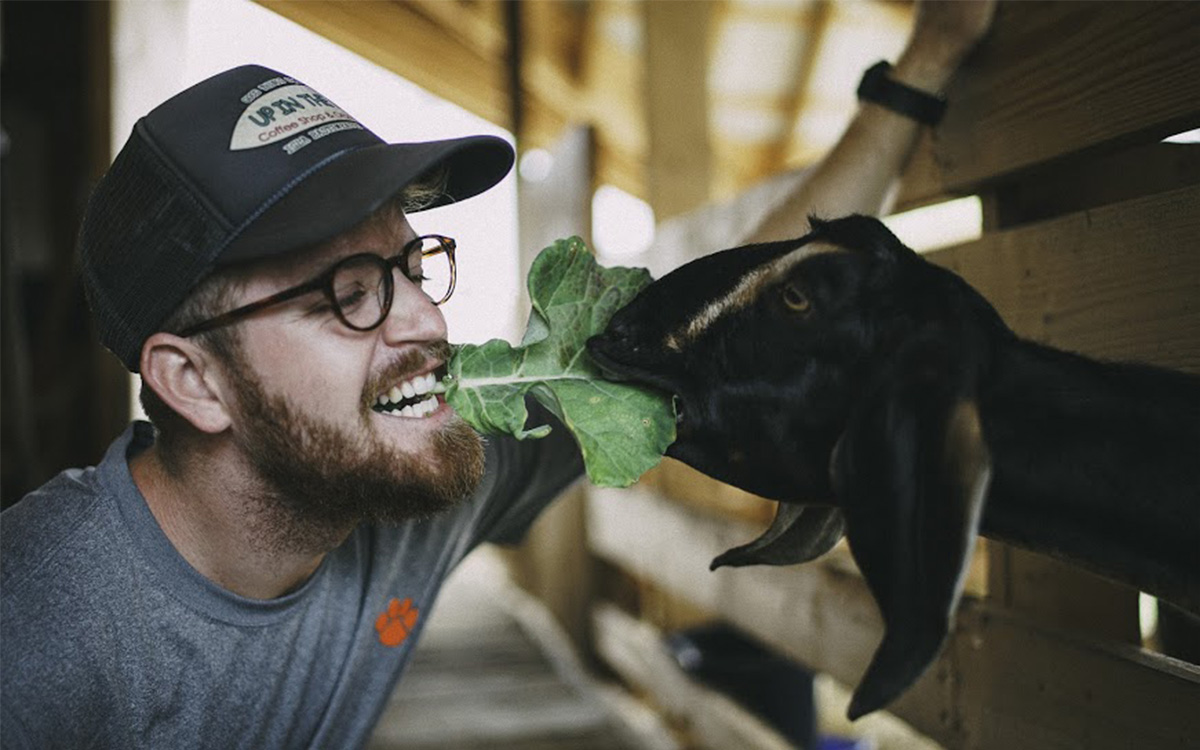
Most communities in the United States have little connection to the origin of their food. On average, fresh produce travels some 1,500 miles from where it is grown to the individual who consumes it. WWOOF offers an opportunity to get more connected, and through that experience, appreciate where and how the food we eat is produced, and even assist in that process.
“People are just craving that connection to the land,” says Fetrow, “getting away from the screen, and developing this deeper appreciation of the natural world around them.”
I had always been a city person. I had never had more than a fire escape or square of backyard grass for gardening. I had never seen big western mountains or wild cacti. The idea of seeing and working in an entirely new landscape, of getting my hands in the dirt, felt important. WWOOFing definitely involves work—often very hard work. And conditions will vary. When I got to southwest Colorado that summer, there was a drought underway, and it was hot and dry. After the first monsoon of the season, there was a leak in my trailer. It was all part of the learning experience though. The next day, I learned how to patch the roof with tar.
But what I didn’t anticipate was how WWOOFing would connect me not just to the land but to a community that shared the same values—people who were looking for less screen time and more time in nature, like I was. After leaving my city of 8 million people, I was now in a town where most people knew each other by name. I spent every day for months with my host and his family—not only working, but eating meals together, going to gatherings with their friends and family, and playing trivia at the local bar. We became a part of the fabric of each other’s lives.
I was proud to be a part of that community, and to pitch in to do my part. Which is another piece of the core WWOOF mission: supporting small-scale farmers.
“By bringing more people onto these farms, we’re supporting sustainable agriculture,” says Fetrow. “No matter if they’re visiting a [local farm] for a couple of hours, or weeks, or months, you walk away from a completely new perspective of food and what it takes to live sustainably.”