 The Magazine of The Sierra Club
Protecting the Apalachicola River
Fifth graders rally to keep oil drilling away from a beloved waterway
Photos by Erich Martin
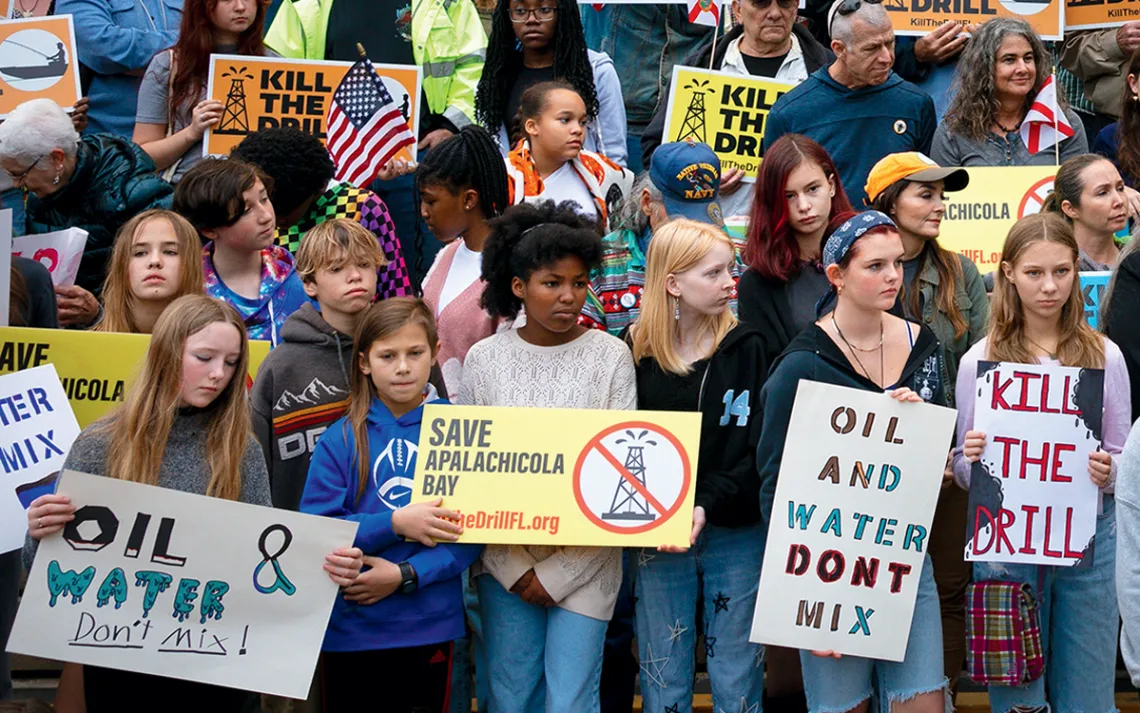
Nairobi Bryant felt nervous and excited as she stepped up to the podium at her first rally in December 2024. She was the first student to speak. The 11-year-old took the mic after oyster farmers, charter boat captains, and community activists had spoken. They were there to help protect Florida’s Apalachicola River from oil drilling.
“I promise you, drilling is not the solution,” Nairobi said. She could feel the hundreds of people watching and listening to her—and it felt good. Nairobi’s classmates from Cornerstone Learning Community in Tallahassee who spoke after her said they were worried about the river’s fish, tortoises, and other wildlife. They told the crowd how much they love to swim in Florida’s clean waters. Drilling could cause oil to spill into their river and pollute it, harming the local ecosystem and the people who rely on it.
Wyatt Steele Simpson said, “You can make fast money with oil, but you would be destroying an entire region’s economy and way of life.”
The “Kill the Drill” rally was held the same week that a group called Apalachicola Riverkeeper went to court to protect the river. It wanted to stop the Florida government from allowing a company named Clearwater Land & Minerals to search for oil in the area.
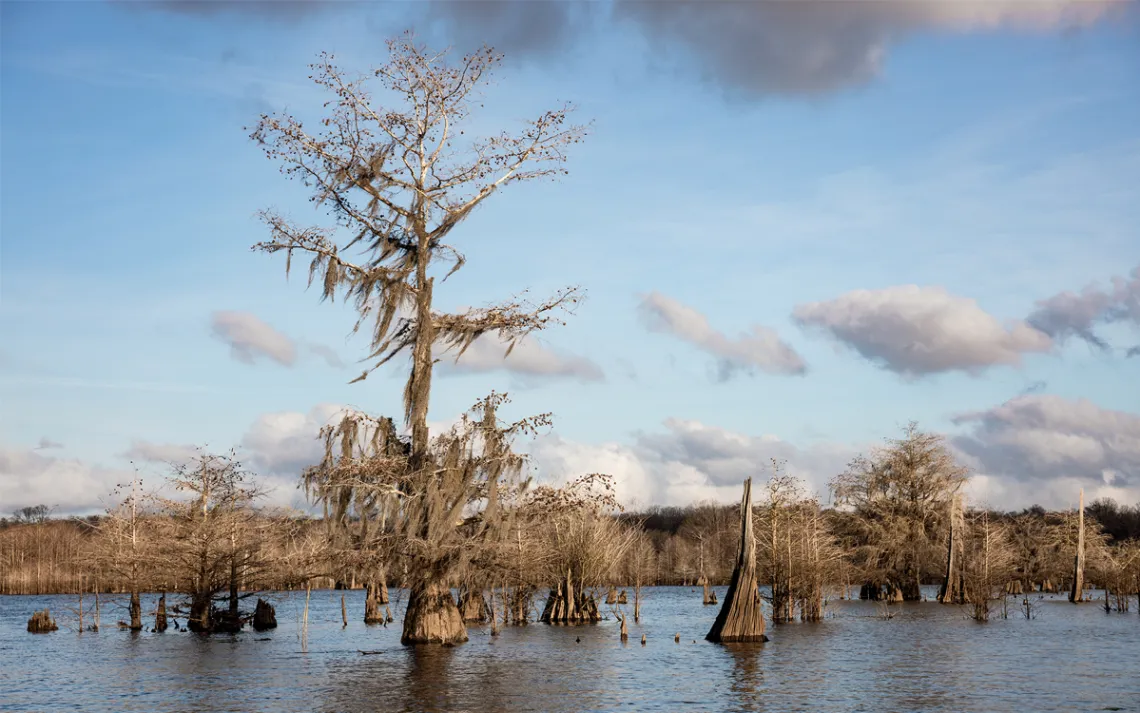
Cypress trees poke out of the Dead Lakes, part of the state’s Apalachicola River watershed.
The Apalachicola River begins its journey where the Chattahoochee River and the Flint River come together near the borderwith Georgia. It flows for more than 100 miles through northern Florida before it reaches Apalachicola Bay. It is rich with plants and animals, all part of the shared web of life. The river and its surroundings are home to reptiles and amphibians like alligators, Apalachicola dusky salamanders, and eastern indigo snakes. Fish lay eggs and reproduce in the river. When the tupelo trees are blossoming, the air buzzes with bees making the region’s special honey.
Clearwater isn’t even sure there is oil at the site. If the company gets approval, it will punch holes in the ground to find out. While oil has been discovered 125 miles away, no oil companies have reported finding any in this area.
“Oil companies have drilled 70 times all around,” Nairobi said at the rally. “And have they found any oil? No.”
One of the bodies of water near where Clearwater wants to drill is called the Dead Lakes. It’s a system of lakes connected to the Apalachicola River and is actually full of life. The Dead Lakes likely got their name after flooding killed thousands of cypress trees long ago. The trunks of those trees still haunt the water. Now younger cypresses grow alongside tupelos here. It’s a popular spot for fishing—one of many along the river.
“I wanna be able to swim and make memories in fresh, plain water, not contaminated water. I am sure most people want to also, so we need to stop this drill. Our generation wants fresh water.”
Ben Greene’s grandma lives near the Apalachicola. The Cornerstone fifth grader goes fishing for bass and bluegill with his dad off the dock near her house. The day of the rally, he was nervous before he spoke, but he felt better after his friends cheered him on.
“I wanna be able to swim and make memories in fresh, plain water, not contaminated water,” Ben said. “I am sure most people want to also, so we need to stop this drill. Our generation wants fresh water.”
Near the end of the rally, there was a surprise guest speaker from a local aquarium: Jack Rudloe from the Gulf Specimen Marine Laboratory showed up in a tan suit with a fake red snapper under his arm.
Penelope Hutchinson, an eighth grader at Cornerstone who spoke right before Rudloe, was thrilled. She wants to be a shark biologist and grew up going to the Marine Lab.
“To get up there and have everyone looking at me, cameras on me, people looking for something to bring them hope and something to believe in, was insanely powerful,” Penelope said.
Her classmate Nina Ozerova closed out the rally.
“Why does money have to win over the environment and democracy?” she asked. “For Clearwater, I hope that when you try to rationalize your actions, you remember the grass, oysters, fish, people, entire worlds that you’ve cast aside.”
In late April, the Cornerstone kids got some promising news. Florida lawmakers passed a bill to ban drilling near the parts of the Apalachicola River that could be most harmed by an oil spill. The students learned that it can be scary, but it’s worth speaking up to protect nature. You never know who’s listening—or what you might help change.